German Promwad Develops Compact Millimeter-Wave Radar Module to Reduce False Alarms in Industrial Video Surveillance
en.Wedoany.com Reported - German electronics design and engineering services company Promwad GmbH announced on July 20, 2026, that it has developed a compact millimeter-wave radar module for a European video surveillance system provider. The module can be integrated into existing video management systems (VMS), providing an independent sensing channel for small industrial sites without the need to replace cameras or add backend servers, effectively reducing false alarms caused by fog, vehicle headlight glare, shadows, and animal movement.
Promwad is a full-cycle electronic development service provider headquartered in Germany, with expertise covering millimeter-wave radar hardware, antenna design, embedded software, signal processing, enclosure and thermal design, as well as integration with video management systems and external systems. The developed millimeter-wave radar module is primarily targeted at small industrial sites—typically open storage yards adjacent to busy roads and company parking lots. In these scenarios, optical cameras have physical limitations: vehicle headlights can overexpose the camera, shadows on asphalt surfaces can trigger motion alerts, animal crossings cause false alarms, and foggy weather further increases the false alarm rate. Operators face a large number of alerts—most of which are false alarms—potentially drowning out real events.
The module is built on the Texas Instruments IWR6843 millimeter-wave sensor, paired with a custom external FR4 antenna array. The external antenna array allows the beam pattern to be shaped to the geometry of typical industrial yards and tuned to the required detection range. The complete assembly fits into a plastic enclosure roughly the size of two matchboxes, with the antenna array area equivalent to that of a pencil eraser.

Processing on the device is divided between two processors: primary radar signal processing—including motion detection, zone crossing logic, and target trajectory generation—runs on the DSP embedded in the IWR6843; a companion general-purpose processor handles post-processing and communication with external servers. The module outputs Cartesian coordinates, radial velocity, and event timestamps to the video management system, with timestamps aligned to the video stream to ensure clear correlation between the two channels. The fusion logic is simple yet effective: each channel operates independently, and an alert is triggered only when both confirm simultaneously. The radar provides physical data (distance and radial velocity) that the camera alone cannot obtain, while the camera offers visual confirmation.
Actual deployments have shown that the module reduces false alarm rates to near zero on sites previously unusable for customer analysis, achieves vehicle detection distances of up to 100 meters, and reduces operator workload by approximately 70%. The module requires no replacement of existing cameras or modification of video management system software, nor does it need additional server infrastructure. Promwad Managing Director and Technical Advisor Ivan Kuten stated that the customer needed more reliable detection without wanting to replace cameras or expand server infrastructure, so the company designed a standalone radar module that processes primary sensor data locally and sends target coordinates, velocity, and timestamps directly to the existing video management system.
The development of this module addressed several engineering challenges: the antenna beam pattern needed optimization for site geometry and detection range; the enclosure and radome required special attention to material thickness and dielectric property deviations in the millimeter-wave band; the device operates outdoors year-round, necessitating thermal modeling to ensure stable performance in both summer heat and winter cold; and alignment of radar and video event timestamps was critical for reliable correlation between the two channels. The underlying radar architecture can also be adapted for other perimeter surveillance applications.
Related Products

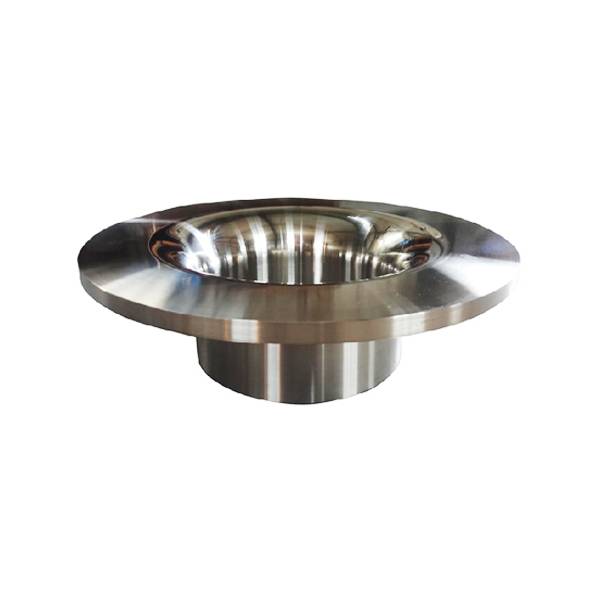
Standard Nozzle Flowmeter
Jinggong Automatic Control Instrument Complete Technology Development Company
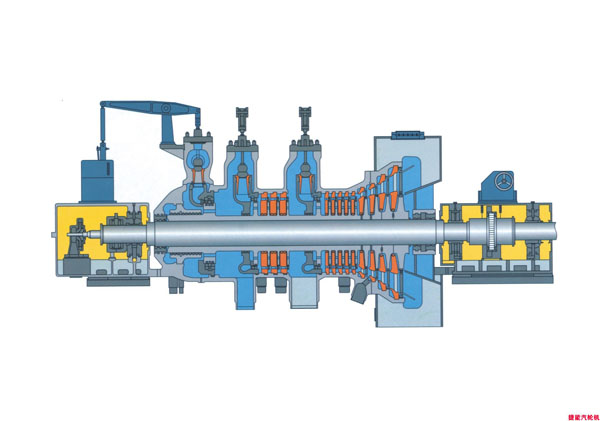

LBH4000 Batch Environmental Protection Asphalt Mixing Plant | Asphalt Batching Plant | Asphalt Mixing Plant
Jilin Province Road Construction Machinery Co., Ltd.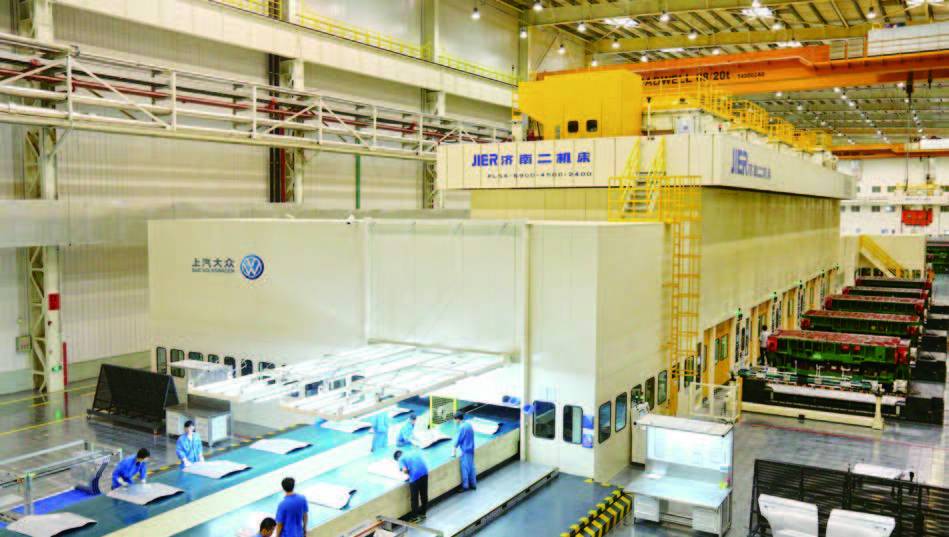
High-Speed Flexible Fully Automatic Stamping Production Line
JIER Machine-Tool Group Co., Ltd.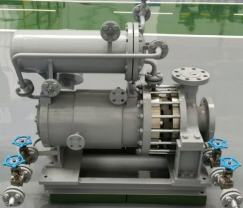

Pneumatic high-pressure wear-resistant ball valve
Zhejiang Deca Control Valve Meter Co., Ltd.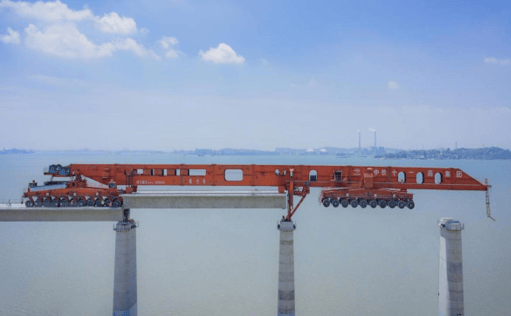
High-Speed Railway Lifting, Transporting, and Erecting Equipment: Integrated Transport and Erection Machine
Hanjiang Heavy Industry Co., Ltd. of China Railway 11th Bureau Group