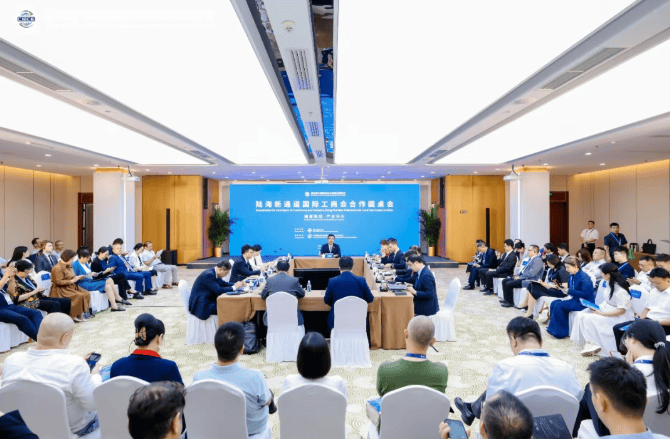
Wedoany.com Report-Nov. 3, China and France have signed an agreement to establish a green shipping corridor between Ningbo Zhoushan Port and France’s HAROPA Port, aimed at advancing maritime decarbonization and promoting sustainable shipping. The agreement was announced by French classification society Bureau Veritas (BV) during a recent international event co-hosted by China’s Ministry of Transport and the Shanghai Municipal People’s Government. The meeting focused on maritime sustainability and explored new avenues for cooperation between the two countries in developing environmentally responsible shipping solutions.
According to Bureau Veritas, the event produced 30 major outcomes, including a seven-point framework for implementing the green shipping corridor. The framework is designed to promote the development of clean energy-powered vessels, near-zero-carbon ports, and environmentally friendly fuel supply and certification systems. It also seeks to enhance collaboration in technological innovation and infrastructure upgrades to reduce emissions across the shipping value chain.
The corridor initiative between HAROPA Ports and Ningbo Zhoushan Port brings together several major industry participants, including Bureau Veritas, CMA CGM, Zhejiang Provincial Seaport Investment & Operation Group, HAROPA Ports, MSC Group, MSC Terminal Investment Limited, and the China Waterborne Transport Research Institute. The project builds on a memorandum of understanding (MoU) signed earlier this year at the Maritime Silk Road Forum held in China, which emphasized cooperation in green and smart maritime development.
Matthieu de Tugny, Executive Vice President of Industrials and Commodities at Bureau Veritas, said: “This corridor will model international cooperation in green shipping, aligning with climate goals and enhancing China-Europe maritime ties.” He highlighted that the initiative represents a concrete step toward integrating environmental standards with international trade routes while supporting the decarbonization goals of both nations.
The establishment of this corridor reflects the growing global momentum behind green shipping initiatives. According to the Getting to Zero Coalition’s report released in September last year, the number of such projects worldwide increased by 40%, driven by the shipping industry’s push to meet international emission reduction targets. Chinese ports and organizations have been active participants in this movement, launching several regional and international projects focused on clean maritime transport.
In October 2025, the Ministry of Transport of China and the Ministry of Transport of Singapore jointly formalized their own green shipping corridor, following earlier agreements at the municipal and provincial levels with Tianjin and Shandong. Similarly, in August 2025, the Port of Barcelona and Shanghai International Port Group (SIPG) agreed to strengthen cooperation in digitalization, standardization, and maritime decarbonization. In May, Ningbo Zhoushan Port also signed green corridor agreements with Germany’s Port of Hamburg and Port of Wilhelmshaven, as well as Spain’s Valenciaport.
The new China-France green shipping corridor adds to this growing network of international collaborations. It is expected to accelerate the transition toward low-carbon shipping, improve global connectivity, and reinforce both countries’ commitment to building a more sustainable and efficient maritime transport system.