Wedoany.com Report on Feb 13th, Since its inception, the Metropol Parasol project in Seville has been accompanied by intense debate. Located in the historic center of Seville, Spain, this structure, designed by German architect Jürgen Mayer, has become a city landmark with its massive wooden structure and undulating roof. The project was launched in 2004 through an international competition, aiming to revitalize the Plaza de la Encarnación and integrate functions such as a market, museum, and public space. However, archaeological discoveries and technical challenges during construction led to the budget ballooning to nearly 100 million euros.
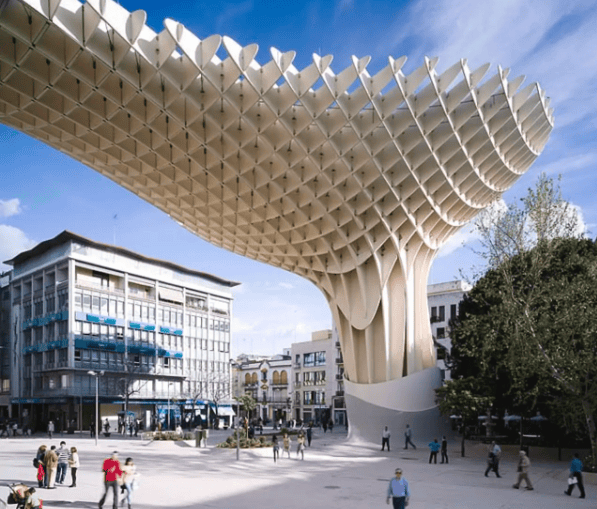
The controversy surrounding the Metropol Parasol primarily revolves around the integration of its contemporary architectural style with the historic environment. Architect Alejandro Cateto stated, "Seville has an almost structural resistance to contemporary architecture, and the 'Mushroom' is no exception." He acknowledged that the project has raised the city's profile in the international architecture scene but also pointed out issues with its urban functionality, such as narrow streets hindering daily use and the elevated plaza design failing to effectively attract the public.
Since its completion in 2011, the Metropol Parasol has provided new viewing platforms and gathering spaces. However, Cateto criticized subsequent management for adding advertisements and themed lighting, which he believes deviated from the original concept of a public space. He emphasized, "The plaza has not been naturally integrated into the daily life of Sevillians. It is visited, photographed, but not inhabited." This has sparked reflection on how contemporary architecture can be integrated into the authentic life of a city.
The Metropol Parasol in Seville serves as a case study, showcasing both the successes and frictions in modernization attempts. Despite ongoing controversy, it has stimulated discussions about architectural renewal in historic centers, becoming an experimental example in urban development.