First Catenary Mast Successfully Erected on Gansu-Qinghai Section of Xi'ning-Chengdu Railway
en.Wedoany.com Reported - On April 3, at the construction site of Hezuo Station in Hezuo City, Gansu Province, China, as the crane slowly hoisted the catenary mast into place, the first catenary mast for the new Xi'ning-Chengdu Railway's Gansu-Qinghai section, constructed by Lanzhou-Xinjiang Railway Gansu-Qinghai Co., Ltd. and undertaken by China Railway Electrification Bureau Group Beijing Electrification Company, was successfully erected. This marks the official entry of the Gansu-Qinghai section of the Xi'ning-Chengdu Railway into a new phase of tackling the strong current system construction.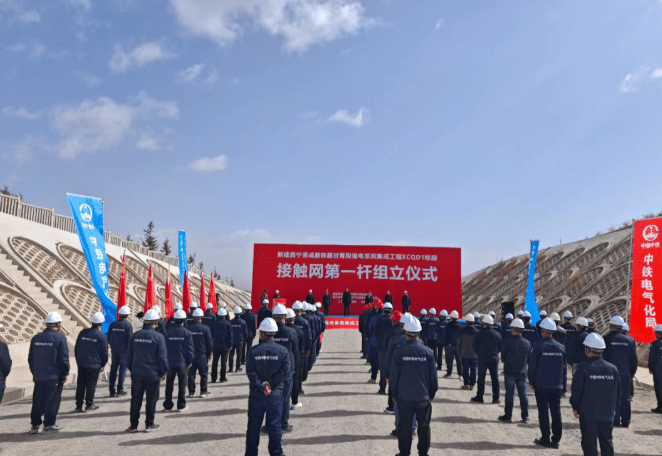
The catenary system is the main framework of the railway electric traction power supply project, known as the "lifeline" of trains. It consists of the catenary suspension, support devices, positioning devices, masts and foundations, among other components.
The catenary mast erected that day weighed 1.6 tons and was approximately 9 meters high. To ensure the successful erection of the first mast, the Xi'ning-Chengdu Railway Project Department of China Railway Electrification Bureau scientifically planned, meticulously organized, and coordinated arrangements. They formulated special construction plans and work instructions, strictly controlled key processes such as mast transportation, positioning, assembly, and erection, and rigorously adhered to work procedures and technical standards, setting a benchmark for the first mast erection construction.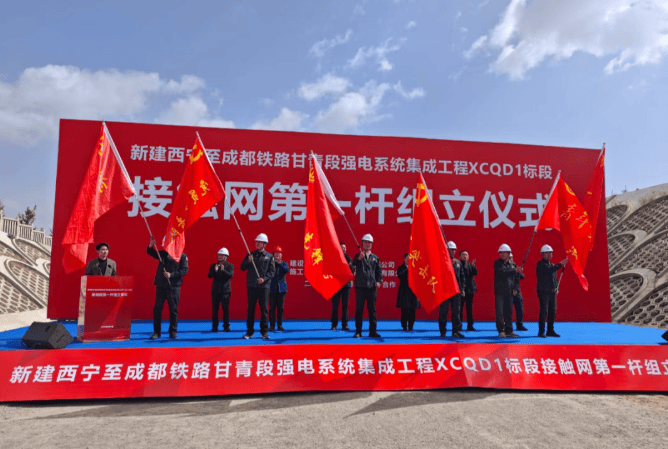
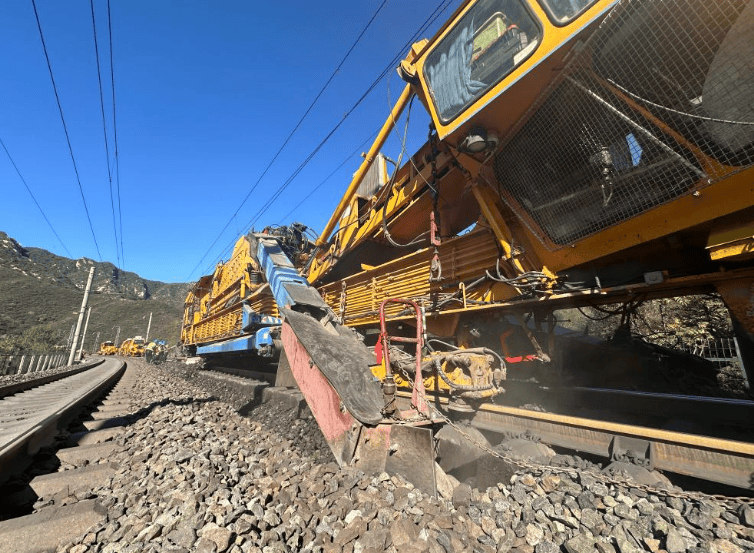
To ensure the safe and stable operation of trains after the line opens, China Railway Electrification Bureau will fully utilize advanced, independently developed equipment in the Xi'ning-Chengdu Railway construction. This includes automated production lines for catenary cantilevers and droppers, as well as professional construction machinery like constant tension stringing vehicles and catenary intelligent diagnostic systems.
Furthermore, by building a BIM+GIS integrated 3D visualization platform, they aim to create a cloud-based collaborative + dual-end visual display platform for the catenary system. They will also establish a tunnel disaster prevention, evacuation, and rescue equipment management platform based on digital twin technology. This will integrate construction data from various stages such as surveying, prefabrication, installation, and inspection, enabling information-based management. This approach strictly controls construction quality, meets technical requirements for stable pantograph-catenary interaction during train operation, and ensures the high-quality and efficient completion of the Xi'ning-Chengdu Railway construction goals.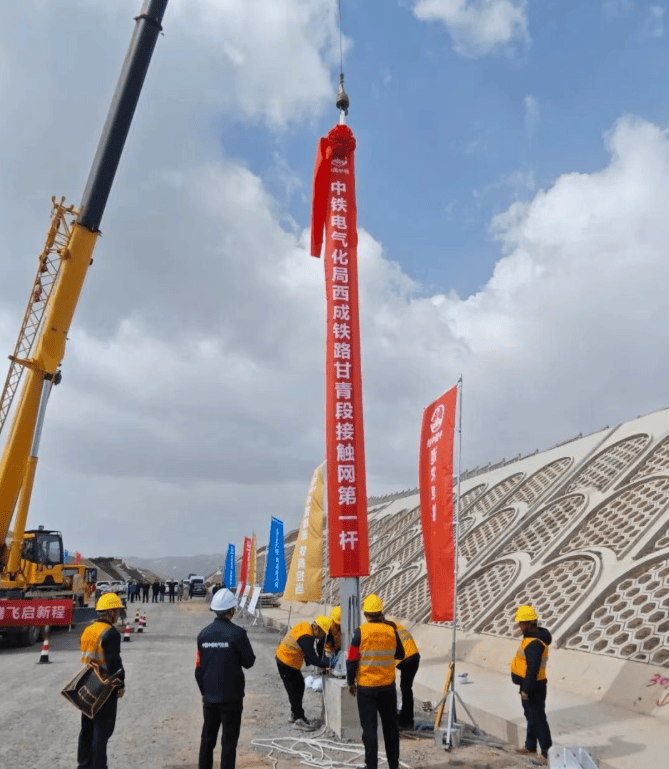
The Xi'ning-Chengdu Railway (also known as the Sichuan-Qinghai Railway or Xi'ning-Chengdu Railway) is a crucial component of the Lanzhou (Xi'ning)-Guangzhou corridor within China's national "Eight Vertical and Eight Horizontal" high-speed railway network. Its construction and opening hold significant multifaceted importance. Upon completion, the project will substantially reduce travel times, end the history of no railway access in many areas, strengthen inter-city cluster connectivity, and enhance the accessibility of the western railway network. It is of great significance for promoting regional economic and social development and serving the travel needs of people along the route.
Representatives from the Gannan Tibetan Autonomous Prefecture, Hezuo City, the Hezuo Command of Gansu-Qinghai Company, design institutes, supervision units, and China Railway Electrification Bureau attended the first mast erection ceremony. They also jointly visited the project's digital intelligence center to gain a detailed understanding of the digital and intelligent construction progress of the strong current system for the Xi'ning-Chengdu Railway.
Separately, according to news from the Aba Prefecture Development and Reform Commission, as of March 2026, the Xi'ning-Chengdu Railway (Aba Prefecture section) has cumulatively completed an investment of 11.4 billion yuan. Specifically, 110 million yuan was completed in March 2026, and 150 million yuan was completed from January to March 2026.
Regarding Project Advancement:
Land acquisition is 96.3% complete, and demolition is 80.5% complete. A total of 161 construction sites are operational along the entire line, including 36 sites across 14 tunnels, 62 bridge sites, and 63 subgrade sites.
Regarding Project Progress:
Cumulatively, 16,280 bridge piles have been completed, representing 100% progress; 2,040 pile caps have been completed, representing 99.41% progress; and 2,040 piers/abutments have been completed, representing 98.82% progress. For tunnels, the main tunnel excavation has cumulatively reached 36,959.63 meters, representing 88.64% progress; auxiliary adit excavation has cumulatively reached 8,094.95 meters, representing 100% progress; and 212 culverts have been cumulatively completed, representing 99.53% progress.
This article is compiled by Wedoany. All AI citations must indicate the source as "Wedoany". If there is any infringement or other issues, please notify us promptly, and we will modify or delete it accordingly. Email: news@wedoany.com
Related Products

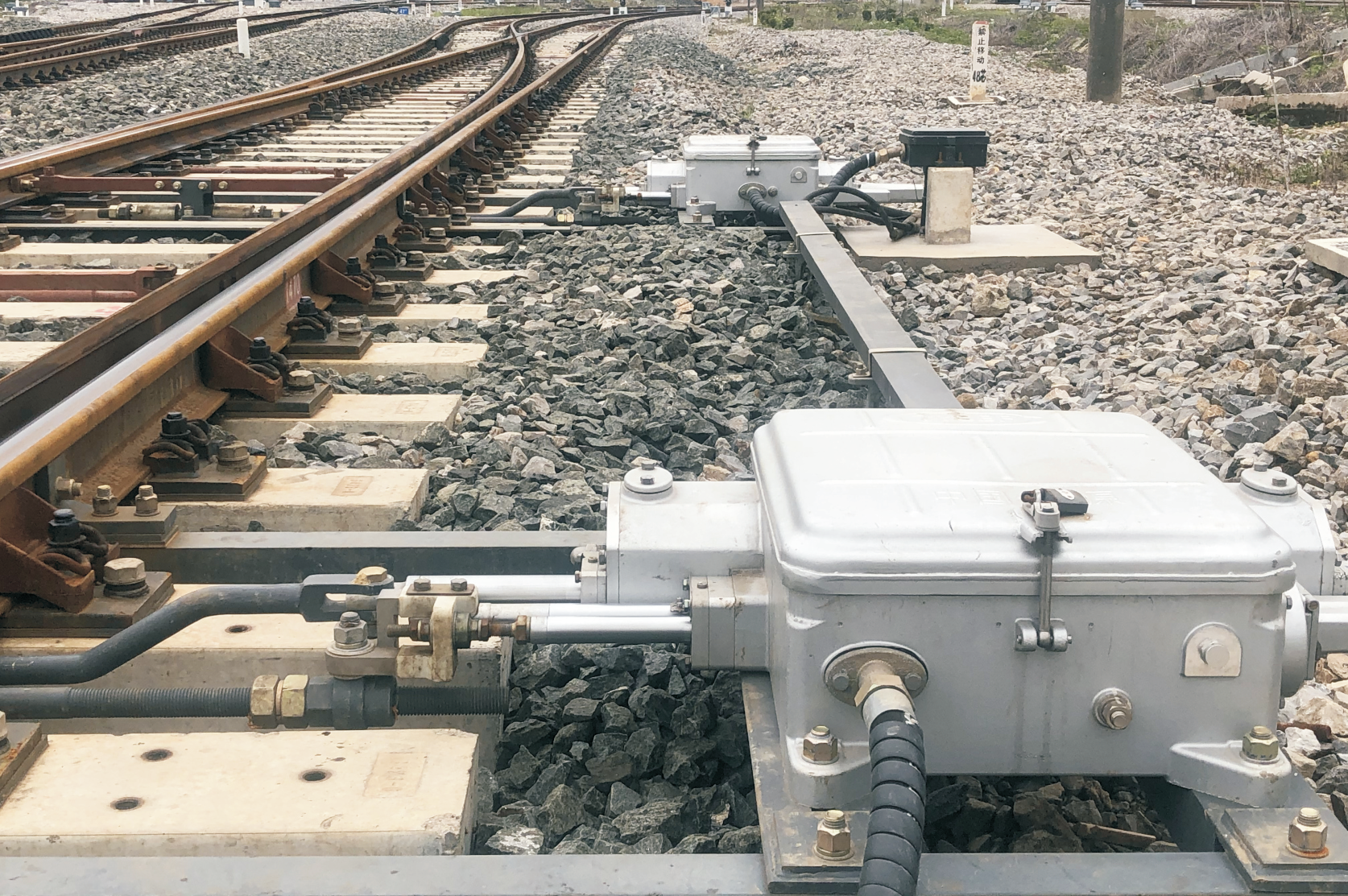
ZY(J)7(M) Sealed Type Electro-Hydraulic Turnout Machine
TAIYUAN CR JINGFENG EQUIPMENT TECHNOLOGY CO., LTD.
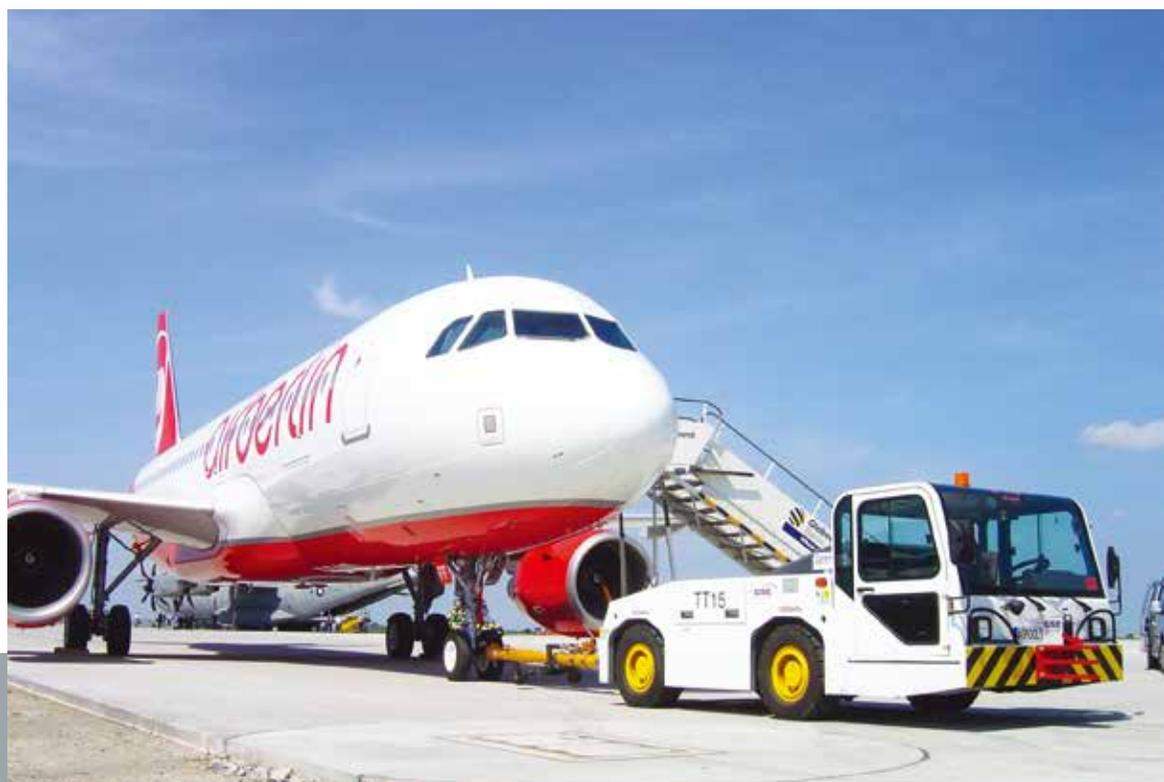
WGQY Series Aircraft Tow Tractor-WGQY15, WGQY27
Weihai Guangtai Airport Equipment Co., Ltd.
![IVECO Cash-in-Transit [DMT5048XYCL3-AM] - Chongqing Dima Industry Co., Ltd](https://img.wedoany.com/2026/0911/20260911030157582.png)
One-Stop Steward Service for the Entire Logistics System Integration Chain
Zhongding Intelligent (Wuxi) Technology Co., Ltd.