Future transformer selection will no longer focus only on capacity and price. It will increasingly emphasize high efficiency, low carbon performance, intelligent monitoring and flexible operation. Power systems are entering a new stage with high renewable penetration, extensive power electronics and more uncertain load patterns. Transformer Selection must therefore evolve from traditional parameter matching to full life-cycle value assessment.
Energy efficiency is the first major trend. Transformers operate for long periods, and even small differences in losses can become significant costs over ten or twenty years. This is especially true for distribution transformers, which exist in very large numbers and whose no-load and load losses affect total system losses. The U.S. Department of Energy’s 2024 final efficiency standards for distribution transformers include a five-year compliance timeline and are expected to save USD 824 million per year in electricity costs. This shows that high-efficiency transformers are becoming both a compliance requirement and an economic necessity.
Intelligence is the second trend. Traditionally, transformer condition was assessed through periodic inspection, dissolved gas analysis, temperature indicators and protection records. In the future, online monitoring will become increasingly important, covering oil temperature, winding temperature, partial discharge, dissolved gases, loading rate, vibration, bushing condition and cooling system status. With these data, operators can shift from scheduled maintenance to condition-based maintenance and identify overheating, insulation aging, partial discharge and cooling failures earlier.
Flexible operation is the third trend. The IEA notes that grid-enhancing technologies such as dynamic line rating, dynamic transformer rating, advanced power flow control and topology optimization can unlock additional hosting capacity in existing grids and help more projects connect. This means transformers will not only be static rated-capacity assets. They can participate in dynamic capacity management through temperature, loading, environmental and operating-state data.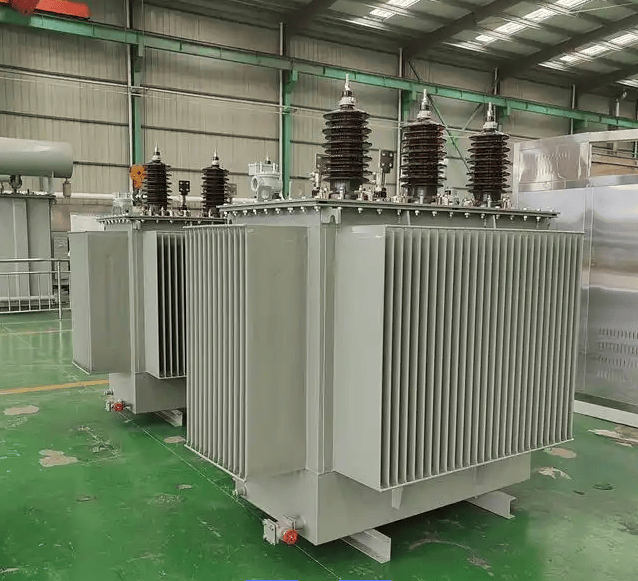 Future Transformer Selection should therefore focus on four questions. First, is the loss level suitable for the project’s real load curve? Second, does the transformer have online monitoring and digital integration capability? Third, can it support future dynamic grid operation and maintenance management? Fourth, can its materials, insulation, cooling and structural design support a longer service life?
For project owners, the cheapest transformer is not always the most economical one. The right product should balance initial investment, operating losses, reliability, maintainability, digital capability and expansion value. In the future, Transformer Selection will essentially mean selecting a long-term power system asset, not simply purchasing a piece of equipment.