OpenAI Co-founder Greg Brockman Formally Takes Over Product Strategy, Merging Three Product Lines to Build a Unified Agent Platform
en.Wedoany.com Reported - OpenAI co-founder and President Greg Brockman has officially assumed the role of Head of Product Strategy, driving the merger of three product lines—ChatGPT, the AI coding assistant Codex, and the developer API—into a single unified product organization. The company confirmed that this adjustment aims to concentrate resources on building a single agent platform covering both consumers and enterprises. In the future, users will experience a unified interactive interface with deep integration between ChatGPT and Codex.
In his first public statement as product lead, Brockman gave a clear direction: the company is consolidating its product forces to focus on an agent-driven future, planning to invest in a unified agent platform and ultimately scale it to the magnitude of ChatGPT, creating greater value for individuals and organizations. He also mentioned that the merger has a necessary foundation, as the capabilities of the company's products are naturally converging. 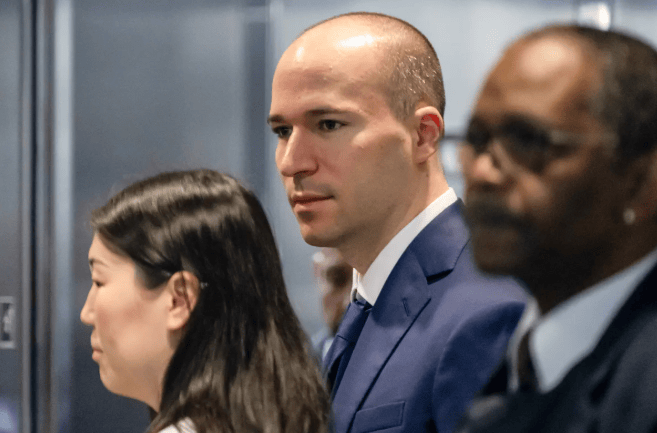
Brockman's transition from interim to permanent role is directly linked to recent personnel changes at OpenAI. In early April, AGI Deployment CEO Fidji Simo went on extended medical leave due to a worsening neuroimmune disease, Chief Operating Officer Brad Lightcap was reassigned from his primary operational role to become head of special projects, and Chief Marketing Officer Kate Rouch departed for cancer treatment. In the following weeks, several other executives also left, including AI Workspace head Kevin Weil, Sora lead Bill Peebles, and Enterprise Applications CTO Srinivas Narayanan. Brockman temporarily took over product operations during Simo's absence and his position was made permanent a month and a half later.
Coinciding with Brockman taking over, OpenAI's product release pace has significantly accelerated. On May 14, the ChatGPT mobile app officially launched a Codex preview, allowing developers to remotely monitor, approve, and dispatch coding tasks on desktop or remote machines via their phones for the first time. Just one day later, ChatGPT introduced a bank account integration feature for Pro subscribers in the U.S., connecting bank accounts, credit cards, and investment accounts through the financial data platform Plaid to enable spending analysis and investment tracking based on real financial data. These two moves indicate that product integration is not just happening at the organizational structure level but is already advancing toward a unified platform at the functional level.
Four core teams have been newly established under Brockman. Core Product and Platform is led by Codex engineering head Thibault Sottiaux, covering consumer, enterprise, and developer ends. The Enterprise Industry division is headed by Nick Turley, the long-time head of ChatGPT, who has transitioned to this role; since taking over in 2022, he pushed ChatGPT's weekly active users to over 900 million and is now moving from the consumer side to focus exclusively on enterprise-grade products. The Consumer pillar is taken over by Ashley Alexander, former Instagram Vice President and former head of OpenAI's healthcare products, covering scenarios like health, commerce, and personal finance. Core Infrastructure, Advertising, and Data Science is led by Application CTO Vijaye Raji. In addition to his full authority over product strategy, Brockman continues to oversee computing power, chips, and the supply chain.
Industry competition and capital pressure jointly form the backdrop for this restructuring. Anthropic just completed a $30 billion funding round, skyrocketing its valuation to $900 billion; Google continues to double down on AI products ahead of its I/O conference. OpenAI itself is facing an IPO window, having previously received massive investments from institutions like Amazon and SoftBank. SoftBank even signed a $40 billion bridge loan in March this year for investing in OpenAI, and the market widely expects the company to go public in the fourth quarter of this year. However, the company projects a full-year loss of $14 billion for 2026, with profitability not expected until 2029. Investors are continuously applying pressure to focus on sustainable revenue streams and cut non-core spending.
Significant uncertainty also exists on the legal front. A lawsuit filed by co-founder Elon Musk is currently under jury deliberation. Musk demands that OpenAI dissolve its for-profit structure, revert to non-profit status, and is seeking $135 billion in damages. If the ruling is unfavorable, the approximately $135 billion stake Microsoft acquired in 2025 could be revoked, and CEO Sam Altman and Brockman himself could be dismissed. At this juncture, Brockman's move from the technical backstage to the product forefront serves both as an emergency measure to address the executive vacuum within the company and as an organizational safeguard to focus product strategy under multiple pressures.
This article is compiled by Wedoany. All AI citations must indicate the source as "Wedoany". If there is any infringement or other issues, please notify us promptly, and we will modify or delete it accordingly. Email: news@wedoany.com
Related Products


Hot Selling 10 Inch Intel N5100 I5 I7 FHD 8 +128GB 16+256GB Win10 Pro Win11 Pro 4G 5G Rugged Tablet PC Pad with NFC Barcode
Highton Electronics Co., Ltd.


20 Inch 1600*900 Full HD 60Hz TFT LED Monitor with VGA and DP Interfaces for Desktop Computers-Business Use
Guangzhou Zanying Optoelectronics Technology Co., Ltd.
Automatic Aiming Laser Remote Obstacle Removal Robot
Pinggao Group Weihai High-Voltage Apparatus Co., Ltd.
Multi-function Marine Monitoring Low-altitude Detection Radar Sea-air Boundary Ocean Dynamic Environment Measurement
Chengdu Dixin Technology Co., Ltd.
Mine Explosion-proof and Intrinsically Safe Industrial Ethernet Ring Network (10 Gigabit/Gigabit)
Chongqing Mas Sci&Tech Co., Ltd.
Conveyor Belt Intelligent Monitoring System
LUO YANG WIRE ROPE INSPECTION TECHNOLOGY CO., LTD.

TWP16 P-Band Tropospheric Wind Profile Radar
China Huayun Meteorological Technology Group Co., Ltd.