en.Wedoany.com Reported - PJM Interconnection, the largest grid operator in the United States, plans to reform its approval process to accelerate the integration of new power generation capacity. The move aims to address an expected 30 GW increase in electricity demand within its service area by 2030, driven by data center needs, and to respond to criticism of its wholesale electricity market management.
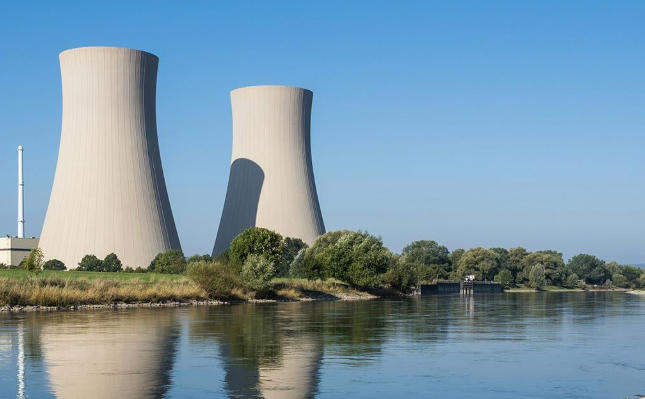
In an announcement on April 29, PJM disclosed that its approved project portfolio includes 349 standalone energy storage projects, 157 natural gas plants, 142 solar projects, 65 wind projects, 45 hybrid solar-storage projects, 27 nuclear units, 15 "other" energy projects, and 11 hydroelectric projects. By capacity, this includes 105.8 GW of natural gas generation, 66.5 GW of energy storage, approximately 150 MW of hydropower, 17.9 GW of nuclear power, and 500 MW of "other" energy—which PJM says encompasses biomass, coal, methane, and, for the first time, nuclear fusion. Massachusetts-based Commonwealth Fusion Systems has applied to connect its planned 400 MW "Fall Line Fusion Substation" in Chesterfield County, Virginia, to the grid.
PJM was founded in 1927, initially forming a power pool from three utilities in Pennsylvania and New Jersey, with two Maryland utilities joining three decades later. In 2002, PJM became a full Regional Transmission Organization, responsible for regional electricity market planning and management. Its grid now covers all or parts of 13 states and the District of Columbia.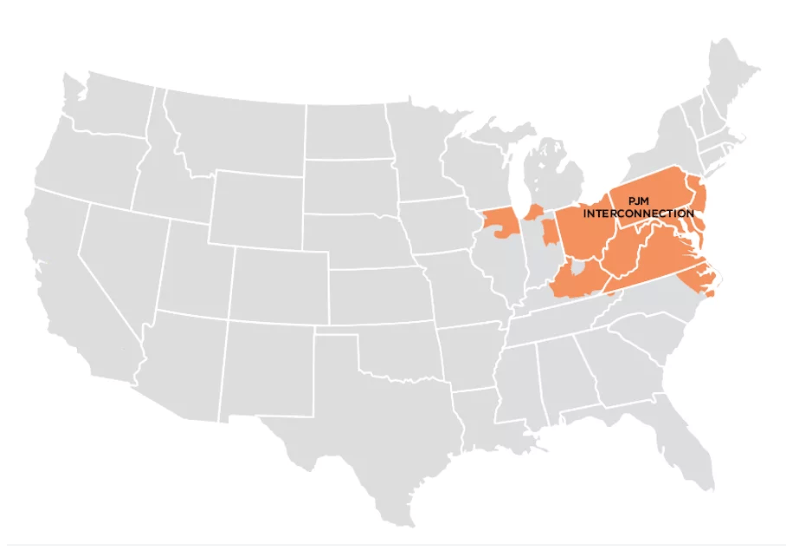
Four years of reform are beginning to show results. PJM previously suspended new interconnection applications for four years to clear a backlog of projects and align with federal regulators' reforms to the time-consuming "first-come, first-served" evaluation process. In the new cycle, PJM will adopt a "first-ready, first-served" approach, prioritizing projects with higher maturity. The company stated that projects must demonstrate viability before entering the queue, including submitting substantial upfront financial commitments and proof of site control, to reduce speculative projects, improve predictability, and speed up grid connection.
PJM expects project evaluation and approval to be completed within two years. Officials say this timeline will be achieved by adopting tools from Google's Artificial Intelligence lab—including automated document review and an interconnection "smart" platform developed by its spin-off software company, Tapestry. Tapestry General Manager Page Crahan stated that the system will eliminate evaluation bottlenecks. The Lawrence Berkeley National Laboratory estimated in 2023 that these bottlenecks caused a backlog of 2,600 GW of potential capacity. Tapestry now utilizes project databases, models, and other tools to facilitate collaboration between grid planners and developers. Crahan said, "By automating and improving data validation for aspects like land rights, equipment, and grid impacts, we aim to reduce the burden on developers and planners." PJM added that AI can enhance the flexibility of the feasibility assessment process, which was originally more suited to traditional large coal and oil-fired plants than variable resources like wind, solar, and storage.
However, the AI technology itself requires more data centers to be located within PJM's service area, disrupting the long-term supply-demand balance in the wholesale electricity market and driving up prices. A report by the Maryland Office of People's Counsel noted that the PJM region-wide capacity price increase would raise annual costs for electricity customers by $14.7 billion, a sevenfold increase from the $2.2 billion in the 2024-2025 delivery year.
At a PJM meeting on May 11, Maryland Governor Wes Moore stated, "Reliability without affordability is not reliability, it's just a transfer payment; affordability without reliability only perpetuates pain for ratepayers and erodes trust in the system." Criticism also includes the slow pace at which PJM is adding low-cost clean energy to the grid. PJM countered that it has processed "gigawatts of renewable energy projects," but uncontrollable factors such as permitting and siting obstacles, financing difficulties, and supply chain backlogs have caused many projects to be delayed or shelved.
Federal Energy Regulatory Commission Chairman Laura Sweet pointed out at the meeting that PJM may be too large to operate effectively to meet data center power demands—it has over 1,000 utility members and an "unacceptable" governance structure. She stated that PJM states and the District of Columbia "have fundamentally different regulatory structures, resource mixes, and political ecologies," and confidence in its decision-making ability has been "completely lost."
In last December's capacity auction, PJM failed to secure enough capacity to meet its reserve margin target, triggering a warning from FERC. According to a staff presentation in January, PJM added 2.8 GW of capacity in 2025 and 4.8 GW in 2024. As of January 8, 2 GW was under construction, and 3.2 GW was in an under-construction and partially operational state.
FERC has scheduled a "fix" meeting for July 23. Sweet said the meeting will identify flaws in PJM's governance process and develop solutions, with participants including PJM board members and executives, investors, state regulators, consumer advocates, and other RTO transmission experts. PJM spokesperson Jeffrey Shields expressed anticipation for participating in the meeting and continuing to strengthen grid reliability and bring new generation projects online as quickly as possible.
Glen Thomas, President of the PJM Power Providers Group, which represents independent power generators, said he does not believe the PJM stakeholder process is "fundamentally broken," but there is room for improvement.
In response to challenges like growing data center demand, PJM is exploring further changes to wholesale electricity market management, releasing three overarching framework proposals. The report notes these pathways involve real trade-offs and affect different stakeholders in varying ways. PJM President and CEO David Mills called the current situation "unsustainable" and said swift yet thoughtful solutions are needed. Shields added, "This is a generational challenge requiring coordination among policymakers, grid operators, utilities, generators, and large energy users to drive grid evolution at the speed and scale currently needed."
But for some large utilities, change may come too slowly. American Electric Power Chairman and CEO Bill Fehrman said during an early May earnings call that if action isn't taken now, the same issues might still be under discussion a decade from now. He said, "The PJM market worked well when there was oversupply, but it's very different now."
This article is compiled by Wedoany. All AI citations must indicate the source as "Wedoany". If there is any infringement or other issues, please notify us promptly, and we will modify or delete it accordingly. Email: news@wedoany.com