en.Wedoany.com Reported - The U.S. Department of Energy's Wind Energy Technologies Office (WETO), through years of collaborative research and development with industry partners, has increased the average capacity factor of U.S. wind turbines from 22% for units installed before 1998 to nearly 35% today (it was 30% in 2000). Meanwhile, the cost of wind energy has dropped from 55 cents per kilowatt-hour in 1980 (in current dollars) to an average of less than 3 cents today. WETO points out that to ensure sustained industry growth, next-generation wind power technologies must continue to improve reliability, increase capacity factors, and further reduce costs, building upon these cutting-edge achievements. The office's research goals for utility-scale wind power technology and its recent key projects are outlined below.
Modern wind turbines are trending towards multi-megawatt rated power, with significantly enhanced economic viability and reliability. Average turbine generation capacity has grown continuously since 1999, with units installed in 2016 averaging 2.15 MW. WETO has facilitated this shift by developing longer and lighter rotor blades, taller towers, more reliable drivetrains, and performance-optimized control systems. Over the past two decades, several prototype technologies developed by WETO in partnership with industry have become commercial products. An example is GE Wind Energy's 1.5 MW wind turbine—a project involving collaboration with GE and its predecessor companies since the early 1990s. Through multiple generations of design testing, this model eventually accounted for about half of the installed commercial wind power capacity in the U.S. and holds a significant competitive position in the global market.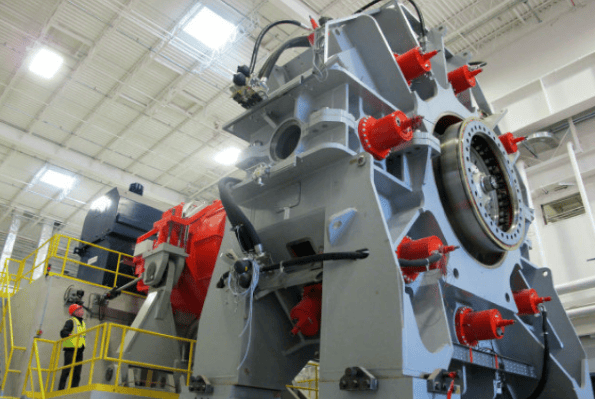
Regarding system component improvements, WETO collaborated with the Wind Blade Division of Knight and Carver in National City, California, and the Department of Energy's Sandia National Laboratories to develop the Sweep-Twist Adaptive Rotor (STAR) blade. The blade features a gently curved tip designed to take full advantage of all wind speed conditions, including low-speed winds, resulting in a 12% increase in energy capture. To support the development of more reliable gearboxes, WETO also partnered with multiple companies to design and test innovative drivetrain concepts. Furthermore, with $47 million in funding from the Department of Energy, one of the largest and globally leading wind energy testing facilities in the U.S. was established at Clemson University to accelerate the deployment of next-generation energy technologies, reduce manufacturer costs, and enhance the global competitiveness of U.S. companies.
Innovation in the design and manufacturing of wind power components remains critical to achieving national renewable energy goals. The Department of Energy's Wind Energy Technologies Office and Advanced Manufacturing Office are collaborating with public and private entities to apply additive manufacturing (3D printing) to the production of wind turbine blade molds. Traditional methods require creating a full-size blade plug before making the mold, a time-consuming and labor-intensive step; 3D printing can significantly save resources in this process.
The National Wind Technology Center (NWTC) at the National Renewable Energy Laboratory is pioneering innovations in wind turbine components, systems, and modeling methods, driving accelerated industry development. The center offers multiple test sites, dynamometers, on-site manufacturing resources, and structural validation capabilities. Its research complements the Department of Energy's Atmosphere to Electrons (A2e) initiative, which aims to significantly reduce wind energy costs through a deeper understanding of the complex physics of wind flow into wind farms. NWTC's innovative research includes: using computational fluid dynamics to develop wind farm simulators and modeling control tools, helping operators analyze plant performance under various atmospheric conditions and coordinate turbine controls to reduce wake effects, thereby increasing overall output by 4%-5%; utilizing a controllable grid interface test system to shorten certification testing time and costs, while helping system engineers understand how wind turbines, photovoltaic inverters, and energy storage systems react to power disturbances; and analyzing the U.S. offshore wind energy potential to reveal the needs, opportunities, and anticipated impacts of this emerging industry.
This article is compiled by Wedoany. All AI citations must indicate the source as "Wedoany". If there is any infringement or other issues, please notify us promptly, and we will modify or delete it accordingly. Email: news@wedoany.com