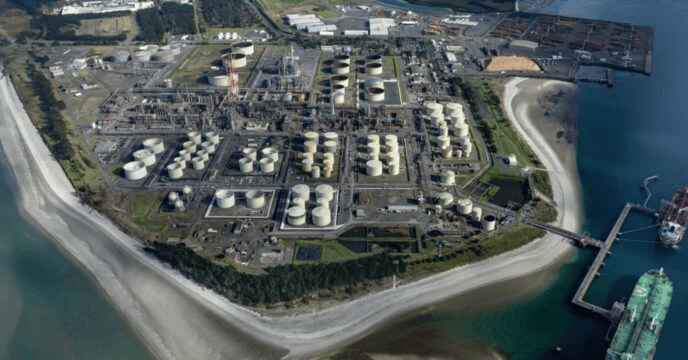
en.Wedoany.com Reported - After crude oil enters a refinery, the first critical engineering step is not distillation, but pretreatment. Water, salts, sand, rust, sulfides, gums and mechanical impurities in crude oil can directly affect atmospheric and vacuum distillation, furnaces, heat exchangers and downstream conversion units. Crude pretreatment is therefore one of the most fundamental applications of Separation and Filtration Equipment in refining.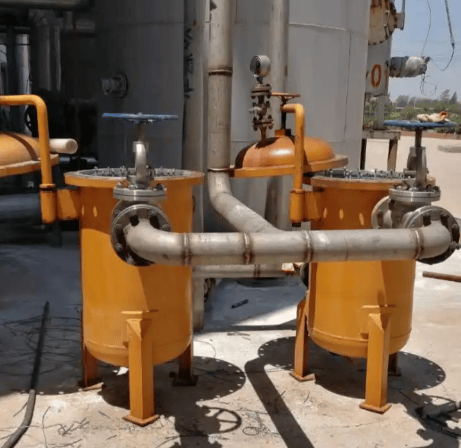
Refining generally includes separation, conversion and treatment. Separation is the foundation for dividing crude oil into fractions. The EIA explains that refineries follow basic steps to separate crude oil into components and process them into products. If feed quality fluctuates strongly before separation, tower and heat-exchanger stability will be affected.
Typical crude pretreatment equipment includes electrostatic desalters, settling tanks, hydrocyclones, coarse filters, basket strainers, automatic backwash filters and coalescers. Electrostatic desalting removes salts, water and some fine solids. Coarse filters capture larger mechanical impurities. Coalescers improve oil-water separation. Automatic backwash filters are suitable for continuous removal of suspended solids.
Crude quality variation is the biggest challenge. Crudes from different sources differ in salt, water, density, viscosity, acid number and solids. Heavy, opportunity and high-acid crudes place higher demands on separation and filtration. If filtration is designed for only one crude slate, feedstock switching may cause lower desalting efficiency, fast pressure-drop rise and exchanger fouling.
Refineries should build crude pretreatment data models tracking water content, salt content, solids, desalter current, interface level, demulsifier dosage, filter pressure drop and exchanger fouling trends. The value of Separation and Filtration Equipment is not only protecting one device, but reducing corrosion, scaling and unplanned shutdown risk. The more stable front-end pretreatment is, the more stable downstream operation becomes.
This article is compiled by Wedoany. All AI citations must indicate the source as "Wedoany". If there is any infringement or other issues, please notify us promptly, and we will modify or delete it accordingly. Email: news@wedoany.com