en.Wedoany.com Reported - The U.S. power grid is facing severe strain, and manufacturers are increasingly awakening to two urgent realities: the grid may not be able to deliver power when they need it, and even if it can, electricity costs are becoming unpredictable and uncontrollable.
These concerns are particularly acute in the 13-state region served by the PJM transmission organization. The organization's last two capacity auctions show a widening supply gap; the shortfall between available capacity and reserve margin targets soared from roughly 210 MW in the 2026/2027 auction to over 6,500 MW in the 2027/2028 auction. Meanwhile, wholesale capacity prices in the region skyrocketed, surging sevenfold in 2024 and climbing a further 22% in 2025.
For manufacturers accustomed to buying power from a single utility, these numbers tell a stark story: what was once a predictable operating expense is now becoming an increasingly unpredictable strategic risk.
"Manufacturers have become very clear that without electricity, nothing else matters," said Dan Degan, Enterprise Sales at Bloom Energy. "You can't open a new factory, and you can't add new jobs."
The harsh reality is that the grid was not built for the digital age. Unprecedented electricity demand from artificial intelligence infrastructure, electric vehicles, and manufacturing reshoring is overwhelming the system, and relief is not coming anytime soon. Grid infrastructure just to meet current demand will take years to build, and by the time it is completed, demand will have grown further.
Manufacturers can no longer wait. They need reliable, efficient, clean, and cost-predictable power they can depend on now and scale with their business in the future. On-site power generation offers a way out.
Utility costs are a significant expense for manufacturers, so even a slight increase in electricity prices can have a major impact on profits. For the 2026-2027 delivery year, electricity prices in the PJM region are projected to rise by 1.5% to 5%, potentially adding millions of dollars in extra costs for industrial operations in the area.
Many manufacturers will be forced to choose between absorbing higher operating expenses, which could stifle innovation or slow expansion, and passing them on to customers. Either way, they risk being left behind by competitors who have locked in stable energy costs.
This uncertainty has elevated energy procurement to the highest levels of corporate management. "It's a top-down push now," Degan explained. "CEOs and CFOs are driving their teams to go find solutions immediately."
To remain competitive, manufacturers must diversify their energy resources. "You wouldn't single-source raw materials or any other critical part of your operations," Degan explained. The same logic must now be applied to electricity procurement. On-site power generation, also known as distributed generation, is the most direct way to diversify energy resources. It refers to generating electricity at or near the point of use. Once viewed merely as backup protection against grid outages, on-site generation is increasingly being deployed as a primary power source because it provides reliable, timely, and economical access to electricity.
The financial benefits are clear. By generating power locally, manufacturers can insulate themselves from grid cost fluctuations driven by market volatility and infrastructure constraints. They can also avoid peak demand charges, which can account for up to 70% of an industrial electricity bill.
Among on-site generation technologies, fuel cells stand out for their predictable energy costs. "We can tell you what the cost per kilowatt-hour will be from a Bloom server six, twelve, and fifteen years from now," Degan said. Combined with high efficiency, low maintenance requirements, and superior uptime, this makes fuel cells highly cost-effective.
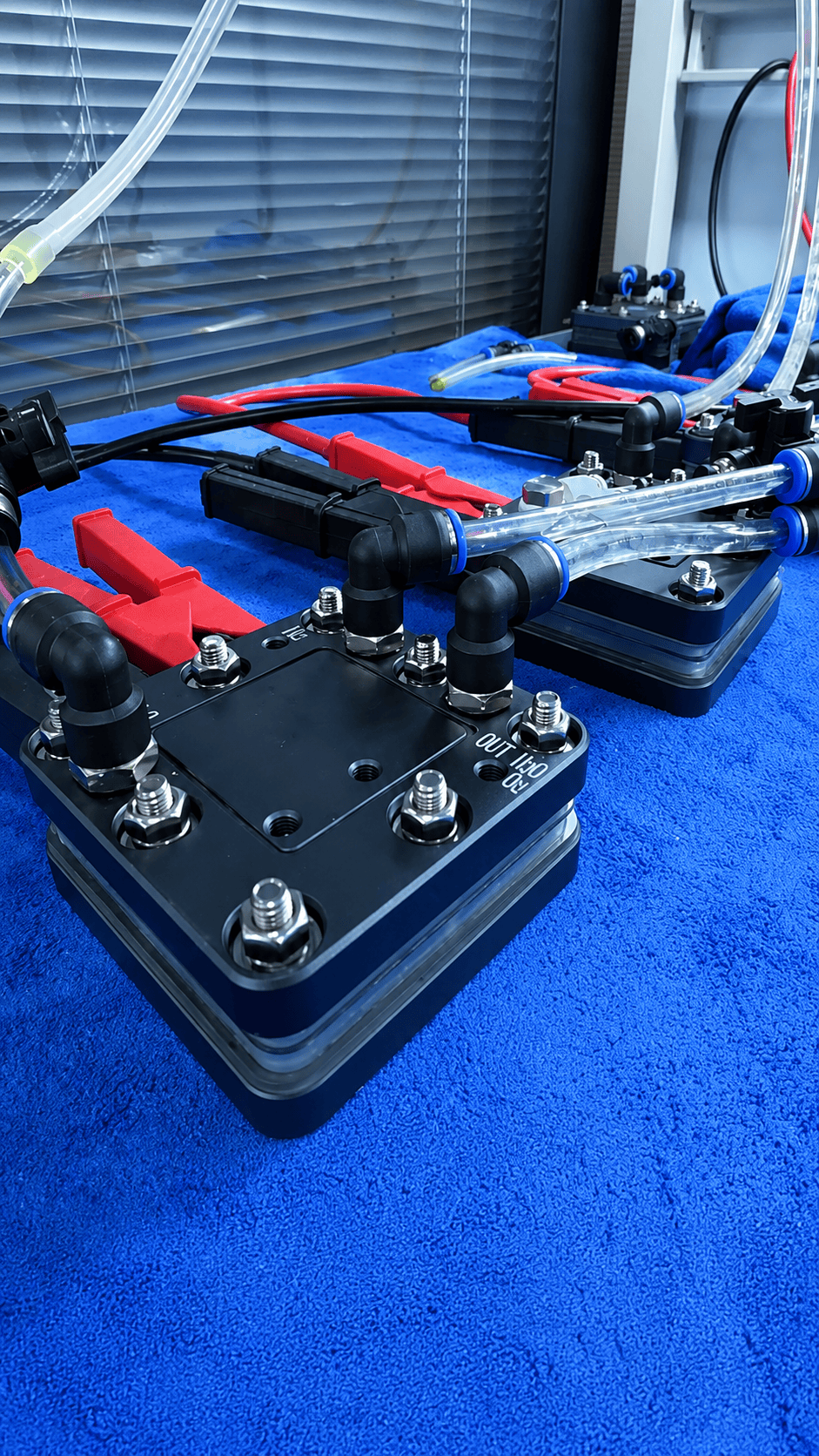
Unlike diesel generators or gas turbines, fuel cells do not burn fuel. Instead, they use fuels like natural gas to generate electricity through an electrochemical process, making them cleaner and significantly more efficient than traditional generation—typically 35% to 45% more efficient. As a result, less fuel is needed per kilowatt-hour generated, improving energy efficiency and reducing exposure to fuel price volatility. This directly lowers a manufacturer's annual operating costs.
This efficiency translates into operational resilience. Clean fuel cells provide reliable, 24/7 on-site baseload power by connecting directly to the underground natural gas network, which has a strong track record of continuous service. This protects operations from grid outages and instability without the need for costly separate backup systems. Furthermore, the technology's inherent redundancy means modules can be hot-swapped without shutting down the system, unlike other technologies, minimizing disruption and protecting sensitive equipment.
PJM's grid crisis is not theoretical—it is happening now, and manufacturers need solutions that can be deployed quickly and scaled with confidence. Bloom Energy's solid oxide fuel cell Energy Server® power systems meet this requirement precisely, typically becoming operational within 90 to 120 days in a fully islanded scenario. With over 1.8 gigawatts deployed, Bloom's modular architecture has a proven track record of rapid, scalable deployment in industrial operations.
Bloom's systems can be deployed behind or in front of the meter in various configurations and contract models, giving manufacturers the flexibility to structure a solution that aligns with their operational and financial goals.
This article is compiled by Wedoany. All AI citations must indicate the source as "Wedoany". If there is any infringement or other issues, please notify us promptly, and we will modify or delete it accordingly. Email: news@wedoany.com