U.S. Energy Fuels Reports First Quarter Uranium Revenue of $35.7 Million, ASM Acquisition to Close
en.Wedoany.com Reported - U.S. uranium and rare earth producer Energy Fuels Inc. reported a net loss of $10.8 million, or $0.04 per share, for the first quarter ended March 31, 2026, narrowing from a net loss of $26.3 million ($0.13 per share) in the same period of 2025. The company sold 510,000 pounds of uranium oxide at a weighted average realized price of $70.04 per pound, generating revenue of $35.7 million and operating cash flow of $8.3 million, compared to $18.8 million used in operating activities in the same period of 2025. Liquidity at quarter-end stood at $956.6 million, including $108.4 million in cash and cash equivalents and $802.2 million in marketable securities.
The uranium business was the primary source of cash flow for the quarter. The Pinyon Plain, La Sal, and Pandora mines produced 425,000 pounds of uranium oxide; the White Mesa Mill in Blanding, Utah, processed 790,000 finished pounds. In April 2026, the company reached a production milestone of 1 million pounds. The weighted average cost of finished uranium inventory decreased approximately 16% from the end of 2025 to about $36.00 per pound, with mining, transportation, and processing costs for Pinyon Plain ore ranging from $23.00 to $30.00 per pound. Full-year 2026 production guidance remains at 1.5 to 2.5 million pounds of processed uranium oxide, with sales targets of 1.5 to 2.0 million pounds. The company holds six long-term contracts with U.S. nuclear power utilities covering deliveries from 2026 to 2032. Ore mined at the Pinyon Plain mine in Arizona during the quarter averaged 1.12% uranium oxide, with grades expected to increase as mining progresses into higher-grade zones.
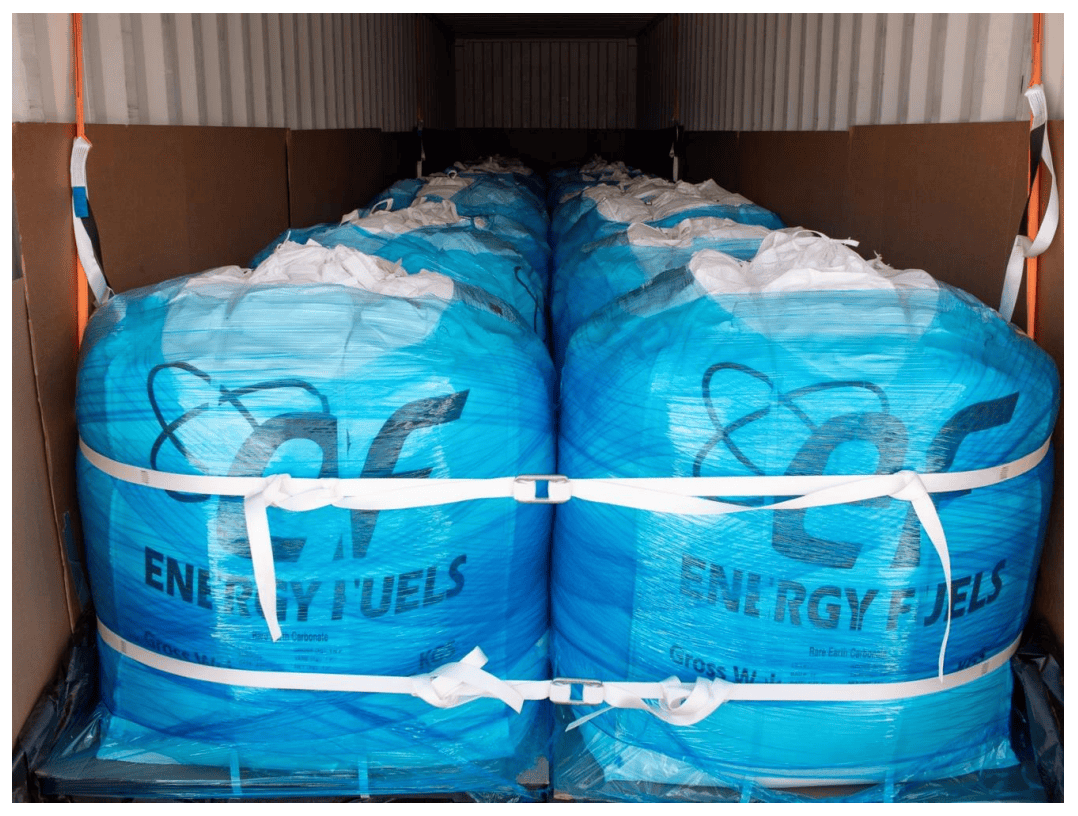
In rare earth operations, the White Mesa Mill is the only facility in the U.S. with commercial capability to process monazite concentrate into separated rare earth oxides and has become the domestic processing node for the company's contracted feedstock pipeline. This pipeline totals approximately 40,900 tons per year across four projects. The existing Phase 1 circuit can process up to 10,000 metric tons of monazite annually and produce up to 1,000 metric tons of neodymium-praseodymium oxide (NdPr). In the first quarter, the company announced trial production of 99.9% pure terbium oxide, meeting permanent magnet manufacturer requirements. A bankable feasibility study for Phase 2 expansion outlined $410 million in capital expenditure, increasing combined NdPr capacity to 6,229 tons per year, with target commissioning in 2028 and 2029. The study showed a net present value of $1.9 billion at an 8% discount rate, an internal rate of return of 33%, and average annual EBITDA of $311 million over the first 15 years of operation.
The proposed acquisition of Australian Strategic Materials Ltd. (ASM), announced in January 2026, will bring an operating metal plant in Ochang, South Korea, currently producing approximately 1,300 tons of neodymium-iron-boron (NdFeB) alloy annually with expansion plans to approximately 3,600 tons per year, as well as a planned U.S. metal plant with initial capacity of approximately 2,000 tons of alloy per year. The transaction also includes the Dubbo Project in New South Wales, a construction-ready rare earth development asset with a modeled mine life of 42 years. The ASM acquisition is subject to court, regulatory, and shareholder approvals, with completion expected as early as July 2026.
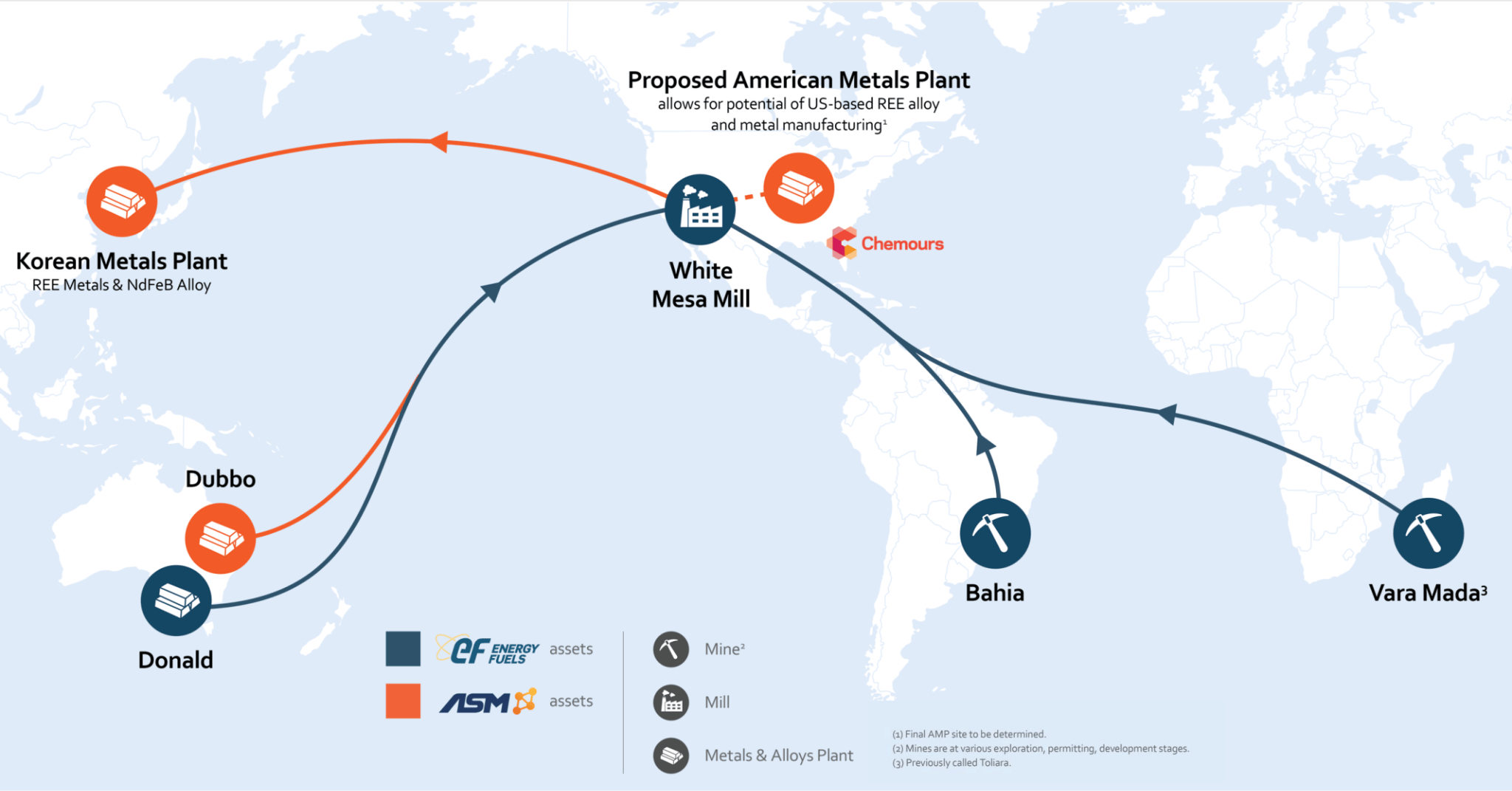
Energy Fuels has contracted approximately 40,900 tons of monazite per year across four projects to supply the rare earth circuit at the White Mesa Mill. The Donald Project in Australia, a joint venture with Astron Corporation, gives Energy Fuels a 49% interest and the right to 100% of produced monazite, targeting first deliveries to the mill by the end of 2027. The Vara Mada Project in Madagascar has a net present value of $1.8 billion at a 10% discount rate over a 38-year mine life, with development subject to a final investment decision and a fiscal agreement with the Madagascar government. The Bahia Project in Brazil is undergoing drilling, with a resource estimate targeted for completion by the end of 2026, and potential monazite supply of 3,000 to 5,000 tons per year. An existing offtake agreement with Chemours contributes an additional 800 tons annually. In total, these four projects contain approximately 5,381 tons of NdPr, 260 tons of dysprosium, and 64 tons of terbium per year. The ASM acquisition will support the company in building an integrated supply chain covering feedstock, processing, and alloy production. Former CEO Mark Chalmers, when discussing competition with Chinese suppliers, noted that to be truly competitive, one must control the entire chain from feedstock to alloy without missing intermediate steps; the company already possesses multiple skills including hydrometallurgy, heavy mineral sands, mining, and metal alloying, capabilities that cannot be quickly obtained through organic growth alone.
In the medical isotope field, the White Mesa Mill aims to achieve commercial-scale production of radium-226 and radium-228 as early as 2028 for targeted alpha therapy cancer treatment, subject to successful production of research-grade quantities and obtaining necessary regulatory approvals. The mill is currently developing pilot-scale separation of these two isotopes.
This article is compiled by Wedoany. All AI citations must indicate the source as "Wedoany". If there is any infringement or other issues, please notify us promptly, and we will modify or delete it accordingly. Email: news@wedoany.com
Related Products

Double-slide Triple-sealed Hot Air Isolation Door
Xi'an Yingchuan Electric Power Equipment Co., Ltd.
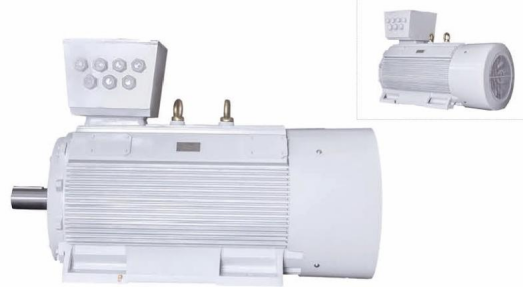
YE3 Series Low Voltage High Power Three-Phase Asynchronous Motor
Shandong Lijiu Electrical Machinery Co., Ltd.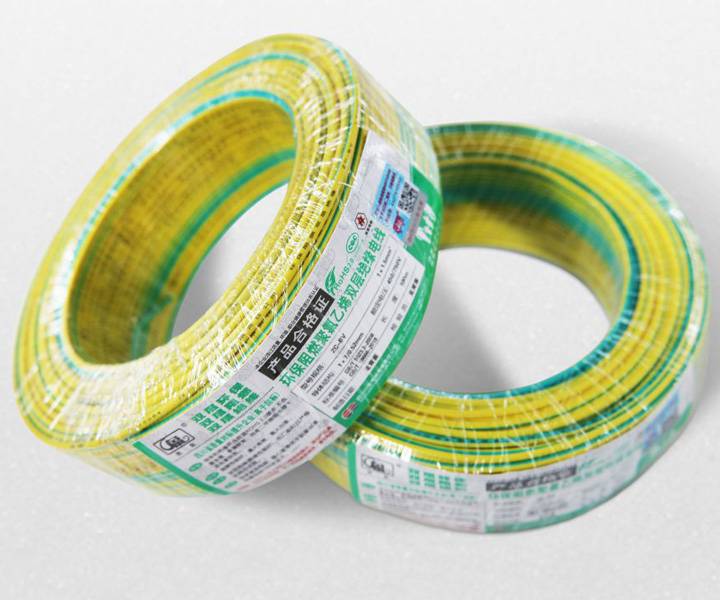
Environmentally Friendly Flame-retardant PVC Double-layer Insulated Wire
Sichuan Chndo Cable Co., Ltd.
Jiujiang Pinggang 125MW Subcritical Gas Power Generation Project
Capital Engineering & Research Incorporation Limited