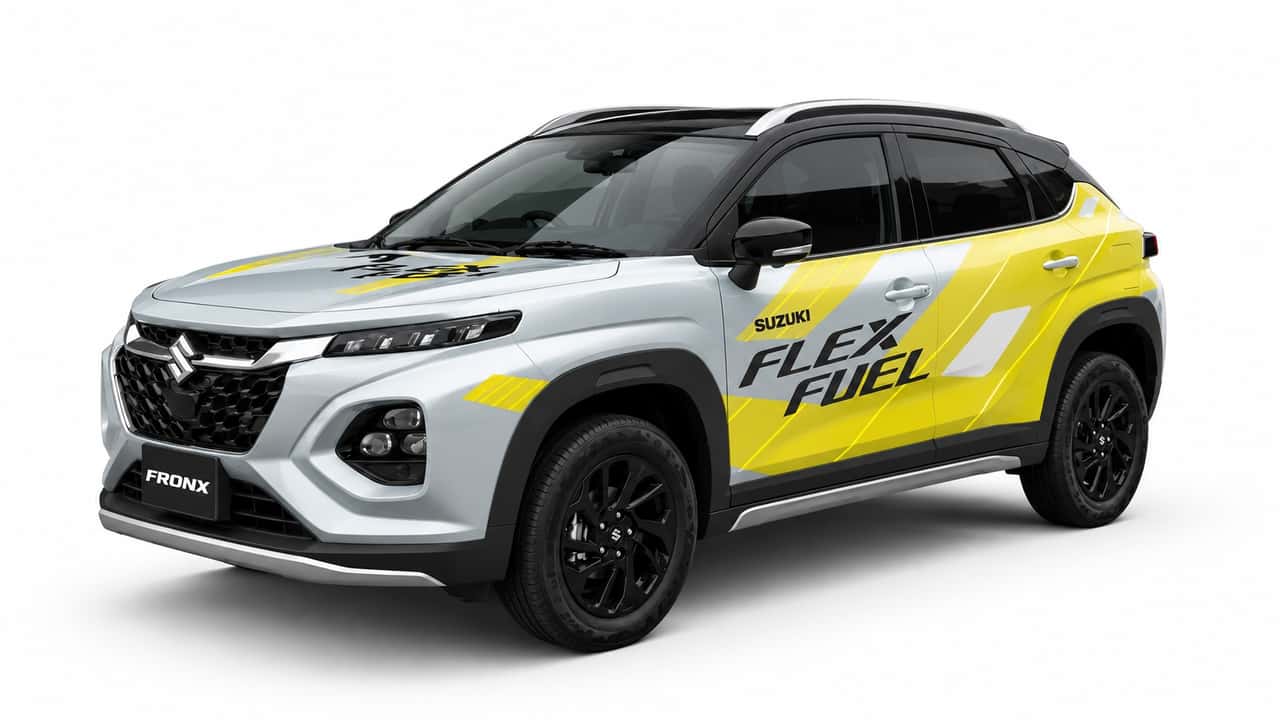
en.Wedoany.com Reported - Maruti Suzuki has launched India's first mass-produced flex-fuel vehicle, with the country's Transport Minister Nitin Gadkari and Petroleum and Natural Gas Minister Hardeep Singh Puri attending the unveiling, highlighting the strategic significance of the project for the local government.
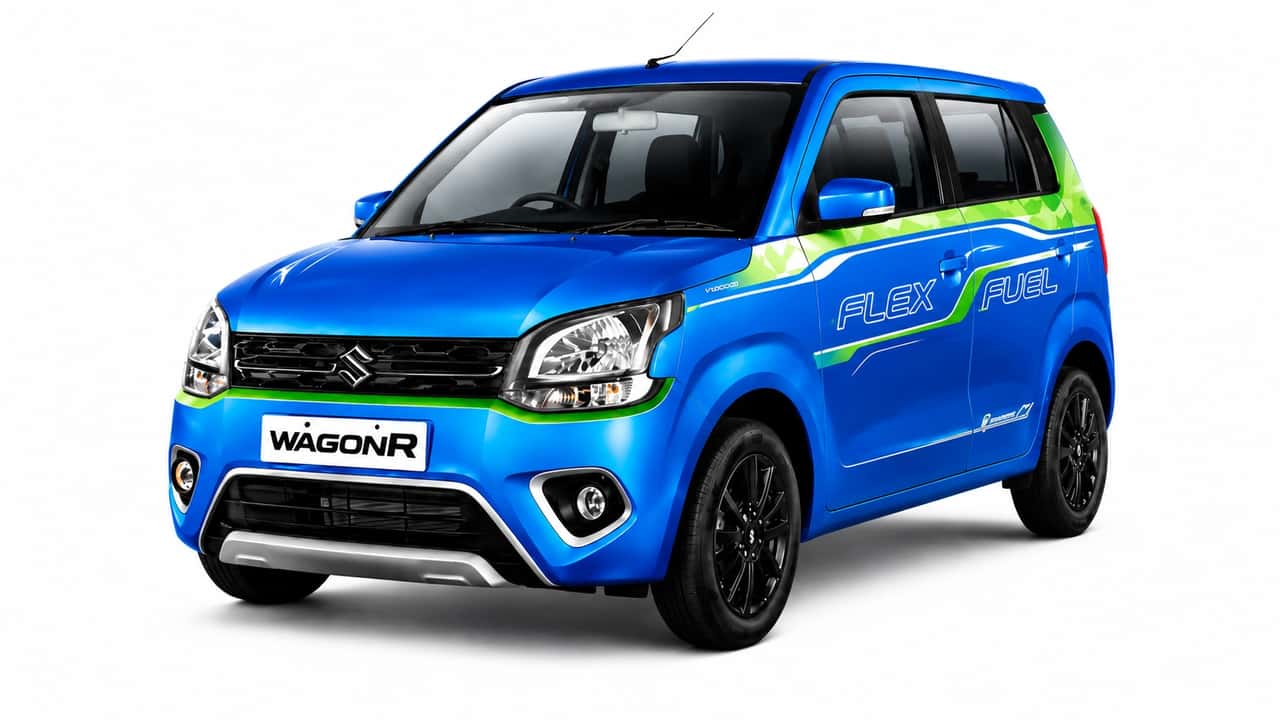
Currently, Maruti Suzuki has not yet announced the specific model, with local media speculating it could be the compact Wagon R or the crossover Fronx. The Wagon R is considered the frontrunner due to its market positioning and sales volume.
The government views the promotion of ethanol as a national policy, aiming to reduce dependence on external energy sources and strengthen the rural economy. Currently, India relies on imports for approximately 87% of its petroleum consumption, making its economy vulnerable to international market fluctuations and geopolitical tensions. By replacing some imported gasoline with locally produced ethanol, India seeks to achieve energy autonomy while creating new revenue streams for the agricultural sector.
The starting point for Brazil's flex-fuel vehicle technology was the 2003 Volkswagen Gol 1.6 Power gasoline version being converted into the Gol Total Flex, after which flex-fuel vehicles accounted for 80% to 85% of passenger car registrations in Brazil. Ethanol production in Brazil is highly concentrated within large-scale agricultural supply chains, dominated by groups such as Raízen, São Martinho, and BP Bioenergy. India's Transport Minister has repeatedly cited Brazil as a global benchmark in this field, advocating for adapting this experience to local realities.
Thanks to the mandatory blending program, the ethanol content in gasoline sold in India has already reached 20% (E20). Maruti Suzuki's flex-fuel vehicle can run on fuels ranging from regular gasoline to pure hydrous ethanol (E100).
India has not fully replicated the Brazilian model. While Brazil's flex-fuel vehicles allow consumers to choose between gasoline and ethanol, India is leveraging the technology to accelerate the government-planned energy transition. Following E20, India plans to gradually expand the supply of fuels with higher ethanol concentrations, such as E85 and E100, with flex-fuel vehicles seen as an intermediate stage towards an increasing share of pure ethanol in the transportation energy mix.
Unlike Brazil, which is dominated by large conglomerates, India plans to produce ethanol from sugarcane, corn, broken rice, and agricultural waste provided by millions of small and medium-sized farmers. The concept is to replace some fossil fuel imports with a domestic supply chain, retaining more resources within the national economy.
The infrastructure for flex-fuel vehicles is still under development. A target has been announced for 5,000 fuel stations to offer E100, but achieving this goal will still take approximately two years.
Other manufacturers are also advancing the development of ethanol/gasoline vehicles. Toyota Kirloskar Motor's Innova HyCross hybrid flex-fuel prototype is ready. A company statement noted that while Brazil introduced similar technology in 2019, its emission standards are more lenient. The prototype based on the Innova HyCross model is designed to meet India's BS 6 (Stage II) standards and is the world's first vehicle to comply with these standards. Since 2022, a Brazilian-made Corolla Hybrid flex-fuel vehicle has been used for demonstrations in India.
Indian consumers' questions about flex-fuel vehicles focus on fuel economy, durability, performance, fuel availability, maintenance, and resale value.
India has not overlooked the development of electrification. Last October, Gadkari launched a plan to encourage the production of simpler and cheaper electric vehicle models. Pure electric vehicles now account for 4.5% of the country's passenger car sales.
This article is compiled by Wedoany. All AI citations must indicate the source as "Wedoany". If there is any infringement or other issues, please notify us promptly, and we will modify or delete it accordingly. Email: news@wedoany.com