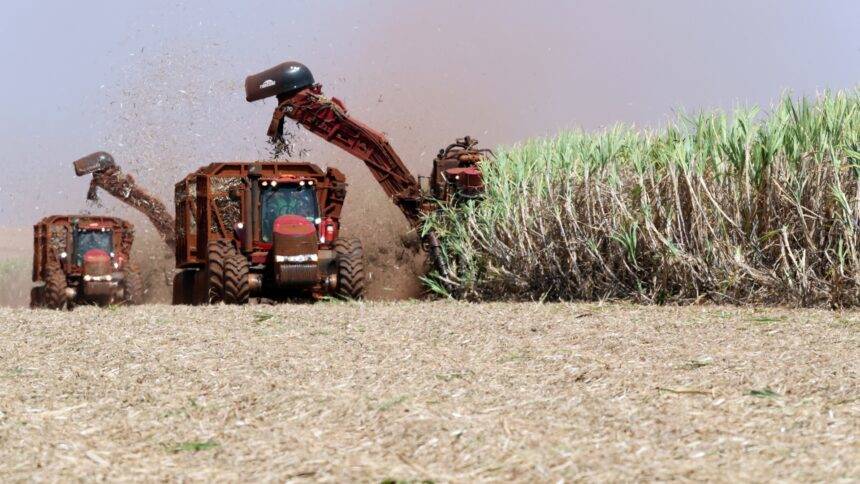
en.Wedoany.com Reported - Brazil's ethanol industry is undergoing a new wave of feedstock diversification. Beyond the dominant sugarcane and corn, numerous new raw materials such as wheat, agave, sweet potatoes, soybean processing by-products, and food residues are being developed for biofuel production, a trend regarded by the industry as the "third wave" of innovation.
Alexandre Breda, Low Carbon Technology Manager at Shell Brazil, stated that the future of the energy transition is not a choice of a single feedstock but a comprehensive solution requiring the joint participation of sugarcane, corn, agave, wheat, and all biomass. The company is investing 100 million reais to study the feasibility of agave as a biofuel feedstock.
Brazil's ethanol industry is valued at approximately $20 billion, and its "flex-fuel" passenger car fleet can run on gasoline blended with up to 30% anhydrous ethanol or use hydrous ethanol alone. According to Brazilian national data, thanks to the widespread use of biofuels, the country's gasoline price rose from 6.32 reais per liter in January to 6.62 reais per liter at the end of May, an increase of only 5%, far lower than the over 40% rise in U.S. gasoline prices during the same period.
According to data from the Energy Research Company (Empresa de Pesquisa Energética), in 2026, approximately 28.5 billion liters (71%) of Brazil's ethanol will come from sugarcane, and 11.2 billion liters will come from other agricultural products such as corn, soybeans, and wheat. The country's largest biodiesel producer, Be8, is investing 1.7 billion reais to build a wheat-based biorefinery in Rio Grande do Sul state, expected to start production in March 2027, with a target of producing 220 million liters of ethanol annually, along with 155,000 tons of dried distillers grains with solubles (DDG) and 27,000 tons of wheat gluten as by-products. Erasmo Carlos Battistella, founder and CEO of Be8, noted that the state had previously missed the waves of ethanol production based on sugarcane and corn, but this time, mature technology will leverage locally abundant raw materials.
In northern and northeastern Brazil, corn ethanol is developing rapidly. Renato Cunha, president of NovaBio, an association of regional sugarcane ethanol producers, expressed concerns about overcapacity, arguing that it cannot be assumed that producing ethanol will sell everything. Meanwhile, the government will raise the mandatory blending ratio of ethanol in gasoline to 32% in June, a move expected to increase annual ethanol demand by about 1 billion liters. Mario Ferreira Campos Filho, president of the Brazilian Bioenergy Association (Bioenergia Brasil), predicts that within five to six years, 40% to 45% of Brazil's ethanol production may come from grains.
Agropecuária Vista Alegre, a producer in São Paulo state, is converting surplus sweet potatoes into ethanol and animal feed. David de Carlo Fernando Junior, the plant's industrial manager, stated that this move ensures the crop is harvested and utilized, preventing it from rotting in the fields due to lack of economic viability. Large soybean processors such as Caramuru and CJ Selecta produce ethanol from molasses generated during soybean processing. Environmental services company Ambipar uses food waste (such as syrup and discarded items) to produce approximately 2.4 million liters of ethanol annually.
This article is compiled by Wedoany. All AI citations must indicate the source as "Wedoany". If there is any infringement or other issues, please notify us promptly, and we will modify or delete it accordingly. Email: news@wedoany.com