en.Wedoany.com Reported - With the accelerated deployment of large-scale AI models, the demand for computing power across society has experienced explosive growth. However, many are unaware that behind this computing power lies enormous electricity consumption and complex power supply systems. Recently, a Chinese company achieved a major breakthrough in the field of "computing-power-electricity synergy," officially launching the world's first high-voltage AC/DC prefabricated substation for data centers—the "Computing-Power-Electricity Island." This innovation not only restructures the underlying power architecture of intelligent computing centers but also promises to significantly reduce the cost of AI services for ordinary people in the future.
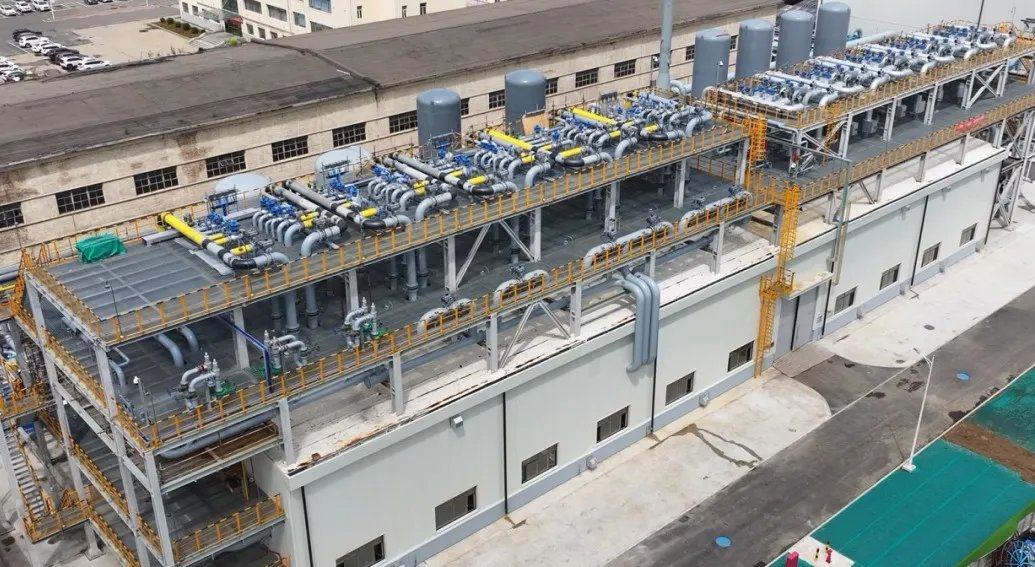
At a data center energy hub construction site in Qingdao, Shandong Province, a substation built as quickly as "stacking building blocks" is changing people's perception of traditional substations. This is the "Computing-Power-Electricity Island," independently developed by Chinese company TGOOD—a prefabricated substation that can directly access 220 kV high-voltage power from the grid and output the 800 V DC power required by data center architectures in a single step.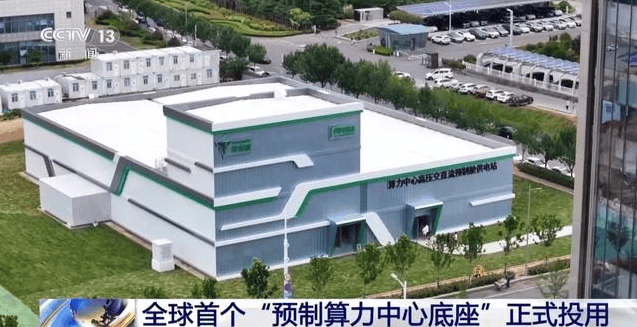
For a long time, the power supply system of traditional data centers has suffered from issues such as multiple voltage levels, slow construction, and high energy consumption. The construction period for a conventional high-voltage substation often takes 16 to 20 months, while an AI computing center typically requires only 6 to 8 months from launch to operation. This temporal mismatch has become a prominent bottleneck constraining the rapid expansion of China's computing power.
"The breakthrough of the 'Computing-Power-Electricity Island' lies in the fact that over 160 core functional modules, including high-voltage switches, transformers, and protection controls, are all prefabricated and pre-commissioned in the factory. On-site, they only need to be assembled like building blocks. This reduces on-site civil engineering by 70% and installation work by 80%. From factory prefabrication to power delivery and operation, it takes as little as 5 months, providing key support for the rapid implementation of China's 'East Data West Computing' project," said Yu Dexiang, Chairman of Qingdao TGOOD Electric Co., Ltd., in an interview with a reporter from China Energy Media.
More notably, this innovation will directly benefit ordinary consumers. Traditional power supply solutions involve complex equipment and high losses, leading to persistently high operational costs for data centers. The "Computing-Power-Electricity Island" adopts a technical path of direct high-voltage input and direct DC supply, eliminating energy losses from multi-stage voltage conversion and reducing the construction cost of the entire power supply system by 20%. At the same time, through direct green electricity connection, energy storage peak shaving, and AI-driven intelligent scheduling, the overall operational efficiency of data centers is significantly improved, ultimately reducing the Token cost behind computing power services by 20%. This means that whether using AI for learning assistance, medical consultation, or daily office work, every interaction for ordinary people could become cheaper and smoother.
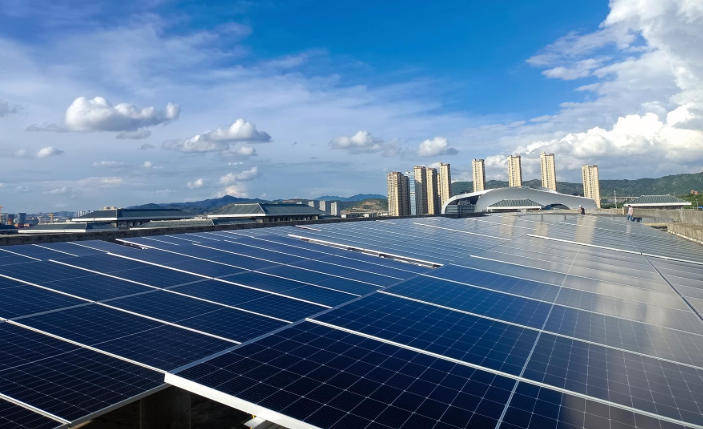
In terms of green energy and energy efficiency, the "Computing-Power-Electricity Island" also excels. It can directly connect green electricity from wind and solar power to the 800 V DC bus, eliminating the losses from repeated AC/DC conversion in traditional solutions and achieving 100% local consumption of green electricity. Coupled with a millisecond-response energy storage system, the green electricity usage rate of intelligent computing parks can reach up to 90%, and the power usage effectiveness (PUE) can be reduced to below 1.15—simply put, using less electricity to run more computing power and utilizing more clean energy.
Additionally, the system incorporates an AI scheduling platform that can intelligently arrange computing tasks based on weather changes, grid load, and energy storage status. When wind and solar resources are abundant, it prioritizes non-urgent tasks like data cleaning and model training; when the grid is under strain, it automatically ensures core computations are not interrupted. This collaborative model of "computing power following green electricity" not only reduces energy costs but also improves the utilization efficiency of new energy sources.
It is worth noting that this technology was not developed from scratch. The R&D company leveraged its deep experience in China's new energy vehicle charging sector—operational data from over 1.9 million charging piles and 55 GW of silicon carbide modules nationwide provided a mature industrialization foundation for the core power electronics technology of the "Computing-Power-Electricity Island." By 2026, more advanced solid-state transformer technology is expected to be grid-connected, preparing for future higher-density computing power demands.
Currently, China's eight national computing power hubs have entered a concentrated construction phase. At the launch event on June 6, the first implementation project for the "Computing-Power-Electricity Island" was officially signed. Meanwhile, relevant companies have established deep cooperation with telecom operators, leading internet companies, computing power service providers, as well as State Grid Corporation of China and power generation groups. A domestic closed-loop ecosystem, spanning core components to power supply equipment and from green electricity consumption to computing power scheduling, is rapidly taking shape.
Experts point out that computing power has become a key productive force in the digital economy era, with electricity serving as its foundational bedrock. The emergence of the "Computing-Power-Electricity Island" marks China's leading position globally in the field of "computing-power-electricity synergy." In a way that is visible and tangible to ordinary people—faster construction, lower electricity costs, greener energy, and cheaper computing power—it has built a solid power foundation for Digital China construction. It is foreseeable that with the large-scale adoption of this technology, every smooth AI conversation we have in the future will be powered by an efficient, green "computing-power-electricity heart" beating steadily.
This article is compiled by Wedoany. All AI citations must indicate the source as "Wedoany". If there is any infringement or other issues, please notify us promptly, and we will modify or delete it accordingly. Email: news@wedoany.com