en.Wedoany.com Reported - A team of German scientists has developed a catalyst production method that triples ammonia yield from electrochemical nitrate conversion through magnetic field-assisted synthesis, offering a new technical pathway for decarbonizing fertilizer production.
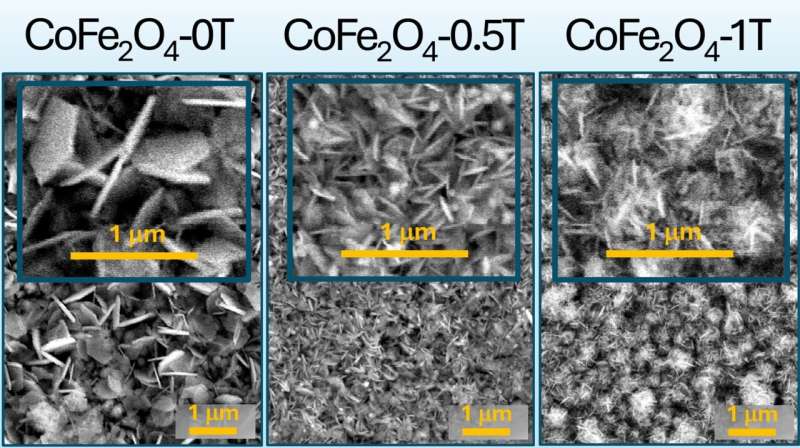
Researchers from the Helmholtz-Zentrum Berlin and the University of Cologne applied a 1-tesla magnetic field during the synthesis of cobalt ferrite (CoFe₂O₄) electrocatalysts, significantly improving the material's performance in converting nitrate to ammonia. The findings have been published in the journal Advanced Functional Materials.
This study focuses on an alternative to the traditional Haber-Bosch process, a century-old industrial method for ammonia production that currently accounts for 1% to 2% of global energy consumption and generates nearly 1% of annual greenhouse gas emissions. Electrochemical nitrate reduction, with its relatively lower energy demands and ability to treat excess nitrate pollution from intensive agriculture, has emerged as a new avenue for scientists.
The results show that catalysts synthesized under a magnetic field produced three times more ammonia than the same material made without the field. Researchers attribute this to the magnetic field altering the catalyst's surface structure and stabilizing catalytically active cobalt ions, thereby enhancing nitrate reduction efficiency while suppressing competing hydrogen evolution side reactions.
The best-performing catalyst, CoFe₂O₄ synthesized under a 1-tesla magnetic field, achieved an ammonia yield 22 times higher than iron oxide catalysts prepared using similar methods, highlighting the critical role of cobalt in the reaction. Computational modeling confirmed that experimental observations align with the proposed mechanism: cobalt lowers the kinetic barrier for nitrate reduction and reduces unwanted side reactions.
The researchers note that this method offers a scalable approach for designing more efficient electrocatalysts. Unlike processes requiring continuous magnetic field application, this technique uses the field only during catalyst manufacturing, with no need for ongoing magnetic fields during ammonia production.
The study suggests that magnetic fields could serve as an additional tool, alongside temperature and pressure, for tuning catalyst properties at the atomic level, potentially accelerating the development of next-generation technologies for sustainable chemicals and fertilizer production.
This article is compiled by Wedoany. All AI citations must indicate the source as "Wedoany". If there is any infringement or other issues, please notify us promptly, and we will modify or delete it accordingly. Email: news@wedoany.com