Phillips 66 Breaks Ground on 300 MMcfd Permian Gas Plant
en.Wedoany.com Reported - Phillips 66 is constructing a new cryogenic natural gas processing plant adjacent to its existing 160 million cubic feet per day (MMcfd) gas processing facility in Goldsmith, Ector County, Texas, to expand its Permian midstream platform. The project is part of the company's $1.1 billion midstream capital budget for 2026, with $700 million allocated to growth projects and $400 million to sustaining projects, aiming to organically advance its integrated NGL (natural gas liquids) wellhead-to-market strategy by increasing gas processing, pipeline, and fractionation capacity in a key basin.
Combined with the recent acquisition and integration of Coastal Bend NGL assets with long-haul pipeline and fractionation networks, this gas processing plant is part of the operator's overall goal to enhance NGL recovery from rich Permian gas, provide producers with multiple transportation routes, and connect wellhead production to fractionation, petrochemical demand, and export channels on the U.S. Gulf Coast.
The new plant, named Iron Mesa, was approved via a final investment decision (FID) in 2025 and is designed with a nameplate cryogenic gas processing capacity of 300 MMcfd. It is located approximately 15 miles northwest of Odessa. Operationally, Iron Mesa is designed to process rich Permian gas containing ethane and heavier NGL components, enabling Phillips 66 to improve capture rates. Products will be transported through its existing pipeline and fractionation platform. The plant's proximity to the existing Goldsmith complex and its connection to Phillips 66's gathering network in the region will also support feedstock aggregation from the Midland and Delaware Basins and enhance flow assurance by providing multiple delivery options for processed gas and NGLs. As of early April 2026, steel structure and foundation work at the new plant had accelerated, with the project recording over 77,000 safe work hours. The team is preparing for major equipment lifts involving the installation of processing towers for component separation. The company confirmed in April 2026 that the project is on schedule and within budget, with startup planned for the first quarter of 2027.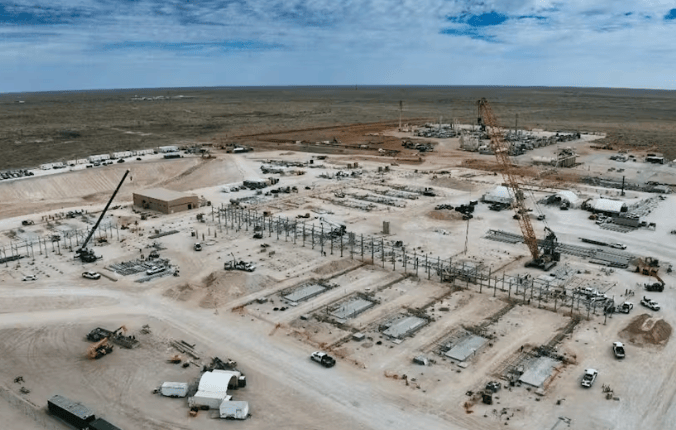
Phillips 66 stated that its Permian plan is a combination of acquired assets, new capacity additions, and existing downstream links, supporting the company's broader vision of building a wellhead-to-market NGL value chain. In addition to the Iron Mesa plant, key components related to the operator's Permian expansion include: the Dos Picos complex (Midland County, Texas), comprising two 220 MMcfd gas processing plants with a combined capacity of 440 MMcfd, which added advanced ethane extraction capabilities to the site following the startup of Dos Picos II in 2025; the Goldsmith complex (Ector County), with an existing 160 MMcfd plant and planned upgrades associated with the Iron Mesa construction, where portions of the older plant will be retired as the new Iron Mesa plant and upgrades optimize performance; and Coastal Bend (formerly EPIC NGL), an integrated pipeline and fractionation asset including approximately 885 miles of NGL pipeline with an initial capacity of about 175,000 barrels per day, integration involving two fractionation towers near Corpus Christi, Texas, totaling 170,000 barrels per day, and approximately 350 miles of pure product distribution pipelines, previously expanded to increase the distribution network's throughput to 225,000 barrels per day, with a second approved expansion to 350,000 barrels per day targeted for completion in the fourth quarter of 2026. Additionally, an extra 100,000 barrels per day fractionation tower in Corpus Christi is under consideration for FID, with startup expected sometime in 2028 if approved in 2026.
Phillips 66 indicated that its Permian investment plan is designed to provide operators with a method to capture richer molecules at the source for flexible access to downstream markets, where NGLs and separated pure products can achieve differentiated pricing. According to the operator, the value proposition is based on three interrelated mechanisms: enhanced NGL recovery, where additional cryogenic capacity increases the capture rate of total ethane and heavier NGLs, particularly important when ethane prices and petrochemical demand offer favorable spreads relative to NGLs left in residue gas; molecular selectivity, where long-haul pipeline and fractionation scale enable the company to transport Y-grade and separated pure products (ethane, propane, butane) to U.S. Gulf Coast fractionators, the Sweeny hub, domestic petrochemical plants, or export channels, with multiple transportation routes reducing the risk of local bottlenecks; and full-chain profit capture, where owning processing, long-haul transportation, and fractionation capacity increases the potential to capture value at the wellhead (processing fees, retained NGL volumes) and downstream (fractionation margins, market positioning), with the integrated model converting commodity flows into optimizable decision points to maximize netbacks.
At the core of Phillips 66's strategy is increasing cryogenic processing capacity, expanding long-haul pipeline throughput, and scaling fractionation to build a wellhead-to-NGL value chain, complementing the operator's ongoing investments in the Permian as the region remains the largest growth engine for U.S. oil and associated gas. As regional oil-directed drilling continues, sustained production of large volumes of Permian associated gas puts pressure on regional infrastructure, maintaining demand for additional processing and midstream capacity. Several market realities underpinning Phillips 66's investment case include: Permian crude oil production growth increasing associated gas supply, with cryogenic plants extracting ethane at the wellhead improving recovery rates, thereby creating product flows for coastal fractionators and export markets; U.S. Gulf Coast fractionation capacity and pipeline throughput remaining critical for price realization, where ethane production may be reduced when downstream capacity is constrained, and conversely, expanding fractionation and export options increasing the marginal value of captured ethane and propane; and returns on midstream growth capital depending on project execution, long-term contract coverage (take-or-pay or fee structures), and the spread between NGL pure product prices and residue gas, where owning processing and fractionation can mitigate basis risk and improve margin realization if markets align.
As a key part of the operator's broader Permian plan, Phillips 66 emphasized the integration of the former EPIC NGL business (renamed Coastal Bend). In early February, the company stated that its strategy enabled early completion of the integration of personnel, systems, assets, and digital systems, achieving measurable efficiency improvements in processes and field-to-office workflows. According to the company, cross-functional integration of human resources, information technology, operations, and field services was also critical for maintaining business continuity during the transition. The Coastal Bend integration also highlights a common midstream execution challenge: transforming acquired physical infrastructure into a cohesive operating platform. The company stated that coordinating supervisory control and data acquisition (SCADA) systems, scheduling and commercial nomination systems, and maintenance and operational practices can reduce friction and lower operating costs and outage risks. In a series of regulatory filings and public disclosures, Phillips 66 identified digital alignment and operational discipline as core to post-acquisition value drivers.
This article is compiled by Wedoany. All AI citations must indicate the source as "Wedoany". If there is any infringement or other issues, please notify us promptly, and we will modify or delete it accordingly. Email: news@wedoany.com
Related Products

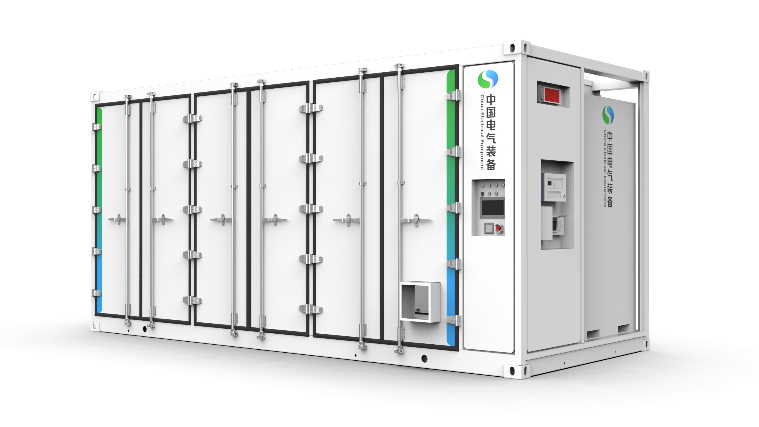
MESS8201-2507/5015-BN Prefabricated Liquid-cooled Energy Storage Battery Container
Xuchang Xuji Electric Science Energy Storage Technology Co., Ltd.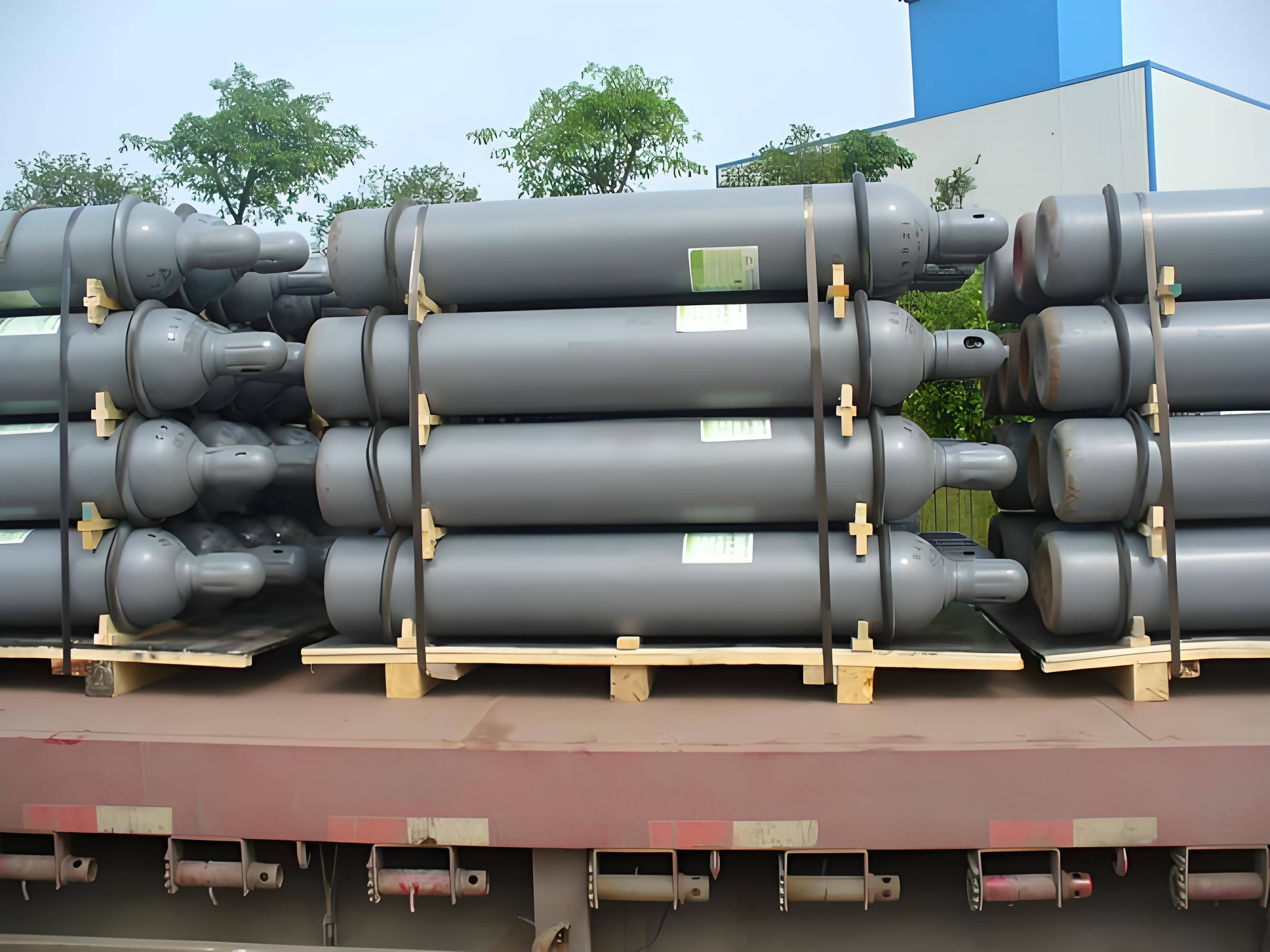
Global Sulfur Hexafluoride Gas Supply and Cylinder Export
Foshan Yuexin Industrial Gas Co., Ltd.

Prefabricated Houses and Electrical Energy Boxes
Chengdu Ruilong Machinery Manufacturing Co., Ltd.
220kV Composite Outdoor Cable Terminal
Shenyang Guolian Cable Accessories Manufacture Co., Ltd.