China Achieves Kilogram-Level Uranium Extraction from Seawater in 2025
en.Wedoany.com Reported - The "2025 National Seawater Utilization Report" shows that China's seawater resource utilization is expanding from a single freshwater supply to a dual-drive model of "freshwater + strategic resources," with breakthroughs in key technologies such as seawater uranium extraction. Key technologies have achieved significant progress.
On June 8, World Oceans Day, the report released by the Ministry of Natural Resources indicated that as a strategic emerging industry, China's seawater desalination and comprehensive utilization industry has achieved new results in large-scale engineering utilization, core technology breakthroughs, industrial chain construction, and policy and standard system development. Relevant research institutes, universities, and enterprises are actively studying the extraction of trace elements such as lithium, uranium, and deuterium from seawater, and have made breakthroughs in basic theories and key technologies. In 2025, China achieved the extraction of kilogram-level uranium products in a real marine environment.
According to industry estimates, the total uranium reserves in seawater are approximately 4.5 billion tons, more than a thousand times the reserves of terrestrial uranium mines, earning it the nickname "blue uranium repository." In the long term, the economically efficient development of seawater uranium resources holds strategic value.
Xiang Wenxi, Director of the Tianjin Institute of Seawater Desalination and Comprehensive Utilization under the Ministry of Natural Resources, introduced that China currently has 167 seawater desalination projects with a total capacity of 3.077 million tons per day, and an annual seawater cooling water usage of 193.36 billion tons, an increase of 86.4% compared to 2020. These "blue springs" effectively ensure the water supply for major coastal industries such as thermal power, nuclear power, and steel, as well as for water-scarce islands. Xiang Wenxi stated that seawater desalination is an important way to address the global water crisis and serves as a "liquid mine" for strategic resources. Regions such as Tianjin, Hebei, and Shandong, relying on large-scale desalination projects, are vigorously promoting the comprehensive utilization of concentrated brine. Large-scale seawater potassium and bromine extraction projects are steadily advancing, while technologies for seawater lithium and deuterium extraction are being continuously developed. Tianjin has launched an international cooperation project on "Key Technologies for Magnesium Extraction from Seawater/Concentrated Brine between China and Saudi Arabia," and an industrial pattern for efficient multi-dimensional resource development is taking shape.
Xiang Wenxi said that during the "15th Five-Year Plan" period, efforts will continue to strengthen technological innovation, promote the iterative upgrading of domestic technical equipment, and enhance the technical reserves for extracting strategic elements from seawater.
This article is compiled by Wedoany. All AI citations must indicate the source as "Wedoany". If there is any infringement or other issues, please notify us promptly, and we will modify or delete it accordingly. Email: news@wedoany.com
Related Products


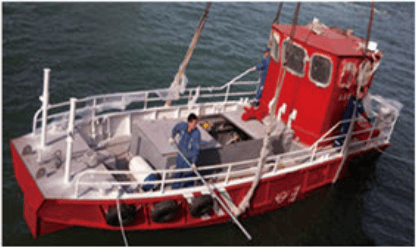
Electromagnetic Fluid Seawater Floating Oil Separation and Recover Equipment
Huate Magnet Group Co., Ltd.
HI-Pro Green Hydrogen High-efficiency Production System-HI-PRO-AEM
Hydrizon Technology (Beijing) Co., Ltd.
Off-Grid Fuel Cell Supercharging Station (180kW Configuration)
Shanghai REFIRE Group Limited

Prefabricated Houses and Electrical Energy Boxes
Chengdu Ruilong Machinery Manufacturing Co., Ltd.