en.Wedoany.com Reported - Brazil's Ministry of Mines and Energy announced on June 8 that the ±800 kV Graça Aranha–Silvânia ultra-high voltage direct current (UHVDC) transmission line has been approved for construction. The project will connect the Graça Aranha substation in Maranhão State with the Silvânia substation in Goiás State, passing through Maranhão, Tocantins, and Goiás. It is primarily designed to enhance the transmission capacity of renewable energy from northern and northeastern Brazil, while strengthening the security and reliability of the national interconnected system.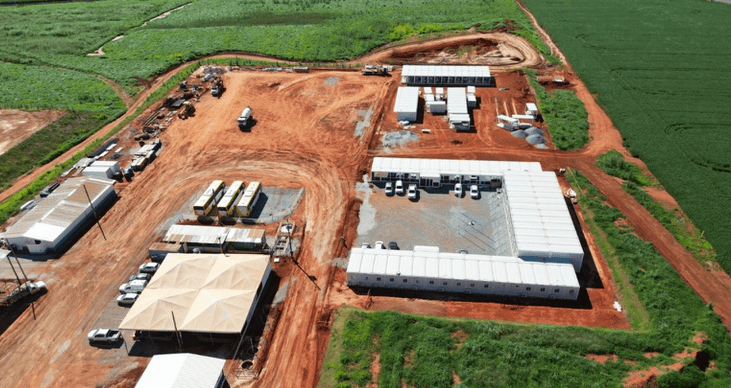
This transmission line is a major backbone project in Brazil's cross-regional power transmission system, spanning approximately 1,500 kilometers and utilizing ±800 kV UHVDC technology. The project investment is estimated at around 18 billion Brazilian reais, covering the main line, associated substations, and supporting facilities such as synchronous condensers. In recent years, northern and northeastern Brazil have continued to unlock the growth potential of clean electricity from wind and solar sources. However, the stable grid integration and delivery of new generation projects to major load centers largely depend on cross-regional transmission corridors, substation capacity, and system regulation capabilities. Once completed, the Graça Aranha–Silvânia line will further connect resource-rich regions with consumption areas in the central and southeastern parts of the country, helping to reduce power transmission constraints, improve system operational efficiency, and free up channel capacity for more renewable energy projects to access Brazil's power matrix.
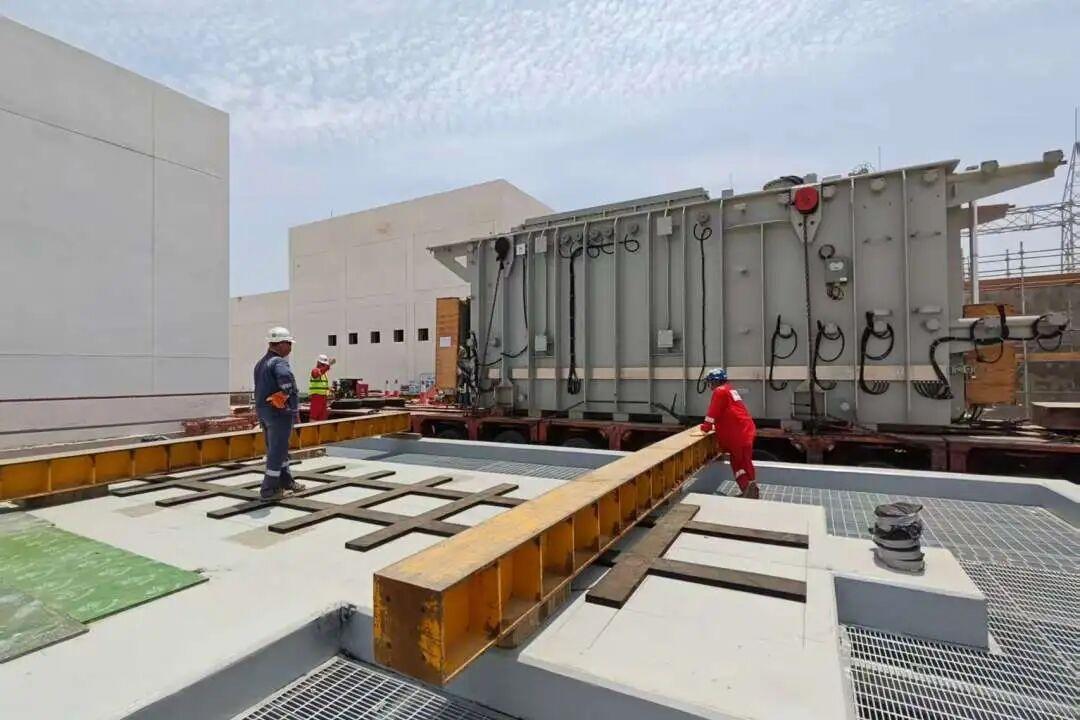
With the construction permit secured, the project focus will shift from preliminary permitting, route planning, and equipment preparation to large-scale construction organization. UHVDC lines typically involve multiple components, including converter stations, transformers, DC field equipment, control and protection systems, line towers, conductors, insulators, grounding systems, communication systems, and synchronous condenser equipment, imposing high requirements on engineering design, equipment manufacturing, transportation, installation, and cross-state coordination. The line traverses several states, and subsequent construction will need to address issues such as land access, environmental compliance, construction window scheduling, substation expansion, and system dispatch integration. Brazil regards this project as a critical infrastructure for serving the energy transition and power supply security, as a higher share of renewable energy requires stronger long-distance transmission capacity and stable support capabilities—simply adding new generation capacity cannot replace backbone grid construction.
Engineering work on the substations at both ends is already underway. After the project is commissioned, power connectivity between northern, northeastern, and central-western Brazil will be further strengthened, providing new infrastructure support for clean energy transmission, regional load assurance, and stable operation of the national interconnected system. Subsequent milestones will focus on main line construction, substation expansion, synchronous condenser installation, system commissioning, and commercial operation permits.
This article is compiled by Wedoany. All AI citations must indicate the source as "Wedoany". If there is any infringement or other issues, please notify us promptly, and we will modify or delete it accordingly. Email: news@wedoany.com