en.Wedoany.com Reported - The Mexican architect duo Alessandro Arienzo and Isabel Abascal of Lanza Atelier have designed a gravity-assembled brick structure without mortar for the 2026 Serpentine Pavilion. This marks the first time in 25 years that bricks have been used as the primary building material for the project, achieving full disassembly through a purely gravity-based assembly method.
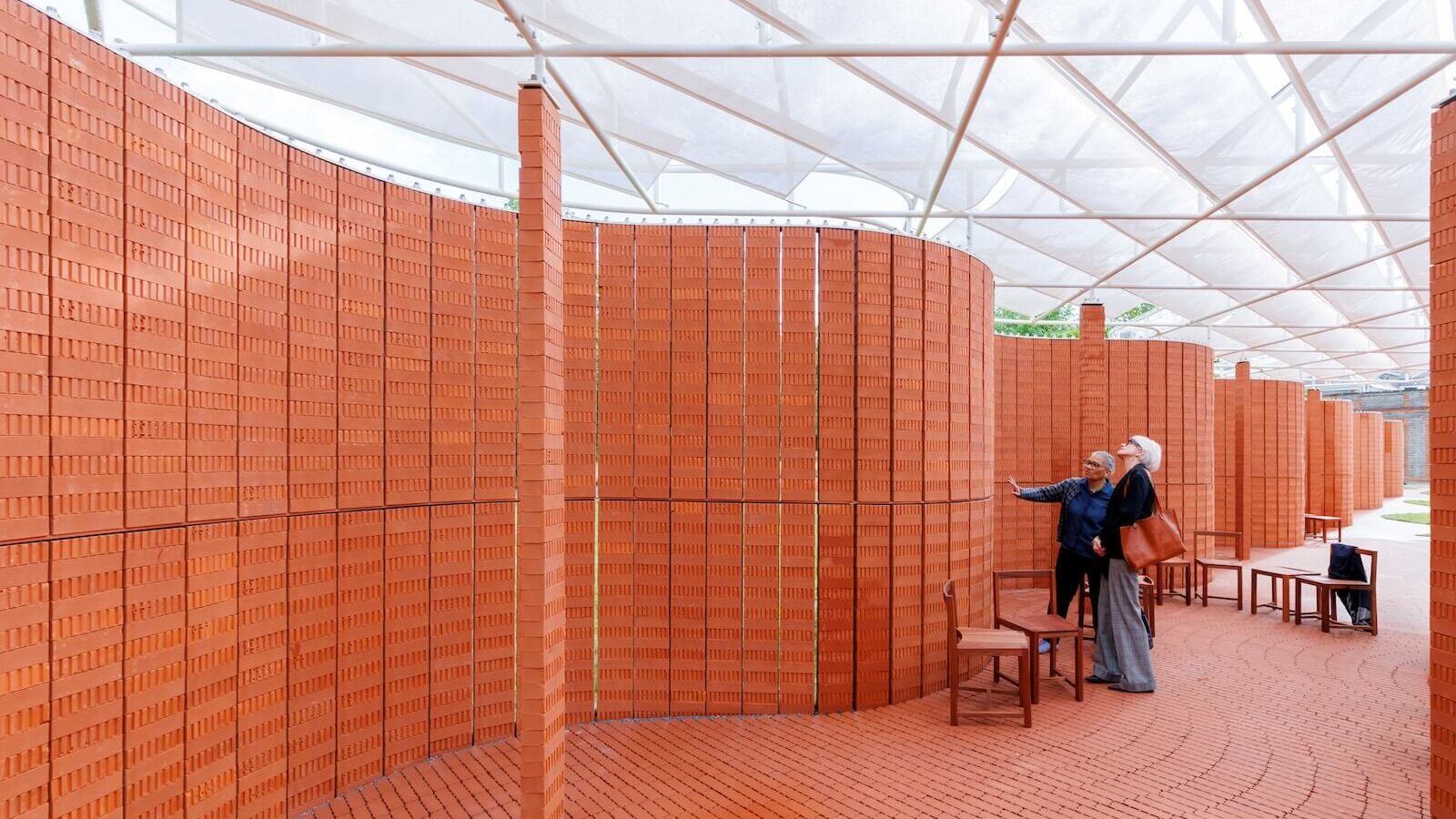
Arienzo stated that the pavilion's structure is offset to create an open green space beside it, with a brick bench winding through, and the pavilion is named "a serpentine." The bricks were specially manufactured for the project at Wienerberger's factory in Surrey, Australia. The winding walls draw inspiration from the "crinkle-crankle wall" brick typology found in the Suffolk countryside of England, a wave-shaped garden wall dating back to the mid-18th century that protects crops from strong winds and provides shade, allowing it to stand with fewer bricks and without buttresses.
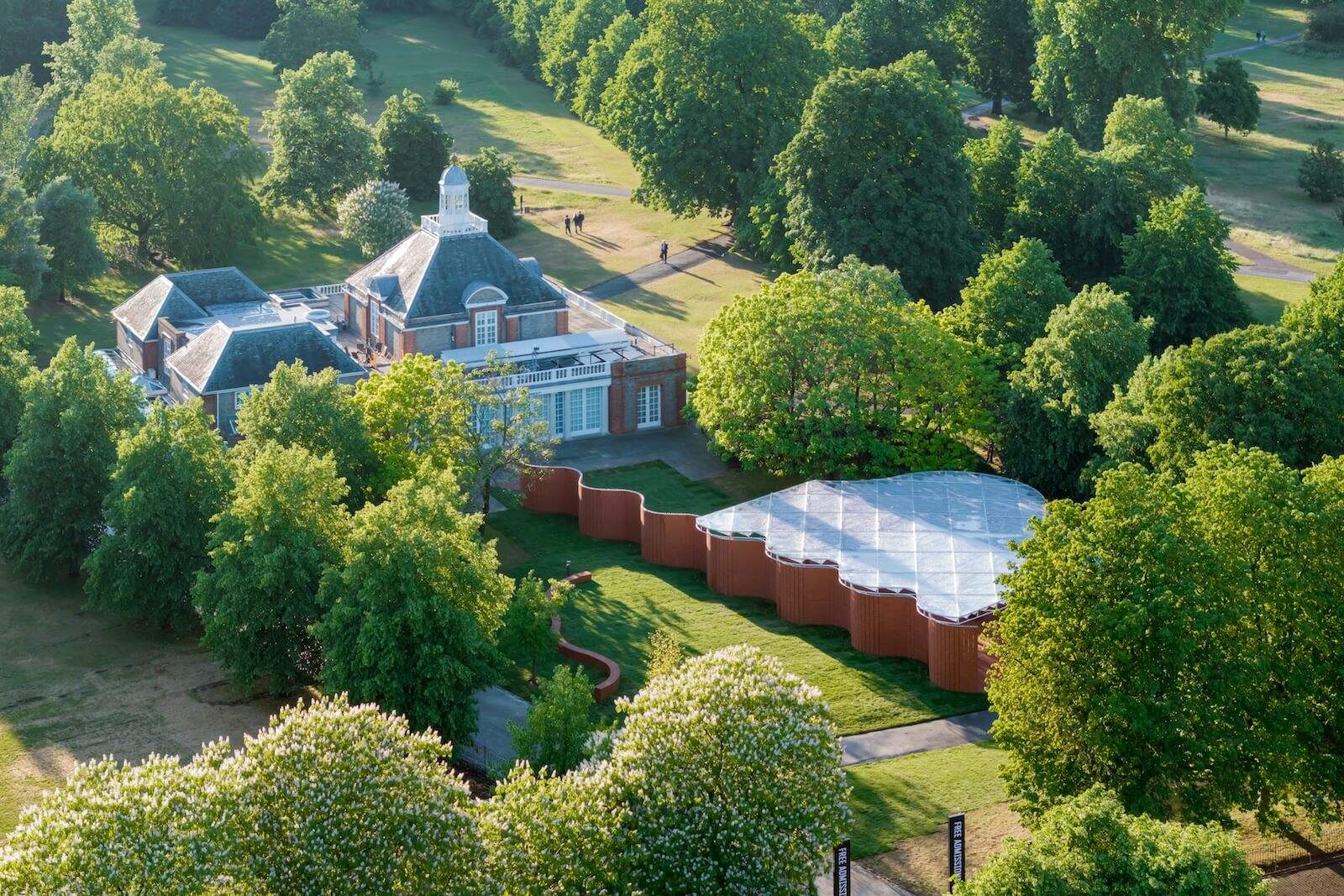
Jo Leach, an engineer from AECOM, which has been responsible for realizing the architectural vision of the Serpentine Pavilion since 2013, explained that the bricks are bolted together from the top and compressed, with thin horizontal metal plates featuring soft joints inserted into the 3.5-meter-high walls to ensure alignment and prevent cracking. The steel plates match the width of standard UK bricks (10 cm) and precisely follow the wall curves, painted the same color as the red brick wall to make the engineering nearly invisible. Steel rods are anchored in concrete blocks recycled from previous versions.
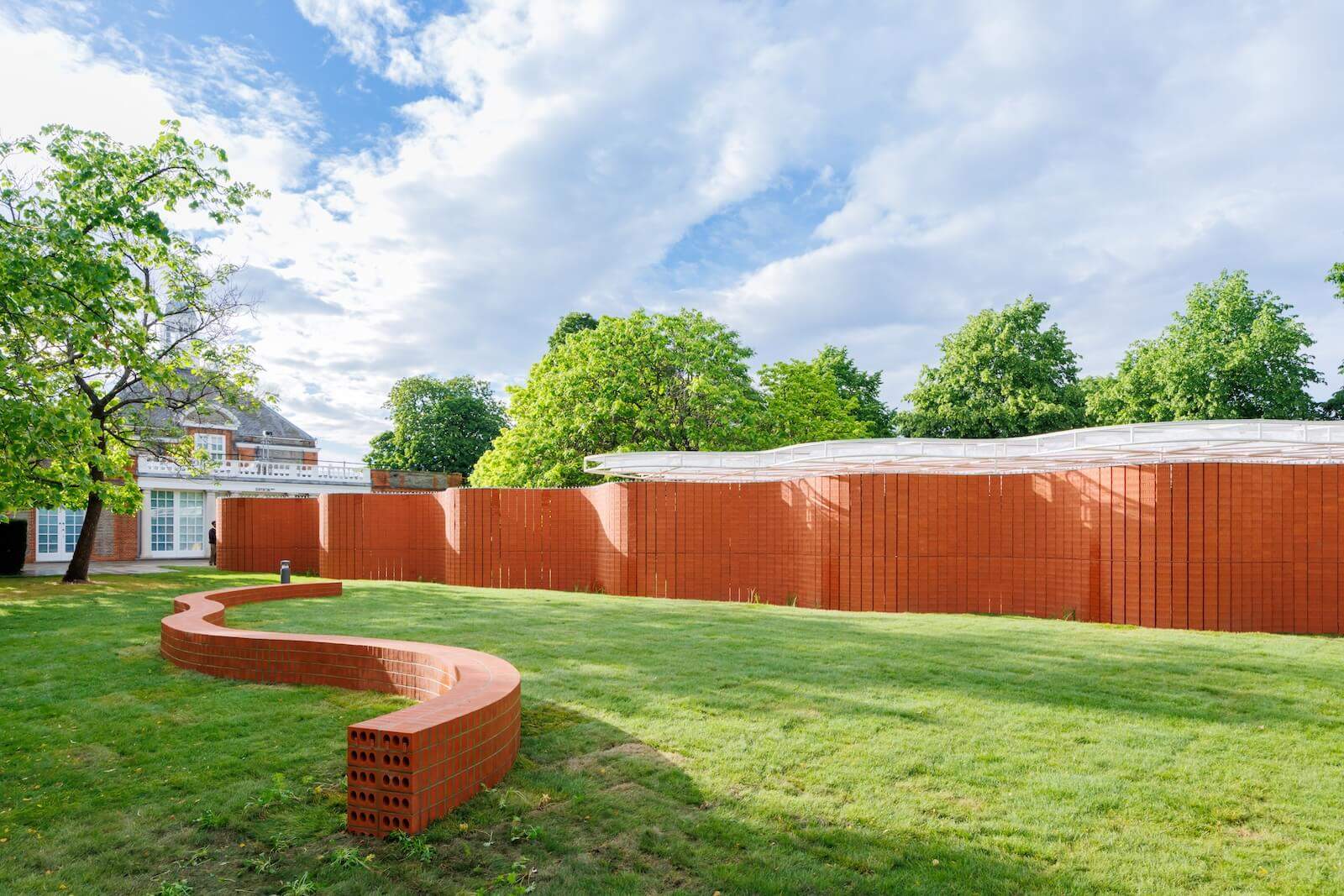
The pavilion's roof features a steel grid design, allowing fabric sunshades to be "threaded through," and lightweight polycarbonate panels keep the structure light enough that the brick columns are only one brick thick to maintain a sense of transparency. The "four pairs of lover's chairs" designed by Lanza Atelier are intentionally unfixed, allowing users to move and rearrange them freely. Arienzo and Abascal have stated that they enjoy the feeling when people cannot describe whether the furniture is a chair or a table.
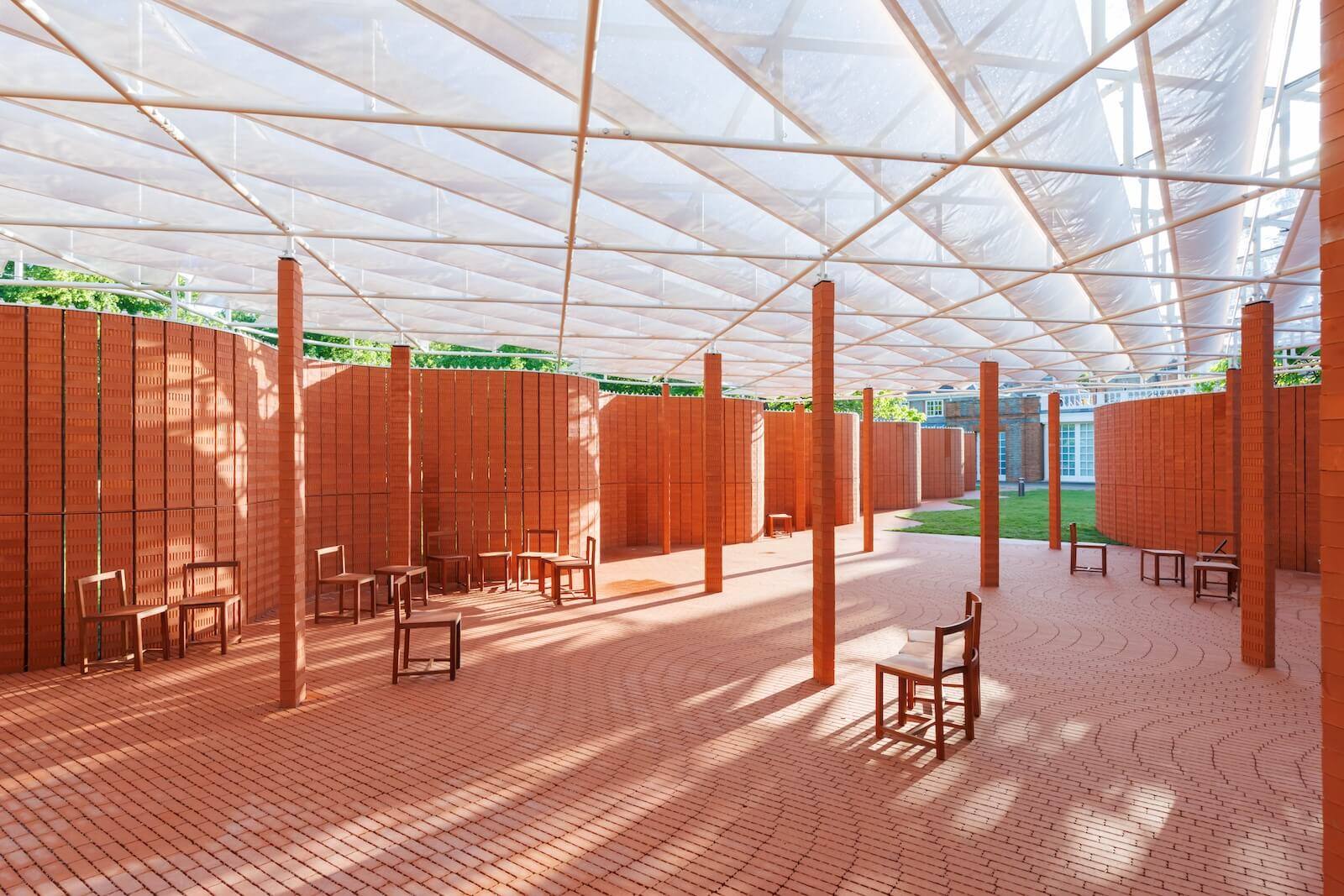
Hans Ulrich Obrist, Artistic Director of the Serpentine Gallery, noted that the pavilion embodies the ideas of French philosopher Édouard Glissant regarding "connecting the local to the global." Glissant foresaw globalization and the subsequent nationalist backlash in the 1960s, proposing the concept of "Tout-Monde" (One World), emphasizing the responsibility to protect diversity. Lanza Atelier describes the pavilion as a gathering place for people, with its clear concept, lightness, and economical approach sharing commonalities with the lineage of Japanese architects who have historically occupied the lawn at the Serpentine (such as Toyo Ito in 2002, SANAA in 2009, Sou Fujimoto in 2013, and Junya Ishigami in 2019).
Obrist also recalled the pavilion designed by another Mexican architect, Frida Escobedo, in 2018, which used roof tiles to create celosía (grille) walls—a common element in Mexican residential architecture—while also referencing the Prime Meridian established in Greenwich in 1851. The Lanza Atelier Serpentine Pavilion is open to the public until October 25, 2026.
This article is compiled by Wedoany. All AI citations must indicate the source as "Wedoany". If there is any infringement or other issues, please notify us promptly, and we will modify or delete it accordingly. Email: news@wedoany.com