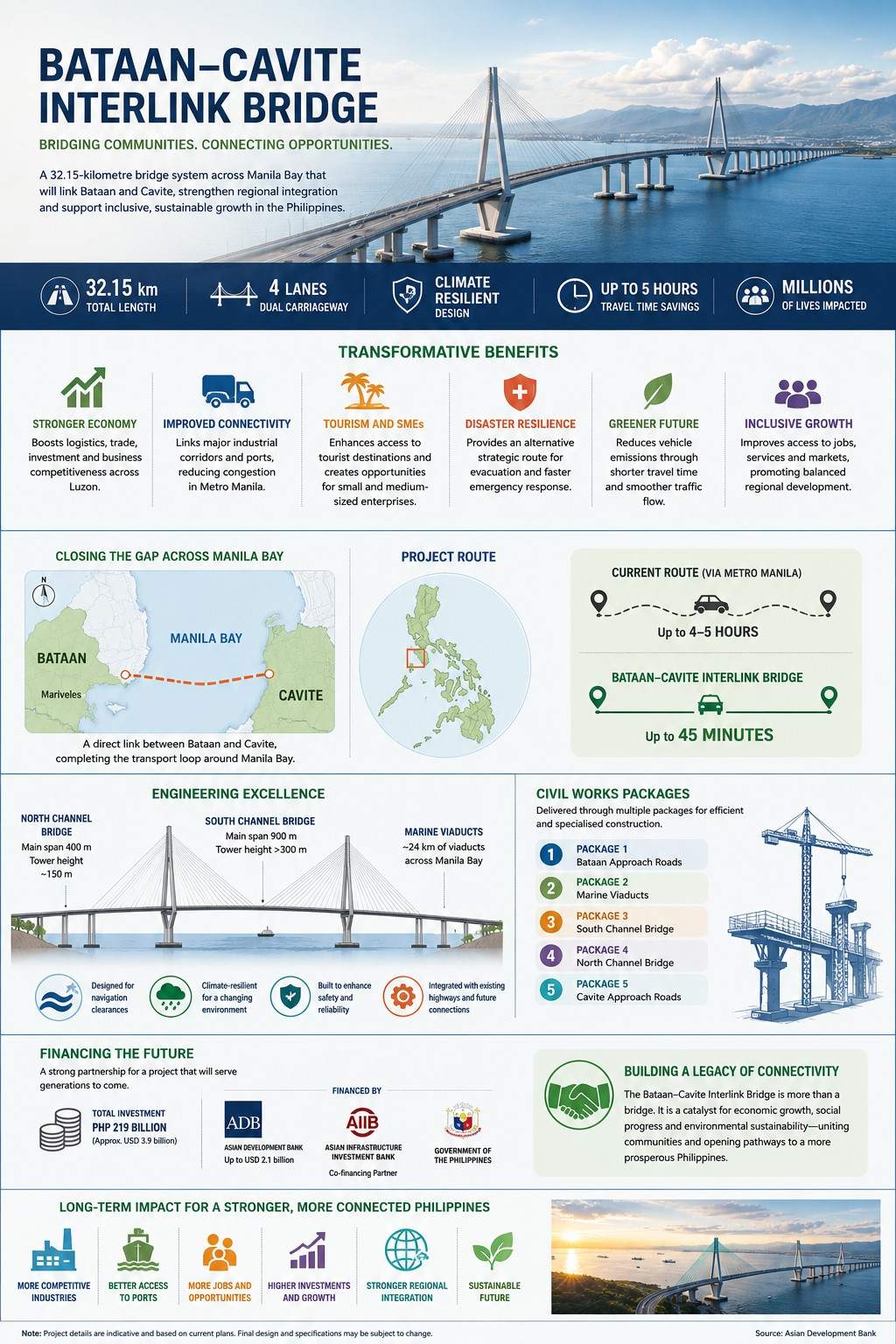
en.Wedoany.com Reported - The Bataan-Cavite Interlink Bridge, spanning 32.15 kilometers across the mouth of Manila Bay, costs nearly $3.9 billion and ranks first in the Philippines' Marcos administration's "Build Better More" program. Jointly funded by the Asian Development Bank, the Asian Infrastructure Investment Bank, and the Philippine government, the bridge aims to solve the lengthy land detour between Bataan and Cavite provinces. Once completed, travel time between the two provinces will be reduced from about 5 hours to less than 1 hour, and it is expected to cut approximately 79,000 tons of carbon dioxide emissions annually.
Bataan and Cavite provinces face each other across Manila Bay, but land connections require a detour through the congested traffic arteries of the Greater Manila metropolitan area, with journeys taking up to 5 hours under adverse conditions. Upon completion, the project will provide a direct route for manufacturers, transport companies, and commuters, completely bypassing Manila's traffic bottlenecks. The bridge will ultimately close the road loop around Manila Bay, connecting the National Capital Region, Central Luzon, and Calabarzon—regions that account for nearly 60% of the Philippines' GDP.
The total project cost is approximately $3.9 billion, with a layered multilateral financing structure. The Asian Development Bank, as the lead co-financier, approved loans of up to $2.1 billion, with the first $650 million loan agreement signed in December 2023. The Asian Infrastructure Investment Bank provides $1.14 billion in loans, part of which is managed by the ADB. The Philippine government covers the remaining balance of about $664 million. The project is divided into multiple contract packages, including approach roads, viaducts, and navigational bridges, with land-based sections advancing first. By the end of 2025, the Bids and Awards Committee of the Philippine Department of Public Works and Highways recommended awarding the contract for Package 2, valued at approximately 3.07 billion Philippine pesos, to a joint venture led by China Wu Yi, in partnership with Jinan Urban Construction Group and local company CM Pancho Construction.
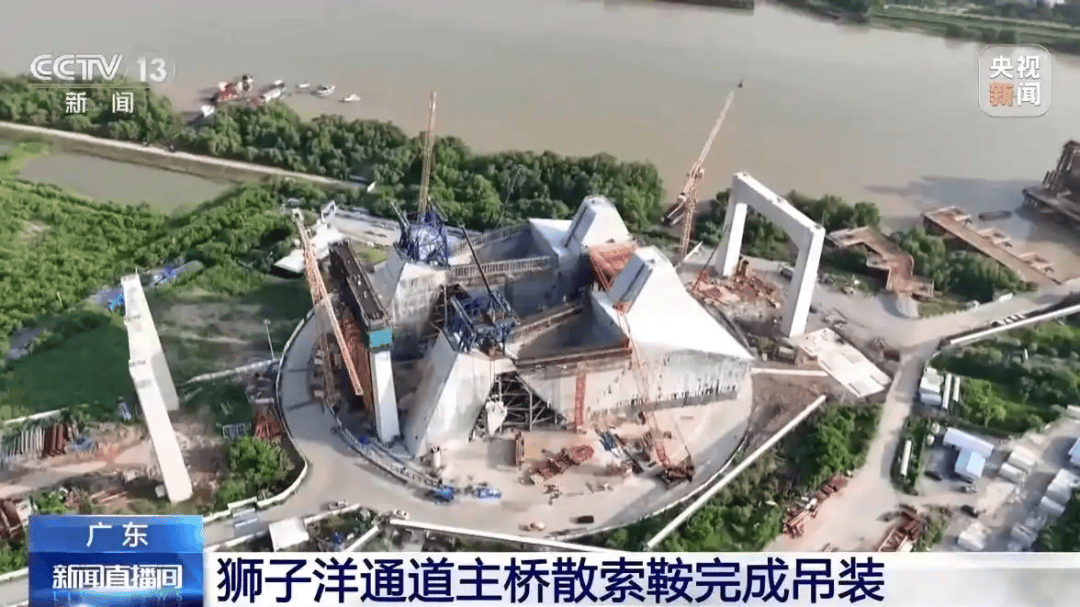
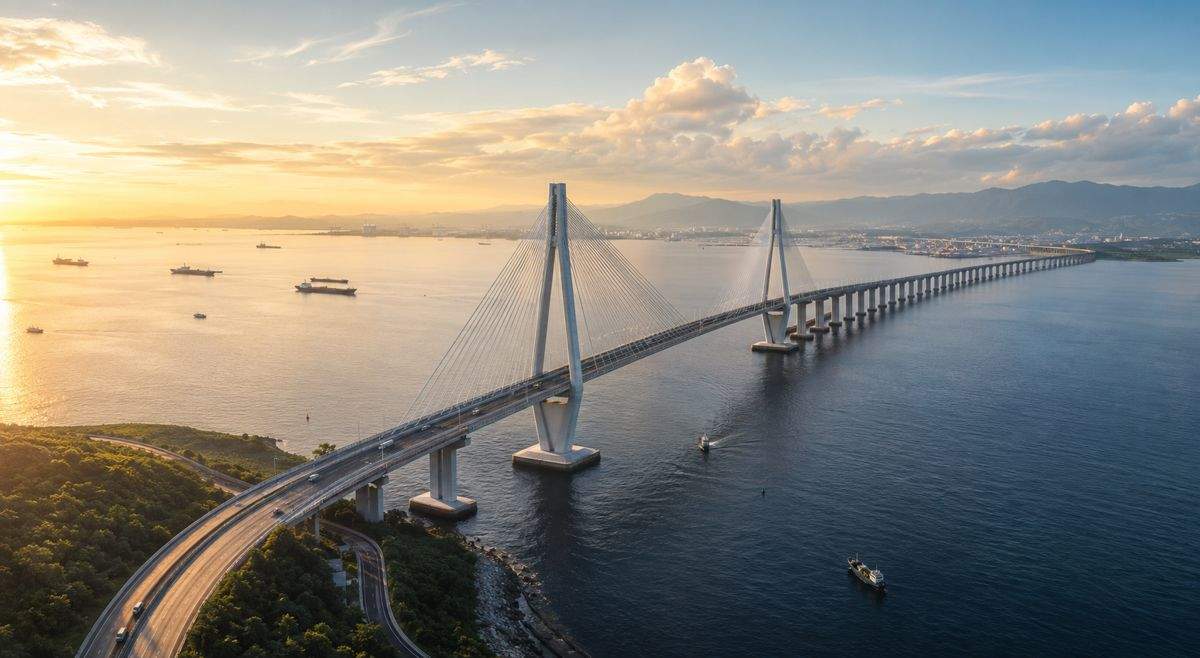
The sea-crossing bridge integrates multiple structural types, including approximately 24 kilometers of marine viaducts, two cable-stayed navigational bridges with main spans of 900 meters and 400 meters respectively, and 8 kilometers of approach roads connecting to the existing road network. On the Bataan side, a trumpet interchange will connect the bridge to the Roman Highway near Mariveles, and a turnaround facility near Corregidor Island will allow for potential future connections to this historic landmark. The South Channel Bridge has a main span of 900 meters and a navigational clearance of 72 meters, with marine structures built in waters up to approximately 50 meters deep; the North Channel Bridge has a main span of 400 meters. It should be noted that some early sources described tower heights exceeding 300 meters, but verified project documents show the North Channel Bridge tower height is about 142 meters, with the 300-meter figure actually referring to the channel width. The design work is led by engineering firm TYLin (part of the Sidara group), with employees from its global offices participating.
The project's commercial value primarily stems from its relationship with ports and factories around Manila Bay. Bataan is developing into an industrial and logistics hub anchored by energy assets, manufacturing, and the Mariveles Freeport Zone, while Cavite's growth corridor attracts export-oriented production. Asian Development Bank Vice President Scott Morris stated at the time of financing approval that the project will transform the economic landscape of Central Luzon, unlock the potential of Bataan and Cavite in trade, manufacturing, and industrial output, and boost tourism. The project also carries a carbon dividend, reducing national greenhouse gas emissions by approximately 79,000 tons of CO2 equivalent annually by eliminating long detours and congestion.
The project incorporates climate-resilient design to meet operational needs in the Philippines, a typhoon-prone region. The bridge is also positioned as an alternative corridor for emergency response and evacuation. In terms of economic benefit calculations, the Philippine Department of Public Works and Highways notes the project's economic rate of return exceeds 25%.
A tourism center and supporting facilities are planned on one side of the bridge, aimed at serving visitors to the peninsula and the Corregidor war landmarks. Small and medium-sized enterprises are expected to benefit from lower transportation costs and more predictable delivery schedules. The project is still in its early implementation phase, with bidding for major marine works nearing completion. The construction timeline has previously faced delays, with completion targets ranging from 2027 to the early 2030s.
This article is compiled by Wedoany. All AI citations must indicate the source as "Wedoany". If there is any infringement or other issues, please notify us promptly, and we will modify or delete it accordingly. Email: news@wedoany.com