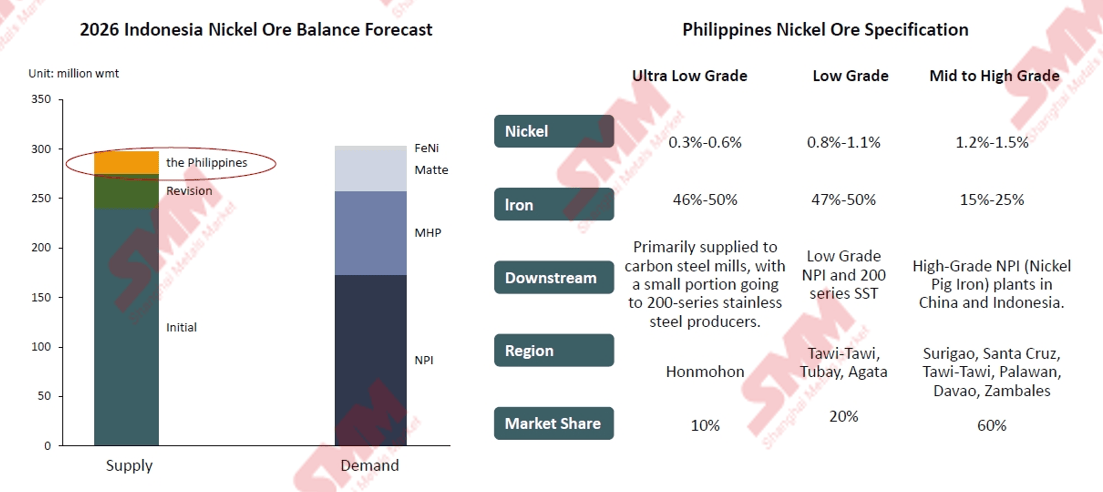
en.Wedoany.com Reported - Huo Junyan, Senior Researcher at Shanghai Metals Market Information Technology Co., Ltd. (SMM), pointed out at the 2026 Indonesia Mining Conference & Critical Metals Meeting - Nickel Cobalt Forum that, according to institutional forecasts, Indonesia's nickel ore supply and demand will be in a tight balance in 2026.
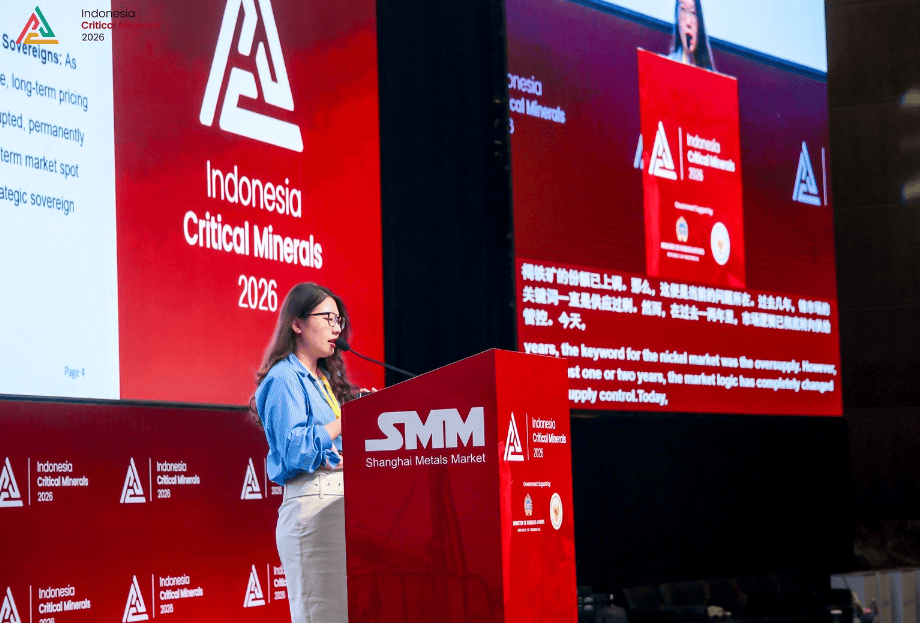
Huo Junyan shared a quantitative analysis of the impact of RKAB policies and smelter supply restrictions on the nickel ore supply-demand balance. SMM predicts that from 2026 to 2036, the proportion of hydrometallurgical ore in Indonesia's nickel ore production will continue to rise, squeezing the market share of pyrometallurgical ore; during the same period, the share of hydrometallurgical ore in the country's nickel ore reserves will significantly surpass that of pyrometallurgical ore.
She stated that once nickel prices break through structural key points, high-cost nickel projects globally that were previously shut down due to insufficient economic viability will quickly resume production, and the market's self-regulating price mechanism will gradually change the current highly concentrated supply-side geography and sovereignty.
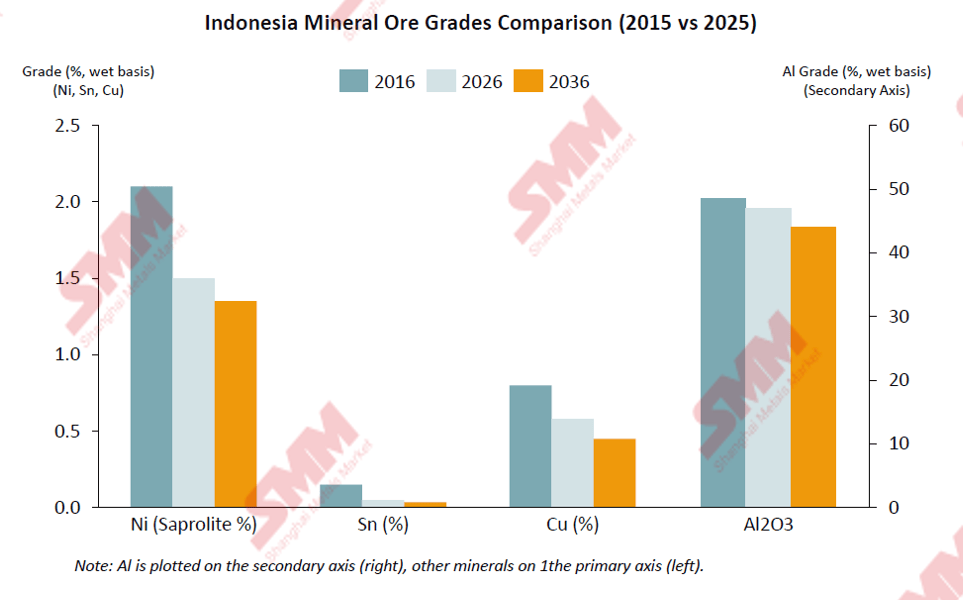
The current development bottleneck of Indonesia's nickel industry has shifted from total ore volume to the supply capacity of high-grade ore. The declining grade of primary ore is an established trend, and the global supply chain is actively adapting through low-grade ore processing, raw material diversification, and recycling. As high-quality reserves are gradually depleted, the long-term pricing logic of the industry faces profound changes, with pricing power shifting from short-term spot market fundamentals to sovereign states with resource advantages, making supply pace a core influencing factor.
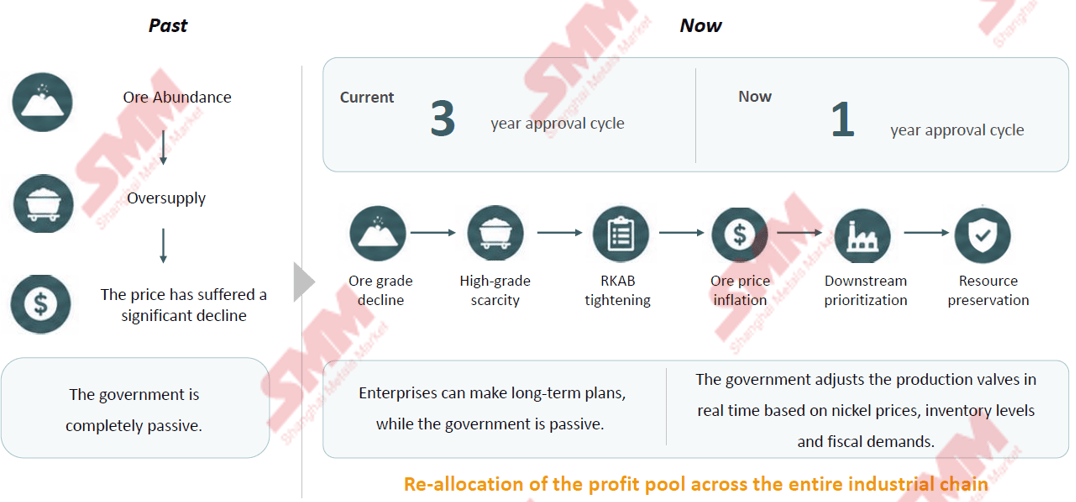
Huo Junyan believes that declining ore grades mean Indonesia's nickel cost advantage will be eroded over the next decade, and policy interventions will become more frequent. New regulatory measures introduced by Indonesia in 2026 impose comprehensive and stringent controls across the entire nickel value chain, reflected in strengthened government oversight, narrowed industry profit margins, and increased administrative approvals and compliance frictions for enterprises.
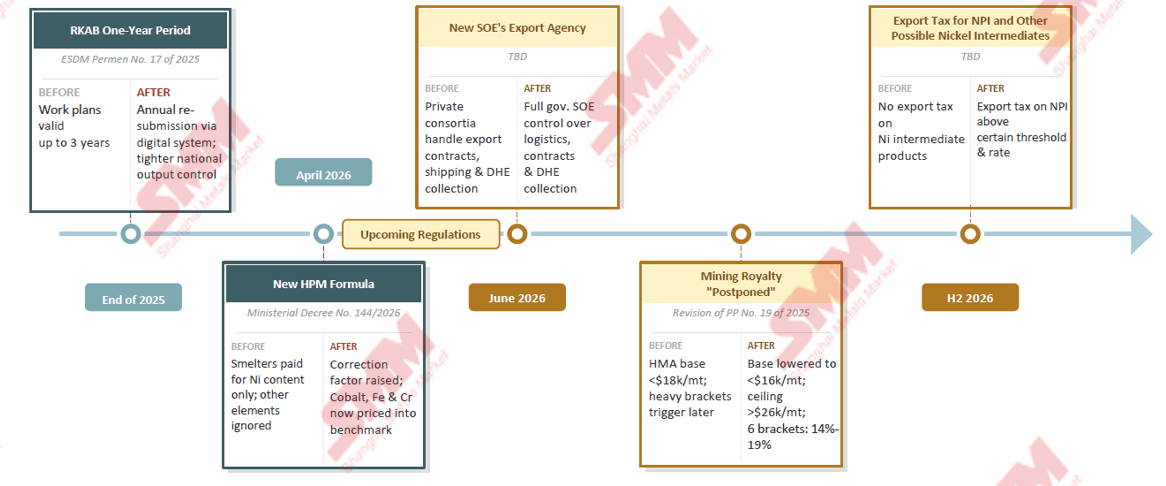
RKAB has evolved from an administrative approval process into a dynamic supply valve. By reserving mid-year revision space, the Indonesian government ties supply to specific timeline milestones, enabling real-time market regulation. The RKAB timeline shows that from January 1 to March 31, if new quotas are still under review, 25% of the original 2026 quota can be used; July 1 to July 31 is the application window for quota supplements or revisions; October 1 to November 15 is the submission window for the following year's quota applications.
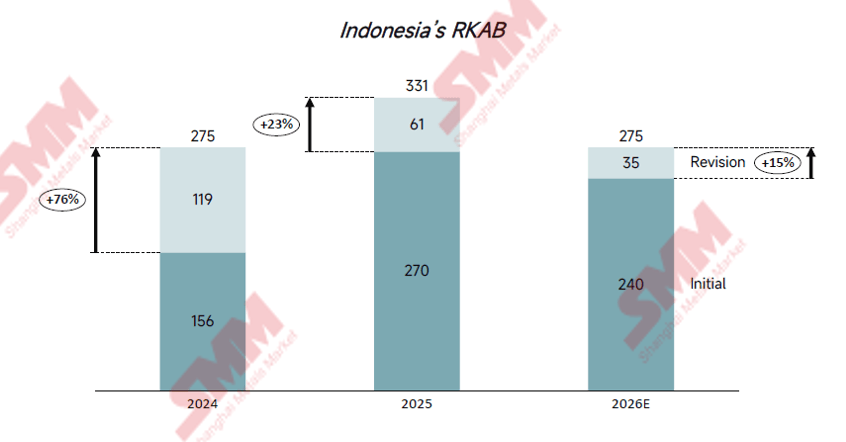
The Philippines can supplement the reduced nickel ore supply from Indonesia but cannot fully replace it. Under structural constraints, the nickel ore supply-demand balance is expected to tighten in 2026.
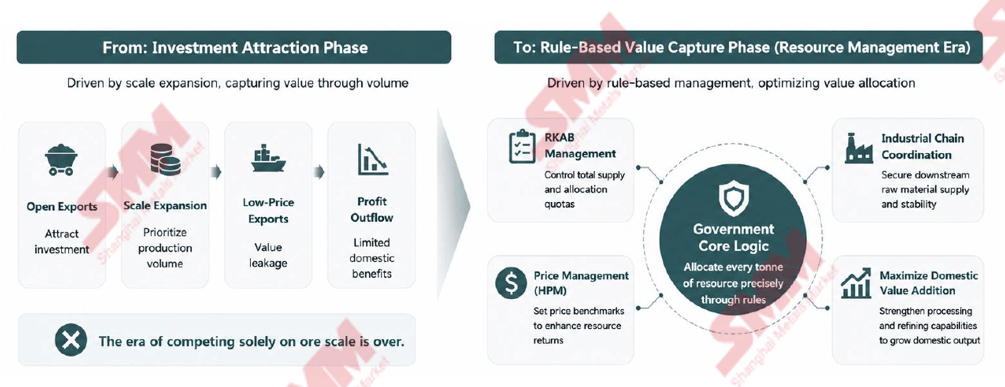
The adjustment in the core thinking of the Indonesian government means that its resource management has officially entered a rule-oriented value operation stage. Through RKAB and price management, Indonesia precisely allocates every ton of resources to drive higher domestic value creation.
This article is compiled by Wedoany. All AI citations must indicate the source as "Wedoany". If there is any infringement or other issues, please notify us promptly, and we will modify or delete it accordingly. Email: news@wedoany.com