Fictiv: AI and Digital Manufacturing Integration Reduce Custom Part Costs to 1.2-1.5 Times Standard Parts
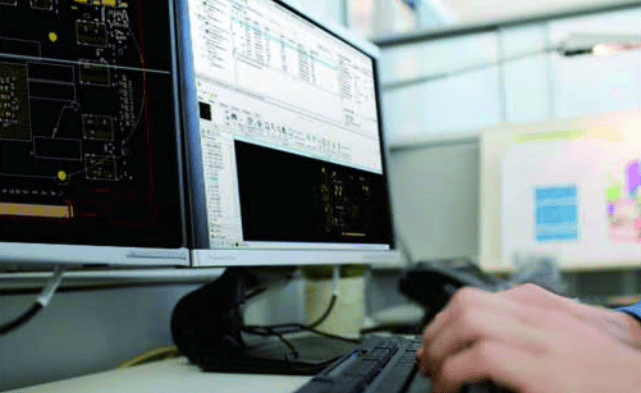
en.Wedoany.com Reported - Fictiv founder and CEO Dave Evans recently wrote about the profound impact of the integration of artificial intelligence, robotics, and digital manufacturing on industrial production. Evans believes that custom component manufacturing is now at a critical turning point, where three forces—AI-optimized design, digital manufacturing, and the convergence of information technology and operational technology (IT/OT)—are converging to make it possible to produce custom components at near mass-production scale and speed, freeing engineers from compromising optimization under supply chain constraints.
Evans co-founded Fictiv with his brother Nate in 2013 to address the industry bottleneck of excessively long hardware manufacturing lead times. He noted that custom components previously came with cost multipliers of 3 to 5 times and lengthy manufacturing cycles, but this is now changing. Technologies such as multi-axis CNC, additive processes, and real-time production optimization have reduced the manufacturing cost of custom components to 1.2 to 1.5 times that of standard parts, with lead times measured in weeks rather than quarters.
A hybrid supply chain model is becoming an industry trend. Evans cited Tesla's Giga factory expansion of machine manufacturing as an example, where the company integrates custom drivetrain components with standardized actuators, enabling robot system iteration at software development speed. This model retains standard actuators as reliability benchmarks while customizing power transmission components such as gearboxes, couplings, and mounting structures, without significant cost or time penalties.
Machine learning algorithms are becoming key middleware between design and manufacturing. Evans pointed out that after specifying parameters such as load cases, torque, and duty cycles, AI systems can perform numerous design iterations within minutes, exploring factors like tooth profiles and material selections that are difficult to consider manually, and directly interfacing with manufacturing execution systems. Anonymous performance data from real-world deployments feeds back into AI models, continuously optimizing subsequent designs. Companies like Boston Dynamics, Universal Robots, and ABB are already leveraging AI-driven design optimization to create actuators and power transmission systems adapted to complex dynamic motions.
IT/OT convergence is a critical breakthrough area. At MISUMI Americas, customer design data flows seamlessly into manufacturing planning, inventory management, and logistics, all in real time. Siemens Digital Industries is also actively advancing its convergence agenda. The emergence of standard MQTT and OPC UA has made interoperability possible.
Specific application cases show that a medium-sized robot system integrator reduced the development cycle of a palletizing system through a custom gearbox solution, with optimized design efficiency 3% higher than manual approaches and a delivery time of four weeks. In the semiconductor field, Nvidia compressed a typically 18-month development time to six months by rapidly prototyping custom gearbox solutions. Medical device companies Stryker and Zimmer Biomet used AI-driven custom gearbox design to reduce the backlash of surgical robot wrist mechanisms by 40% compared to the previous generation, while also achieving cost reductions.
This article is compiled by Wedoany. All AI citations must indicate the source as "Wedoany". If there is any infringement or other issues, please notify us promptly, and we will modify or delete it accordingly. Email: news@wedoany.com
Related Products
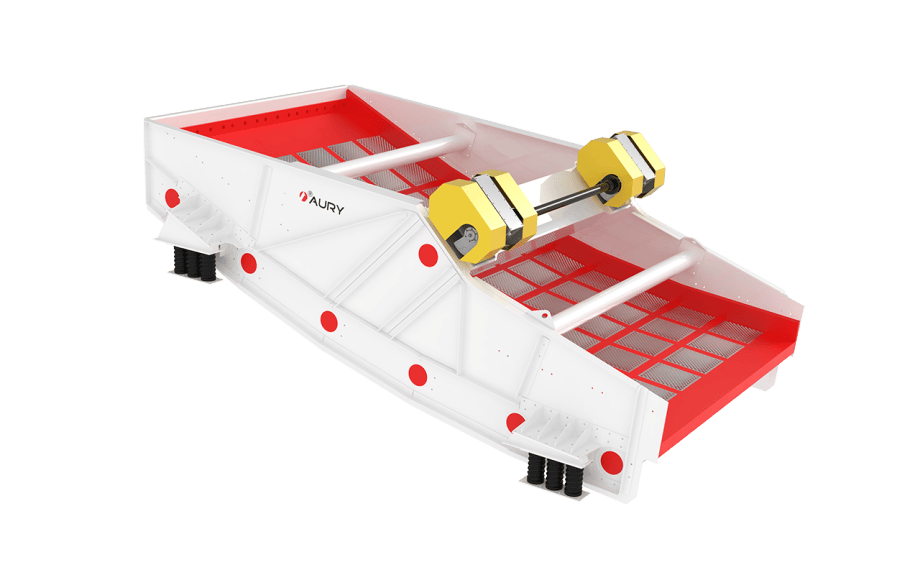

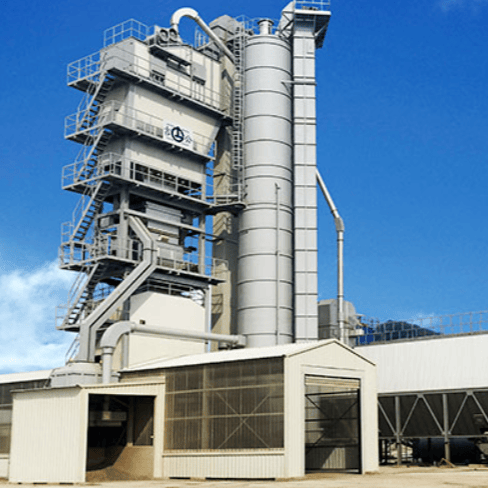
LBH4000 Batch Environmental Protection Asphalt Mixing Plant | Asphalt Batching Plant | Asphalt Mixing Plant
Jilin Province Road Construction Machinery Co., Ltd.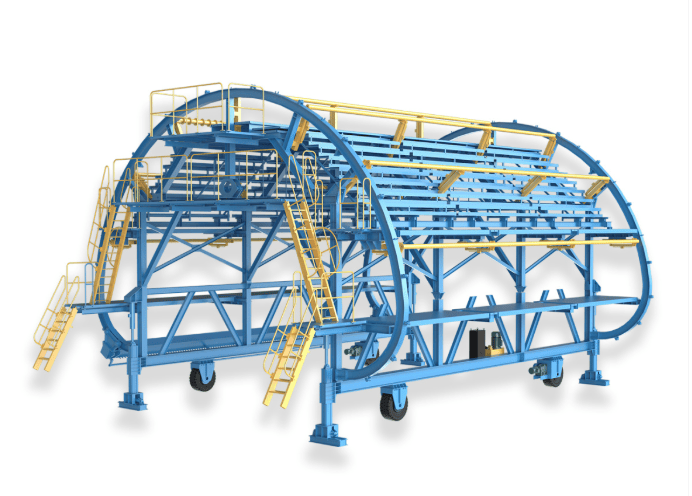
QLZNGJ Intelligent Steel Reinforcement Trolley
Luoyang China Railway Qiangli Machinery Co., Ltd.

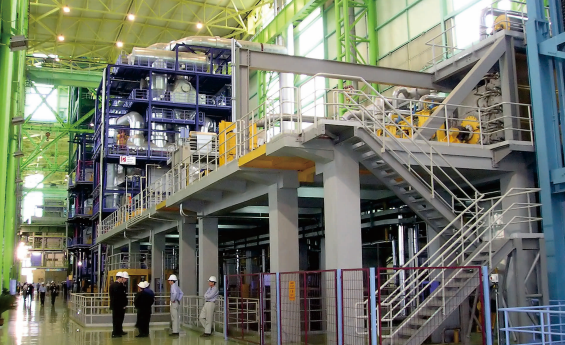
Strip Coating and Plating Production Line Equipment
MCC-SFRE HEAVY INDUSTRY EQUIPMENT CO., LTD.