en.Wedoany.com Reported - The Brazilian Working Group for the Reallocation and Digitization of Television and Radio Channels (Gired) and its executive entity, EAD Seja Digital, have successfully completed their initial mission of transitioning from analog to digital television and freeing up the 700 MHz band for 4G. They are now participating in the preliminary phase of the country's TV 3.0. Both organizations, established in 2015, completed this historic task last week, becoming key players in broadcast technology transformation. Anatel advisor and current Gired President Octávio Pieranti noted that they have also contributed to strengthening Brazil's public television.
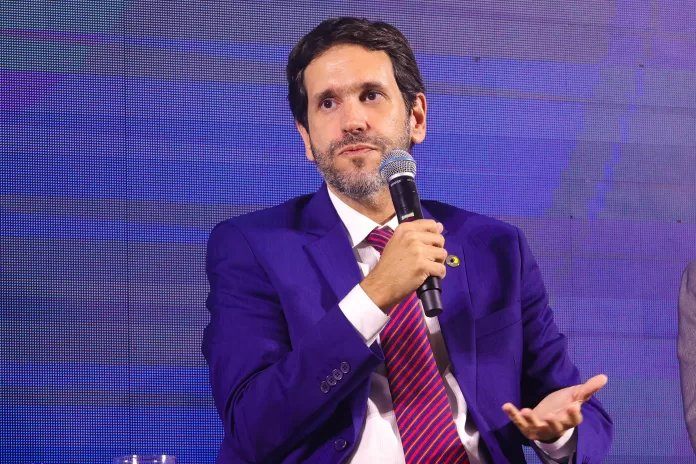
According to Pieranti, Gired adopted an innovative model in implementing public policies. Its initial goal was to create conditions for 4G deployment through the 2014 700 MHz band auction, ultimately achieving results that surpassed the original scope. The working group, under Anatel's leadership, maintained a stable management structure with Seja Digital as the executive entity. Despite changes across four presidential administrations and multiple Anatel leadership terms, it preserved team cohesion and policy execution continuity. This institutional continuity, along with the ability to coordinate consensus between the telecommunications and broadcasting sectors, enabled effective implementation of long-term projects, efficient resource management, and even generated surpluses that could be invested in new phases.
Currently, Gired plays a key role in the preliminary phase of Brazil's TV 3.0. In 2024, the working group approved the construction of test stations in São Paulo and Brasília, open to public and private broadcasters. These stations will serve as gateways for the legislative network and the national public communication network. Additionally, the group purchased 3,000 converter prototypes for the experimental phase of new technologies and public signal demonstrations, and funded the development of an application to enhance the visibility of public channels.
One of the most promising projects under the TV 3.0 framework is the Mais BR platform, funded and developed by Seja Digital. This platform allows federal, state, and municipal public services to be delivered directly through television, enabling on-demand distribution of audio-visual content and streaming of public channels. Coordinated by the Presidency's Social Communication Secretariat, the infrastructure will be managed by EBC after Gired concludes. Pieranti stated that this model of public service delivery has not yet appeared in TV 3.0 initiatives in other countries.
In the connectivity sector, Gired promoted 4G and 5G deployment in remote areas through reverse auctions, enabling 120 locations to gain 5G access ahead of the initially expected timeline. The Digitaliza Brasil project, part of Seja Digital's second phase, has deployed over 6,200 channels in approximately 1,500 small locations, benefiting around 20 million Brazilians. However, maintenance of these transmitters faces challenges, with some infrastructure falling into disuse. Pieranti acknowledged the maintenance issues, which are currently being addressed. Gired has allocated resources for a new maintenance model, extending support for these transmitters for another year until 2027, with local partners responsible for the subsequent three years of maintenance from 2028 to 2030.
In terms of public communication universal access, this model is addressing historical deficiencies in broadcast coverage. Through the Brasil Digital program, Gired has driven the largest expansion of public communication, bringing legislative network and EBC transmitters to municipalities that previously had no access. Pieranti considers a notable achievement that all 62 municipalities in the state of Amazonas now receive the TV Brasil signal, marking the first time in Brazilian history that public communication universal access has been achieved across an entire state.
Gired will conclude its activities in 2027, with its responsibilities transferred to institutions such as EBC and Secom/PR. Pieranti stated that without the efforts of Gired, Seja Digital, and my predecessors as chair, these results could not have reached their current scale.
This article is compiled by Wedoany. All AI citations must indicate the source as "Wedoany". If there is any infringement or other issues, please notify us promptly, and we will modify or delete it accordingly. Email: news@wedoany.com