en.Wedoany.com Reported - The 8th Latin American International Desalination Congress (2026) opened this Wednesday in Santiago, Chile, establishing itself as one of the key platforms for analyzing water infrastructure challenges and opportunities in the region.
The opening ceremony was led by Mery Martínez, Director of International Business Development at Vostock Capital UK, who launched an agenda focused on securing water supply for productive sectors and communities through desalination as a growth driver.
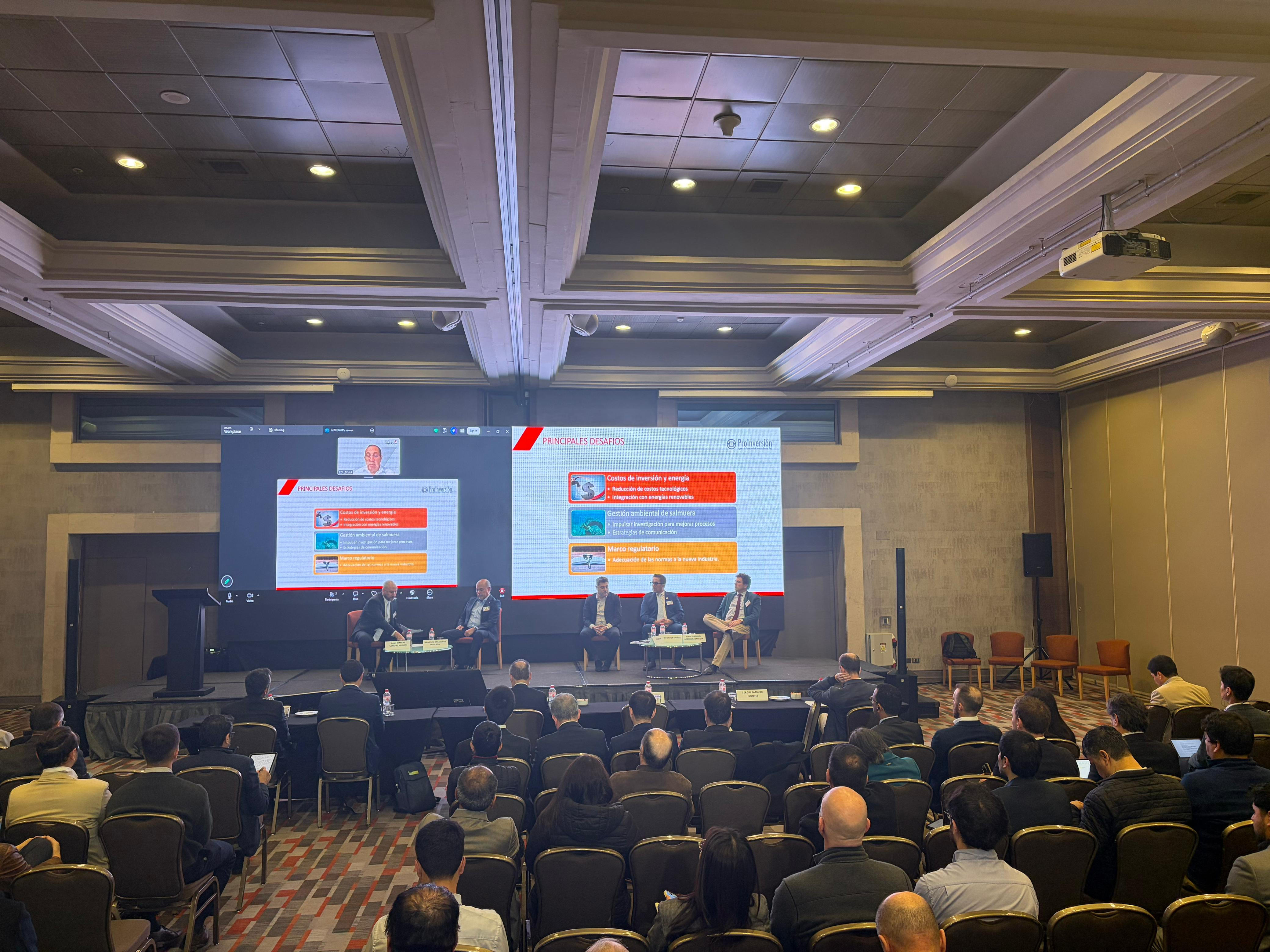
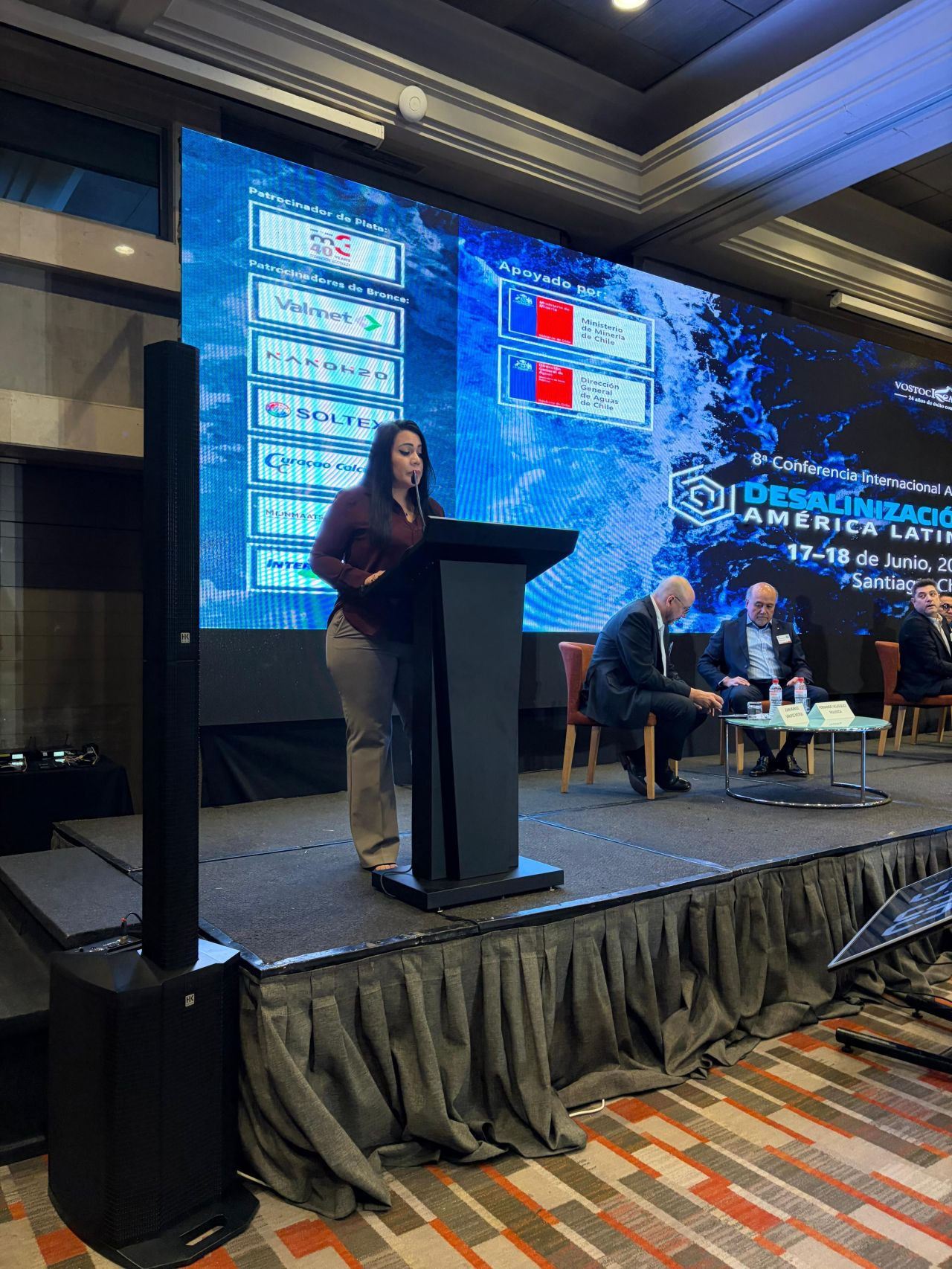
The first session, themed "Latin America 2026 Opportunities: Desalination Market, Progress, and Investment," was moderated by independent consultant Juan Manuel Sánchez Medioli. Representatives from the public and private sectors delivered presentations, including Fernando Velásquez Figueroa, Development Manager at Econssa Chile; Ernesto Zaldívar, Project Director at the Private Investment Promotion Agency of Peru (ProInversión), who spoke online on "Current Status and Prospects of Desalination in Peru." Peleg Lewi, Israeli Ambassador to Chile, discussed "Desalination as Part of National Resilience." Walter Javier Muñoz, Vice President of the Chilean Mining Chamber (Cámara Minera de Chile), explained "Regulatory Strategies, Key Risks, and Investment: Chile's New Desalination Law and Regional Regulatory Framework." Ignacio Rodríguez, CEO of Desala, elaborated on the Desala model and its multi-purpose desalination strategy.
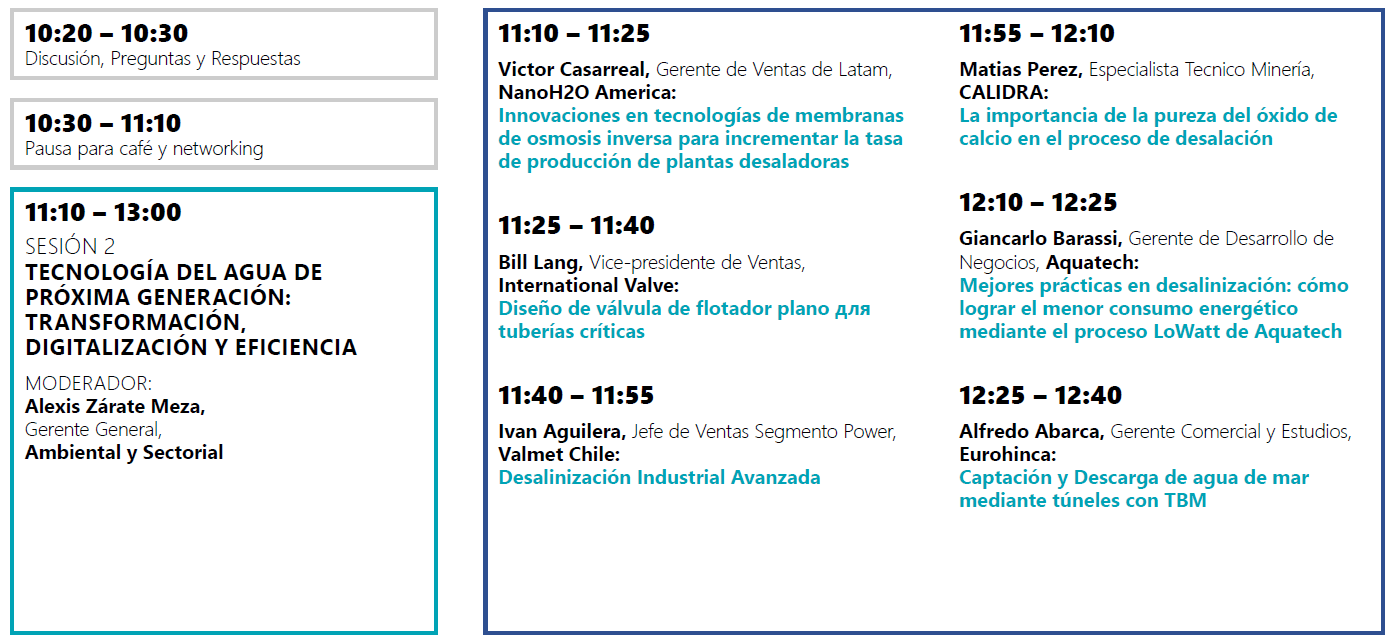
The second session focused on "Next-Generation Water Technologies: Transformation, Digitalization, and Efficiency," addressing digitalization, operational efficiency, and innovative applications in desalination plants. Experts from companies such as NanoH2O, International Valve, Valmet Chile, Grupo Calidra, Aquatech, and EUROHINCA presented R&D results aimed at optimizing processes, reducing energy consumption, and improving operational performance.
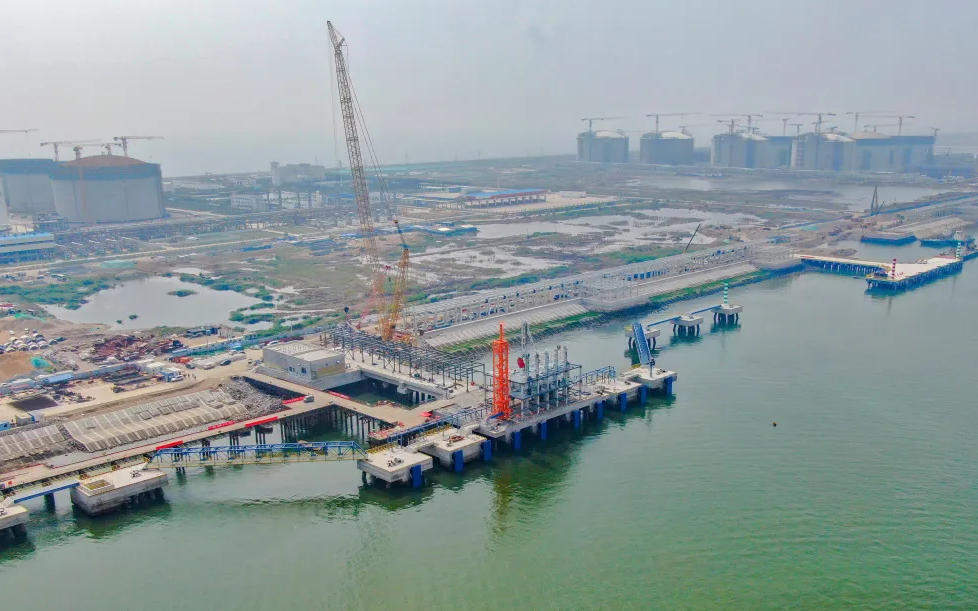
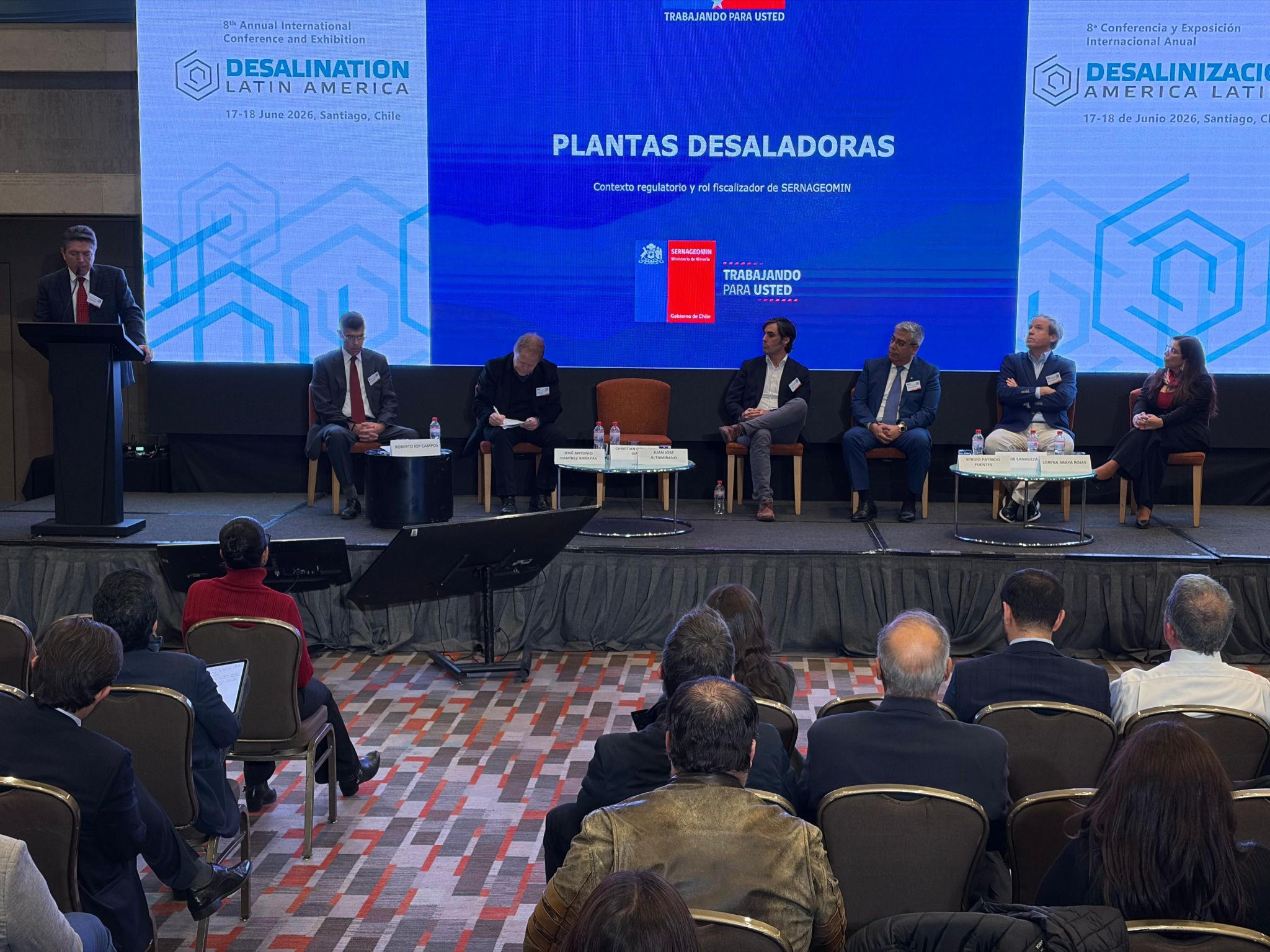
The third session, titled "Water Infrastructure: Projects Under Construction, Future Bets, and Global Experience," discussed water infrastructure and desalination project development in the region. Presentations included María José López, Business Development Manager at CKC Infraestructura Sustentable, analyzing opportunities in desalination and public works concessions in Chile; Cecilia Ramírez, Head of the National Project Management Office at the Chilean National Geology and Mining Service (Sernageomin), discussing the role of sectoral permits. José Tomás Valdés, Water Manager at Colbún, elaborated on project development challenges. Carlos Goitia, Desalination Enterprise Director at Aguas Nuevas, shared experiences in operation and maintenance. Juan Pablo Mino, General Manager of Aguas Pacífico, provided updates on the Aconcagua project. Mario Delannays, Concessions Coordinator at the Chilean Ministry of Public Works (Ministerio de Obras Públicas de Chile), detailed progress on the Coquimbo Region desalination plant.
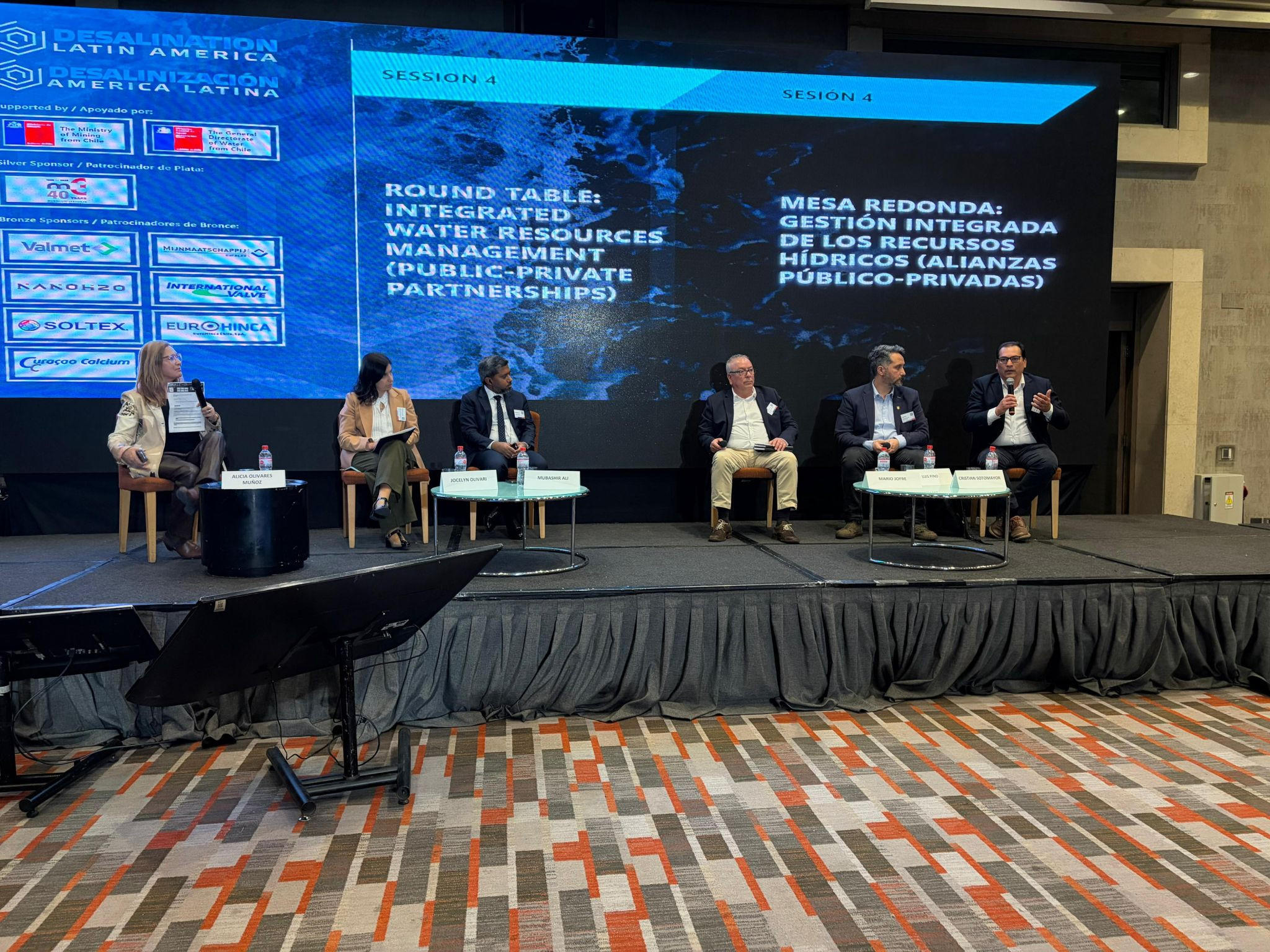
The fourth roundtable discussion revolved around "Integrated Water Resource Management." María Elena Boisier, Technical Capabilities Manager at the Chilean Production Development Corporation (CORFO), introduced tools to drive industry innovation; Emerson Junior Castro Hidalgo, Director of Special Project Management at ProInversión Peru, analyzed Peru's experience in developing water infrastructure through public-private partnerships. The roundtable covered water governance and sustainability, with participants including representatives from the mining, agricultural, academic, and public sectors, such as Walter Javier Muñoz, Vice President of the Chilean Mining Chamber; Mariana Villada Canela, Researcher at the Autonomous University of Baja California (Universidad Autónoma de Baja California); and representatives from water management-related institutions.
The second and final day of the congress will take place on Thursday, featuring technical presentations, panels on investment and water governance, and business networking sessions aimed at analyzing the future of desalination and water security in Latin America, with presentations from mining industry experts.
This article is compiled by Wedoany. All AI citations must indicate the source as "Wedoany". If there is any infringement or other issues, please notify us promptly, and we will modify or delete it accordingly. Email: news@wedoany.com