Nokia Upgrades Autonomous Network Portfolio with Agentic AI
en.Wedoany.com Reported - Nokia has introduced multiple upgrades to its autonomous network portfolio, incorporating a full suite of agentic AI capabilities designed to help telecom operators streamline operations, enhance network performance, and more effectively address increasingly complex dynamic traffic demands.

At the Digital Transformation World (DTW) conference in Copenhagen, Nokia launched the new Autonomous Networks Agent Library, released the latest version of the Autonomous Networks Suite, enhanced RAN automation, and showcased new AI-driven frameworks for IP, fixed, and optical networks. These capabilities enable operators to gradually introduce various elements of AI and agentic automation across the entire technology stack while maintaining operational control and trust in live network environments.
As networks evolve from static infrastructure to programmable AI-native platforms, the pressure to manage unpredictable traffic patterns driven by AI-intensive workloads is increasing. These advancements aim to help operators move toward higher levels of network autonomy, enabling faster decision-making, automated operations, and more efficient utilization of network resources.
Nokia's agent library offers pre-built AI agents that combine complex reasoning, autonomous actions, and deep telecom expertise to address challenges in security, assurance, and service operations. With built-in observability, governance, and "glass-box autonomy," these agents help operators make faster, context-aware decisions under dynamic live network conditions, including identifying zero-day attacks, reasoning about complex anomalies, event classification for root cause analysis, troubleshooting service order faults, and multi-agent coordination. Productivity improvements typically range from 60% to 80% compared to traditional operations.
Autonomous networks are critical to the future of telecom, and agentic AI is a key enabler for achieving them. Nokia is applying its agentic AI across the entire portfolio, already delivering quantifiable business value.
The Autonomous Networks Suite introduces on-premises deployment options and new use cases aimed at improving business outcomes, including enhancing VoLTE service quality, increasing observability, and optimizing subscriber experience in the radio access network.
Nokia's MantaRay SMO solution is compliant with Open RAN standards and features non-real-time RIC capabilities with AI-enabled rApps to manage complex radio networks, detect anomalies, and support dynamic network slicing. Nokia is collaborating with operators including NTT DOCOMO to drive SMO-based autonomy through MantaRay SON, AutoPilot trials, and future Non-RT RIC and rApp development.
Meanwhile, agentic AI framework upgrades for IP, fixed, and optical networks include: for IP, the Network Services Platform (NSP) enables operators to deploy AI agents, with its first application being an AI-driven troubleshooting agent; for fixed networks, new agentic AI capabilities in the Altiplano, Corteca, and Broadband Easy platforms help improve first-line help desk resolution rates to over 50%, confirm network events within five minutes, and reduce callbacks by 50%; for optical networks, the new WaveSuite agentic framework can proactively detect KPI anomalies and photonic device failures before they impact service performance.
These advancements embed AI capabilities directly into existing network management platforms, allowing operators to adopt automation at their own pace and scale use cases over time. Benefits for operators include faster resolution of network events, improved operational efficiency, and higher service reliability.
This article is compiled by Wedoany. All AI citations must indicate the source as "Wedoany". If there is any infringement or other issues, please notify us promptly, and we will modify or delete it accordingly. Email: news@wedoany.com
Related Products


Industrial and Commercial Point-Type Gas Detector
Jinan Benan Technology Development Co., Ltd.
G.652.D Wavelength-extended Non-dispersion Shifted Single-mode Optical Fiber
HONGAN GROUP CO., LTD.


GYTA Type Non-Self-Supporting Aerial/Duct Optical Cable
TONGDING INTERCONNECTION INFORMATION CO., LTD.

20 Inch 1600*900 Full HD 60Hz TFT LED Monitor with VGA and DP Interfaces for Desktop Computers-Business Use
Guangzhou Zanying Optoelectronics Technology Co., Ltd.

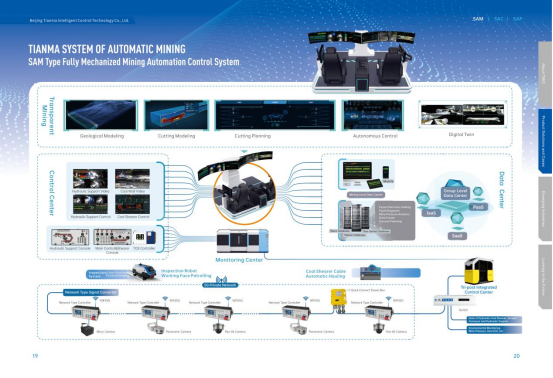
Comprehensive Mining Automation Control System
Beijing Tianma Intelligent Control Technology Co., Ltd.