en.Wedoany.com Reported - Germany is experiencing extreme heatwaves across multiple regions, causing severe damage to urban transport infrastructure materials. Last Saturday, temperatures soared to 40 degrees Celsius, melting the joint materials between tram tracks and road surfaces in Leipzig, forcing the local transport company to suspend operations.
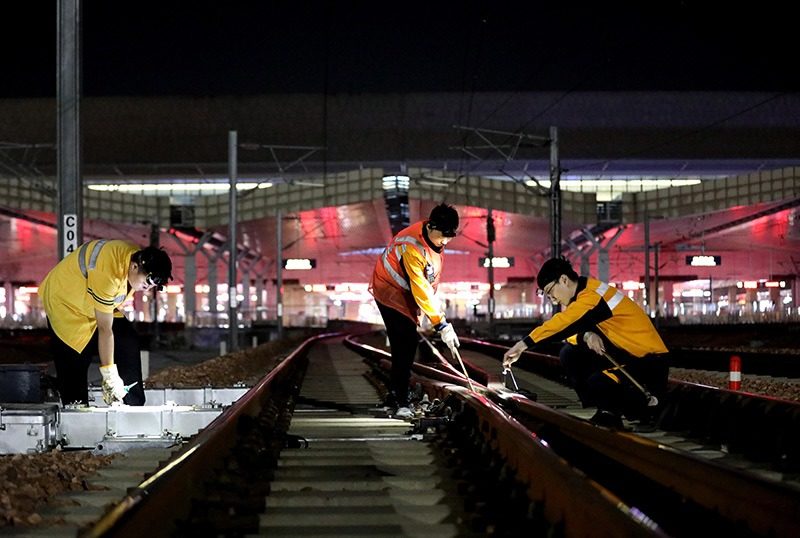
Since Saturday afternoon, technicians have been repairing multiple melted and flowing joints between rails and asphalt, which have accumulated on the tracks. Ulf Middelberg, head of Leipzig's public transport company (LVB), stated that the prolonged heat and intense sunlight caused the damage. As both old and new sections were affected, the exact cause remains undetermined. Middelberg noted that the company is in contact with cities such as Nuremberg and Essen, which, along with Würzburg and Bremen, have also experienced similar damage. The current priority is to complete cleanup before investigating the cause, as no clear pattern has yet emerged.
The transport company is working hard to restore tram services, but operations remained suspended as of Monday, with no clear timeline for resumption. Affected sections must be thoroughly cleaned, including tracks and trams. Over 50 trams that traveled on the melted sealing material have already been cleaned. LVB reported that it is continuing to remove melted sealing material from affected sections, particularly at switches. In total, 300 kilometers of track network and approximately 60 stranded trams need to be cleaned, with employees from municipal services and water supply companies assisting in the cleanup.
High temperatures also pose problems for highways, especially on unrenewed old concrete sections. Dirk Brandenburg of Autobahn-GmbH stated that the heatwave has a significant impact on materials, causing severe damage nationwide. About 70% of Germany's highways are paved with asphalt, while the rest are concrete. The two materials react differently to high temperatures, and in extreme cases, damage can occur and lead to accidents. So-called "blow-ups," where concrete slabs expand, press against each other, and fracture upward, mainly occur on old, severely damaged concrete surfaces that have been repeatedly repaired. Last Saturday, Germany recorded a high-temperature record of 41.5 degrees Celsius.
Unlike concrete, asphalt softens rather than fractures under high temperatures, making it more prone to deformation. When subjected to high pressure, such as from trucks, it can develop ruts known as compression deformation. As a result, inspections of Germany's road network have been intensified during the heatwave.
Currently, about 40 damages caused by extreme heat are being repaired. In the long term, the only solution is to build highways using thicker, more heat-resistant materials. Brandenburg pointed out that with a total length of 13,300 kilometers, it will take decades to complete the renewal of all sections.