US Blossom Gold Advances Historic Rosebud Gold Project, Raises $115 Million
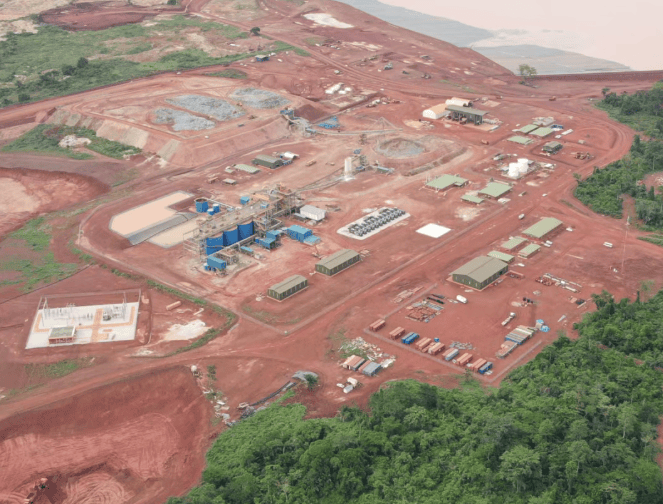
en.Wedoany.com Reported - Blossom Gold has launched an advancement plan around the historic Rosebud gold project in Nevada, USA, aiming to develop the site into an open-pit heap leach operation. The project has undergone six mining and reclamation cycles, and CEO Rick Winters describes it as one of the major heap leach operations in Nevada over the next five years.
The Rosebud project is located in Nevada, a state with over a century of continuous mining history and a stable regulatory environment. In the 1990s, the project area was simultaneously held by five major operators—Lac Minerals, Equinox, Hecla Mining, Santa Fe Gold, and Newmont—before undergoing consolidation. These companies drilled a total of 192 kilometers of core, identifying five underground ore bodies during a period when gold prices were $300 per ounce. The Hecla-Newmont joint venture mined approximately 1 million tons between 1997 and 2000, with a head grade of 15 grams per ton, and the ore was transported to a processing plant about 100 miles away.
A Preliminary Economic Assessment (PEA) conducted by engineering firm SRK, based on a gold price of $1,350 per ounce, indicates an open-pit resource of 97 million tons at a grade of approximately 0.6 grams per ton. Blossom Gold raised $115 million to complete the project acquisition for $35 million plus a 1% royalty, and provided the seller with silver stream upside. The company's recent work has focused on confirming historical resources and completing bottle roll and column leach metallurgical testing, with management expecting results within six months. Winters acknowledged that the market still applies a discount until technical work is completed, with the company trading at 0.18 times net asset value, compared to an average of 0.4 to 0.5 for such projects.
Blossom Gold has assembled a team with deep Nevada mining experience. Former Newmont executive John Seaberg serves as CFO, and Aaron Calhoun as mining engineer. Directors Vern Baker and Gradon Colby, who left Nevada Gold Mines to serve as COO, bring operational backgrounds. Vice President of Exploration Dr. John DeDecker specializes in exploration geochemistry and epithermal systems, while geologist John Schaff, with nearly 35 years of Nevada experience, serves as General Manager. Permitting expert Alan Haslum has joined the team.
A unique strategy for project advancement is leveraging existing underground workings to accelerate the permitting process. The company plans to reopen the historic underground mine in July, rehabilitating approximately 3,000 feet of drifts and opening drill stations for infill drilling. Since underground drilling does not count toward the Bureau of Land Management's (BLM) five-acre surface disturbance limit, the company can complete geotechnical, hydrological, and geochemical drilling while submitting a surface operations plan, cutting the total timeline by roughly half.
Project infrastructure is in good condition, with existing power lines already re-erected, ample water resources, and proximity to active mining operations, allowing access to a regional network of roads and drill platforms.
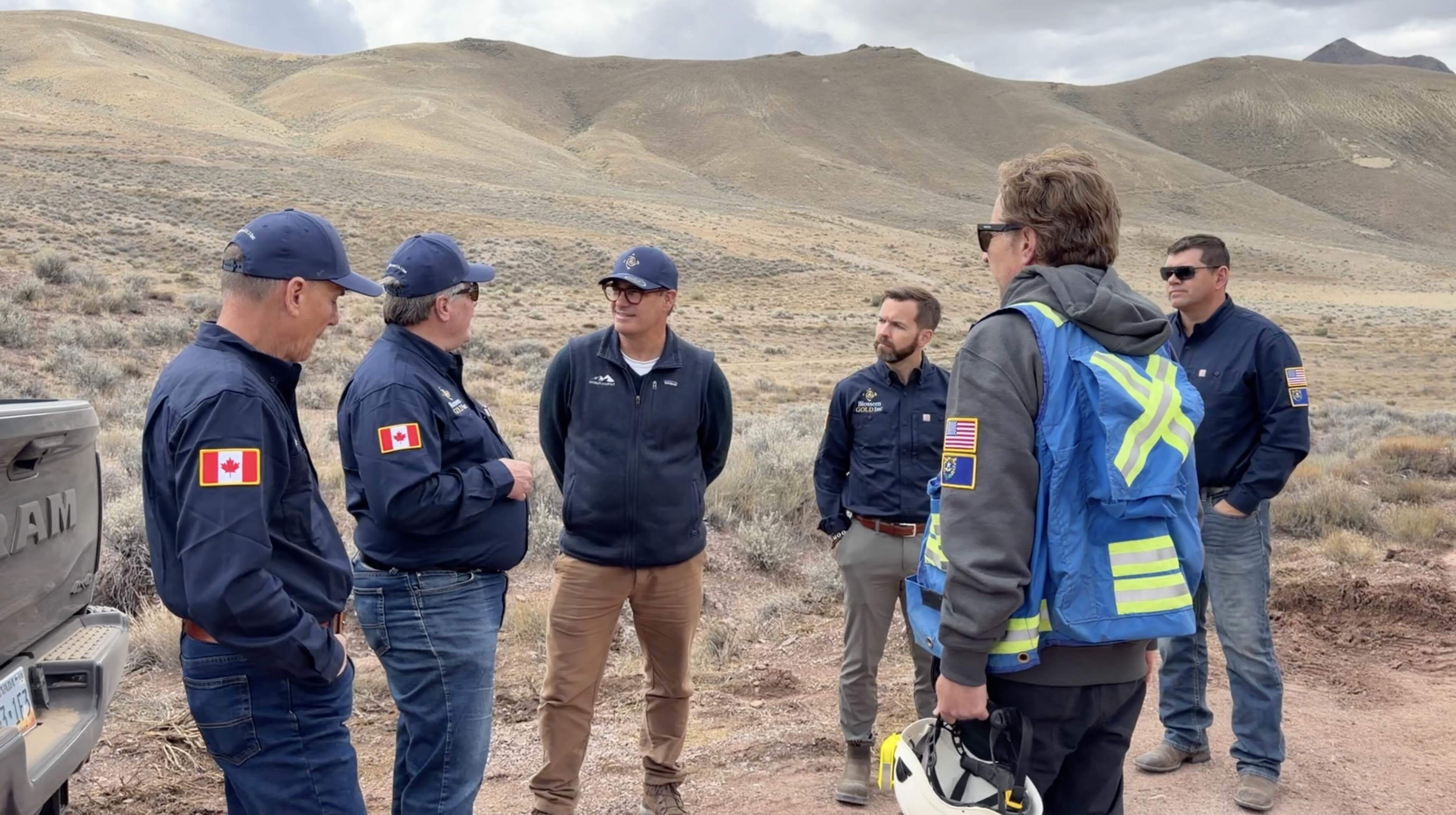
Blossom launched an 80,000-foot drilling program in 2026, with three core rigs operating around the clock. Vice President of Exploration Dr. John DeDecker stated that early results already show the mineralized system extending beyond historical mining limits, with a geotechnical drill hole at the southwest extremity still encountering strong mineralization and hydrothermal alteration. The early phase of the program prioritizes obtaining metallurgical core, and management expects to begin receiving routine exploration drilling results around mid-June.
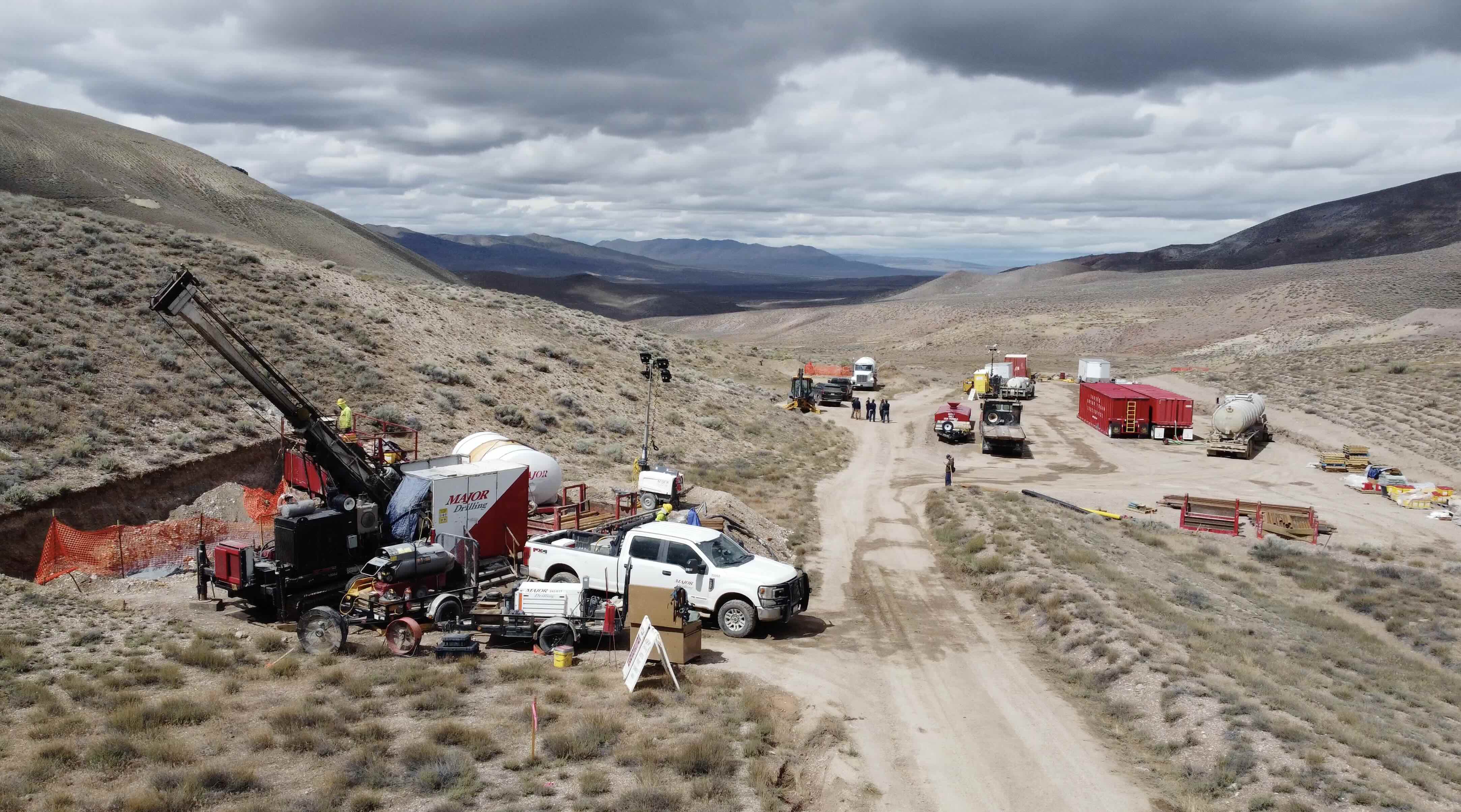
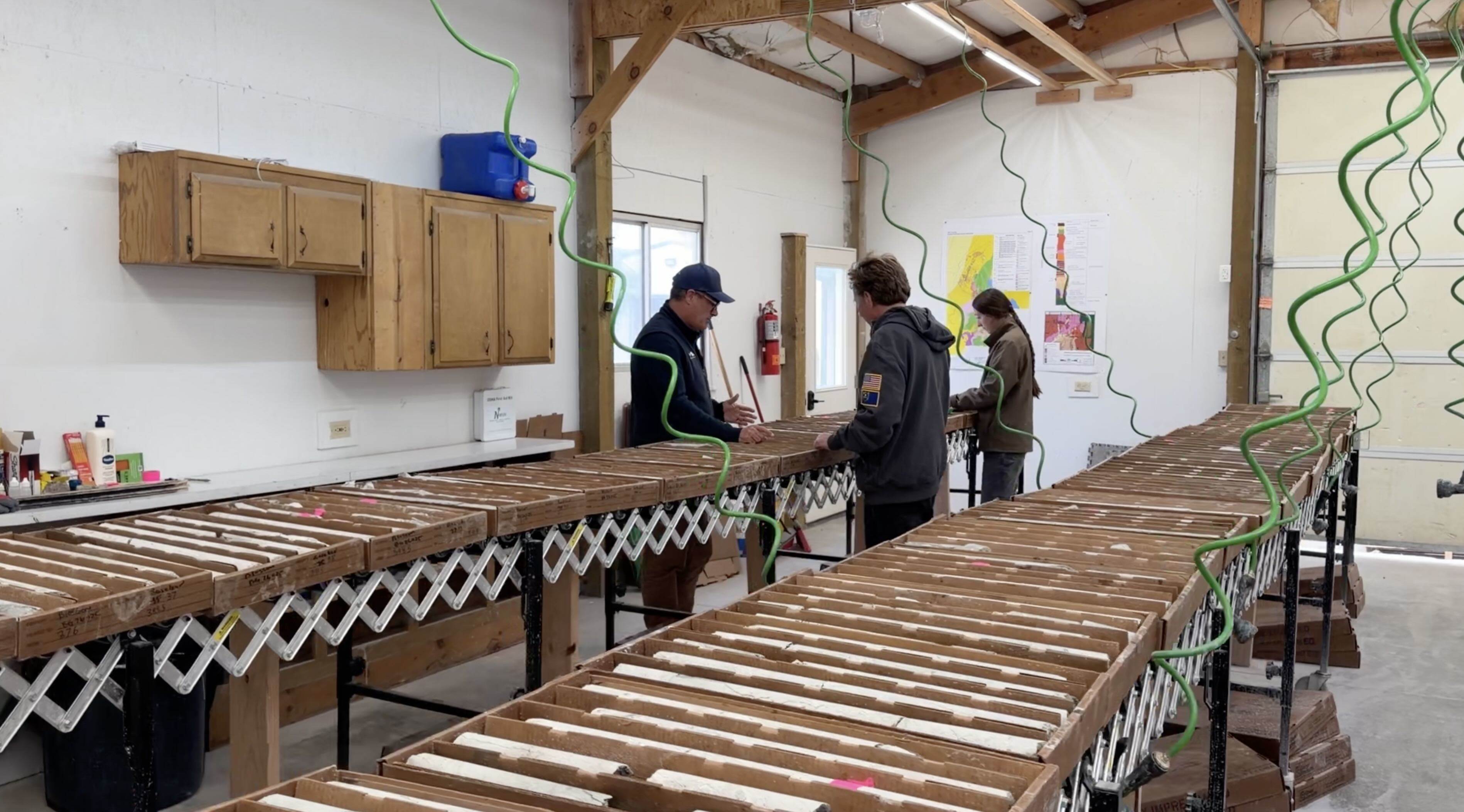
Geological analysis shows that mineralization occurs within the Rosebud volcanic tuff sequence, a fine-grained glassy rock produced by explosive eruptions, now hosting extensive pyrite and marcasite mineralization. The team uses handheld XRF devices on site to obtain real-time readings of indicator elements such as silver, arsenic, and tellurium to confirm the association of sulfide mineralization with gold.
In addition to the Rosebud project, Blossom also holds the Kamma land package, located on the trend of the adjacent Hycroft mine. Aeromagnetic and gravity surveys have identified structures extending from Hycroft into the Blossom property, and outcrop mapping confirms the site lies within the same stratigraphic unit. Later this year, Kamma plans 12,000 feet of drilling, funded by a two-year exploration budget.
Management targets an updated resource estimate in the first quarter of 2027, followed by a feasibility study, with a construction decision by the end of 2028.
Related Products


Industrial and Commercial Point-Type Gas Detector
Jinan Benan Technology Development Co., Ltd.

Mine Explosion-proof and Intrinsically Safe Industrial Ethernet Ring Network (10 Gigabit/Gigabit)
Chongqing Mas Sci&Tech Co., Ltd.
Comprehensive Mining Automation Control System
Beijing Tianma Intelligent Control Technology Co., Ltd.

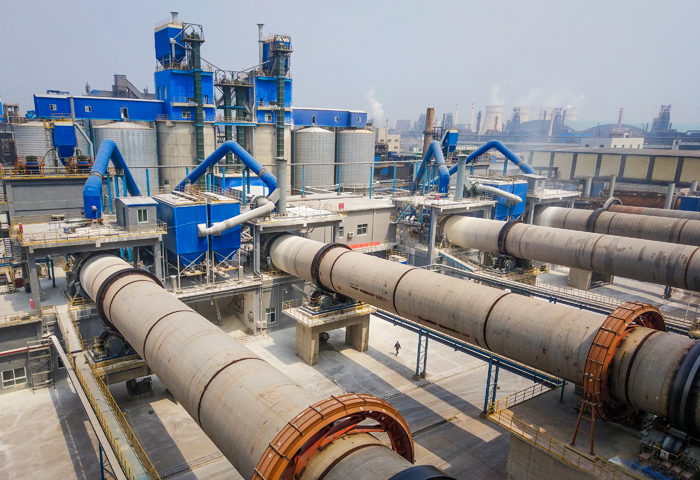
CITIC Heavy Industries Metallurgical Equipment Steel Smelting Engineering Equipment
CITIC Heavy Industries Co., Ltd.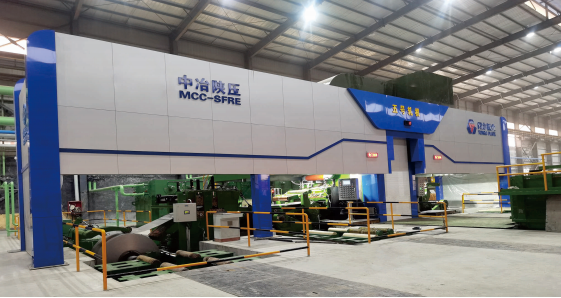
1050-1750mm Steel Strip Single-stand Reversible Cold Rolling Production Line
MCC-SFRE HEAVY INDUSTRY EQUIPMENT CO., LTD.