en.Wedoany.com Reported - McKinsey & Company recently released a report titled "Nuclear power: A renaissance in the making," which points out that Western countries should learn from the experiences of China and South Korea by adopting standardized and replicable reactor designs to reduce nuclear power construction costs and shorten construction timelines. The report predicts that by 2050, global nuclear power capacity will at least double, and could potentially triple, reaching 1,200 gigawatts (GWe). According to data from the International Atomic Energy Agency (IAEA), current global nuclear power capacity stands at 379 GWe.
McKinsey's analysis indicates that nuclear power development in Asia is significantly outperforming Western economies, with half of the global new nuclear capacity additions located in China. The report predicts that China's nuclear power capacity will surpass France in the short term and overtake the United States by 2035. The report highlights a stark contrast in the cost of commissioning nuclear power between the East and the West. According to estimates, the levelized cost of electricity (LCOE) for a new 1,000-megawatt-class third-generation reactor is $63 per megawatt-hour (MWh) in China, $65 per MWh in South Korea, $154 per MWh in the United States, and as high as $190 per MWh in France. LCOE, which covers capital investment and operational and maintenance costs, is a standard metric for assessing the cost of new nuclear projects and represents the long-term break-even electricity price for the plant.
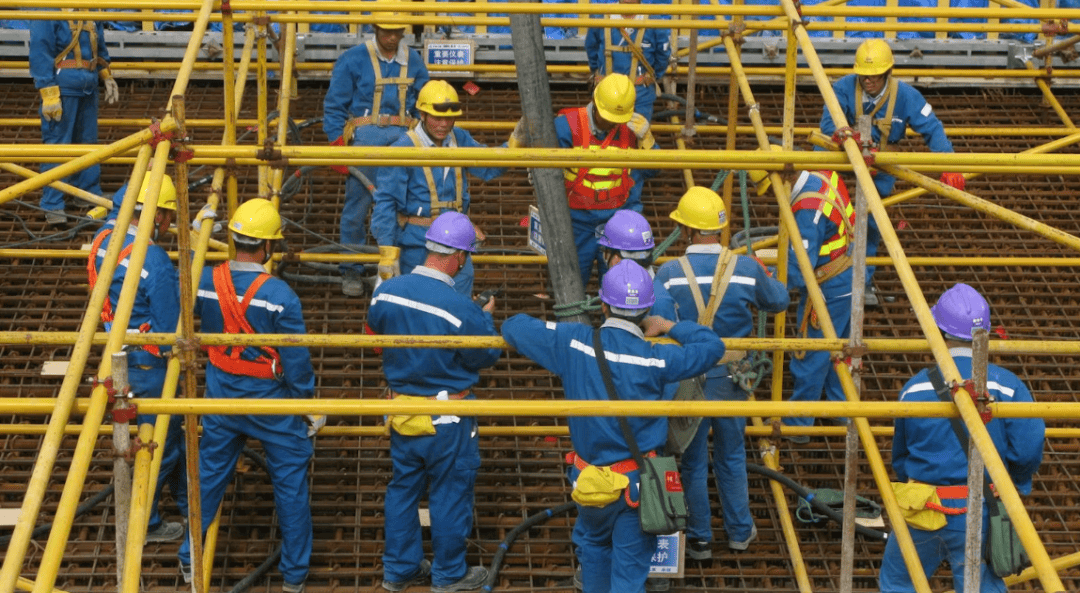
The report also emphasizes a significant gap in nuclear power construction timelines between the East and the West: South Korea's nuclear plant construction period is 6 to 8 years, while recent nuclear projects in Europe and the United States have taken nearly 20 years. China's nuclear project delivery cycle is only 70 months, offering a clear advantage.
To enhance the economic viability of nuclear projects, McKinsey recommends that companies and policymakers refer to the experiences of the aforementioned Asian countries. Companies can reduce costs and shorten timelines by building reactor groups in batches. The standardized design approach adopted by China and South Korea, which involves reusing designs across multiple projects, can lower costs and significantly compress construction schedules. Data shows that since 2000, more than one-third of China's operating reactors use the same reactor design, and 90% of units under construction utilize iteratively optimized mature reactor types. Additionally, modular construction, integrated project delivery models, and aligned incentive mechanisms between owners and contractors help reduce engineering changes, cut labor hours, and stabilize construction progress.
On the policy front, McKinsey recommends optimizing the approval process: completing all licensing approvals before project commencement and avoiding changes to approval requirements during construction, as such adjustments can easily prolong timelines and drive up construction costs. The report suggests that the nuclear industry needs to reduce operational and market risks to attract private investment. Financial instruments such as sovereign guarantees, export credits, loan guarantees, indexed power purchase agreements, and contracts for difference can lower financing costs, and these tools are particularly critical for high-risk projects such as first-of-a-kind reactors or entirely new reactor types.
The report also considers small modular reactors (SMRs) as a viable solution for nuclear power growth. Small reactors, typically with a capacity of less than 300 megawatts (MWe), could reshape the industry's development model: their designs are more standardized, can be prefabricated in factories, and produced in batches, further shortening construction timelines while also being suitable for regional grids or industrial hubs that cannot accommodate gigawatt-scale large reactors. The report also notes that countries like the United States still need to improve support systems to establish a stable nuclear fuel supply chain for new nuclear projects. McKinsey states that uranium enrichment is the most costly part of the nuclear fuel chain, and high-assay low-enriched uranium (HALEU) required for advanced reactors may face supply shortages in the future. The firm estimates that for the United States alone, achieving nuclear power development goals by 2050 would require cumulative investments of $105 billion to $170 billion across the entire fuel cycle.