en.Wedoany.com Reported - Italian solar module manufacturer FuturaSun has launched the Silk Nova Pure series of photovoltaic modules, which integrate anti-soiling glass technology designed to reduce dirt accumulation on the panel surface.
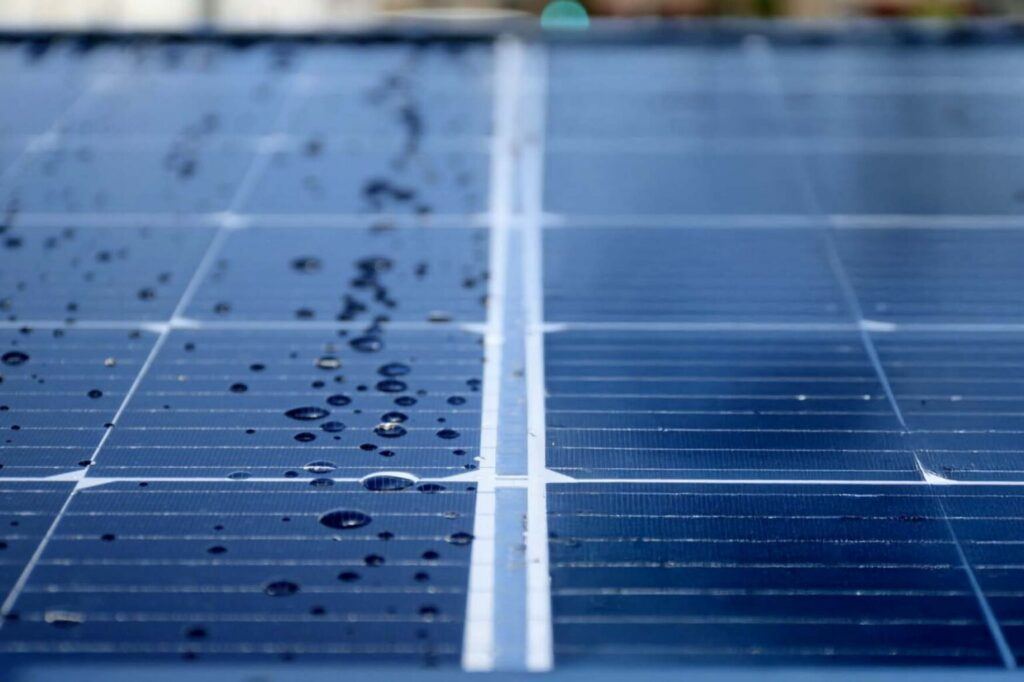
This technology, called True Rays, is integrated directly into the front glass during the glass manufacturing process, rather than being applied as a post-coating. FuturaSun states that this integration keeps the anti-soiling performance active throughout the entire service life of the module, avoiding the typical degradation issues of traditional surface coatings.
Gianluca Coletti, Chief Technology Officer of FuturaSun, explained that True Rays is an anti-soiling solution suitable for the entire service life of the module because the functional layer is integrated directly into the glass surface during the glass manufacturing process, becoming part of the glass rather than a surface coating. This integration ensures high durability and long-term stable performance, with relevant tests including damp heat accelerated aging, humidity freeze cycling, salt spray, abrasion resistance, and sand resistance. The material achieved 0-grade adhesion, 4H hardness, and withstood over 15,000 cleaning cycles while maintaining its photocatalytic properties. Coletti added that the solution is designed to remain functional throughout the entire service life of the module without requiring reapplication of treatment.
True Rays glass combines hydrophilic and photocatalytic properties. The hydrophilic surface allows rainwater to spread evenly across the glass rather than forming droplets, helping to remove dust and fine particles. Exposure to sunlight activates a photocatalytic process that breaks down organic contaminants such as bird droppings, biofilm, or moss, preventing them from firmly adhering to the surface.
The technology was developed in collaboration with Irish company Kastus, founded in 2014, which specializes in advanced surface technologies and sells smart glass solutions developed from initial research at Dublin Institute of Technology and Trinity College Dublin. Coletti stated that the technology was initially used for antimicrobial solutions in smartphones, laptops, home appliances, and automotive applications, eliminating over 99.99% of bacteria and viruses. Subsequently, its hydrophilic and photocatalytic properties were adapted for the photovoltaic sector, improving the degradation of organic residues, water runoff, and natural cleaning of panels.
FuturaSun noted that integrating this technology directly into glass manufacturing requires an additional surface functionalization step and specific quality control, although no subsequent treatment is needed during lamination or in the field. The company did not disclose the additional cost of the technology, as it depends on module format, production volume, and glass configuration, but expects costs to decrease as production scales up. The company believes this innovation is particularly targeted at commercial and large-scale utility projects, where small improvements in annual energy generation can have a significant impact on profitability. At the same time, the technology is also suitable for residential installations, especially where cleaning is more difficult on hard-to-access roofs.
FuturaSun cautioned that soiling remains one of the main factors reducing the performance of photovoltaic installations, particularly in environments exposed to dust, organic residues, atmospheric pollution, and biological growth. Reducing the accumulation of contaminants on the glass helps maintain higher light transmittance, stabilize long-term energy generation, and reduce cleaning frequency. Coletti stated that identifying and integrating technologies developed for other industries is a key driver of innovation, and this collaboration allows FuturaSun to introduce solutions already validated in demanding sectors such as automotive into the photovoltaic field, improving module performance, reliability, and energy generation throughout their service life.
Commercialization of the Silk Nova Pure modules is planned to begin in the fourth quarter of 2026, by which time the certification process and production planning for various configurations will be completed. FuturaSun has already opened reservations during Intersolar Europe 2026 in Munich.