Starbucks Spends $400 Million Annually on Software, Plans to Develop In-House AI to Replace Microsoft and IBM Systems
en.Wedoany.com Reported - Starbucks spends approximately $400 million annually on software, and the coffee giant is developing its own AI-assisted systems to replace Microsoft's inventory tracking system and IBM's maintenance management platform. Some new AI tools may be launched by the end of next year, depending on testing results.
The market reacted immediately after the announcement. IBM fell about 3% in pre-market trading, ServiceNow dropped 3.5%, and Salesforce declined 4%, according to data from Yahoo Finance. None of these companies lost any contracts that morning, but the market began reassessing a long-standing logic in enterprise software valuation: large companies always choose to buy software because building it in-house is too difficult.
Microsoft's stock was almost unaffected. The company is both the supplier of the inventory application Starbucks is replacing and the provider of the Azure cloud and AI infrastructure Starbucks relies on to build its alternatives. Starbucks' Green Dot Assist barista tool already runs on Azure OpenAI. IBM, ServiceNow, and Salesforce operate at the application layer, which Starbucks believes a coffee company can rebuild internally. ServiceNow and Salesforce were not even publicly mentioned by Starbucks, but the market sold off pure-play application vendors exposed to risk.
Starbucks Chief Technology Officer Anand Varadarajan told employees that there is a clear opportunity to reduce software spending, and the company is reviewing every contract and service. This is part of a broader $2 billion cost-cutting plan led by CEO Brian Niccol.
The logic is: if engineers already need to heavily customize vendor products to make them usable, and AI allows these engineers to build tailored tools in less time, what is the point of continuing to pay licensing fees? This scenario is not unique to Starbucks but is a preview of the "build vs. buy" recalculation currently underway in the technology budgets of every Fortune 500 company.
Mati Greenspan, founder and CEO of Quantum Economics, said companies are realizing that AI is not just a feature but the central nervous system of their operations. This move marks a strategic shift, as companies demand deep ownership and customization of their AI, reclaiming key technologies from external vendors to ensure a unique competitive advantage. His assessment was generated by AI financial assistant Korra AI.
Starbucks has not completely separated from Microsoft and IBM, still relying on Microsoft's cloud and AI infrastructure. Earlier this year, Starbucks withdrew an AI-driven inventory counting system due to inaccurate data, and stores resumed manual counting.
That failure actually makes the current move more credible. Through that lesson, Starbucks realized that layering AI onto flawed processes amplifies the flaws. The new approach targets workflows first: fix how inventory and maintenance actually operate, then build systems around the corrected processes, and finally let AI accelerate the construction.
Box CEO Aaron Levie said on LinkedIn that the best use cases for AI are often those that fundamentally change work, not just replace existing processes and improve efficiency. Companies are exploring their own versions because each industry is different.
This sequence is crucial: data integration, process redesign, then AI. Companies that skip the middle step will end up automating wrong decisions faster with expensive tools.
Four ripple effects are expected. First, vendors will fight back in areas such as integration depth, governance, security, and domain knowledge, with Microsoft, IBM, and Salesforce potentially repositioning from application sellers to infrastructure and trust providers. Second, more companies will replicate Starbucks' approach on their most expensive and least liked systems, starting with targeted replacements. Third, a new service economy will form around this transformation, with winners being operators who understand how to redesign the actual workings of enterprises. Fourth, as agents integrate into systems with sufficient historical and personalized data, prompts may gradually disappear, and systems will automatically complete repetitive tasks and predict needs. Companies that control system data will gain predictions on their own terms.
The lesson from Seattle is that AI is not just about cheaply writing software, but about giving companies the initiative to regain control of their own operations—provided they are willing to complete the process optimization work first. Starbucks has demonstrated this path with its $400 million budget.
Related Products
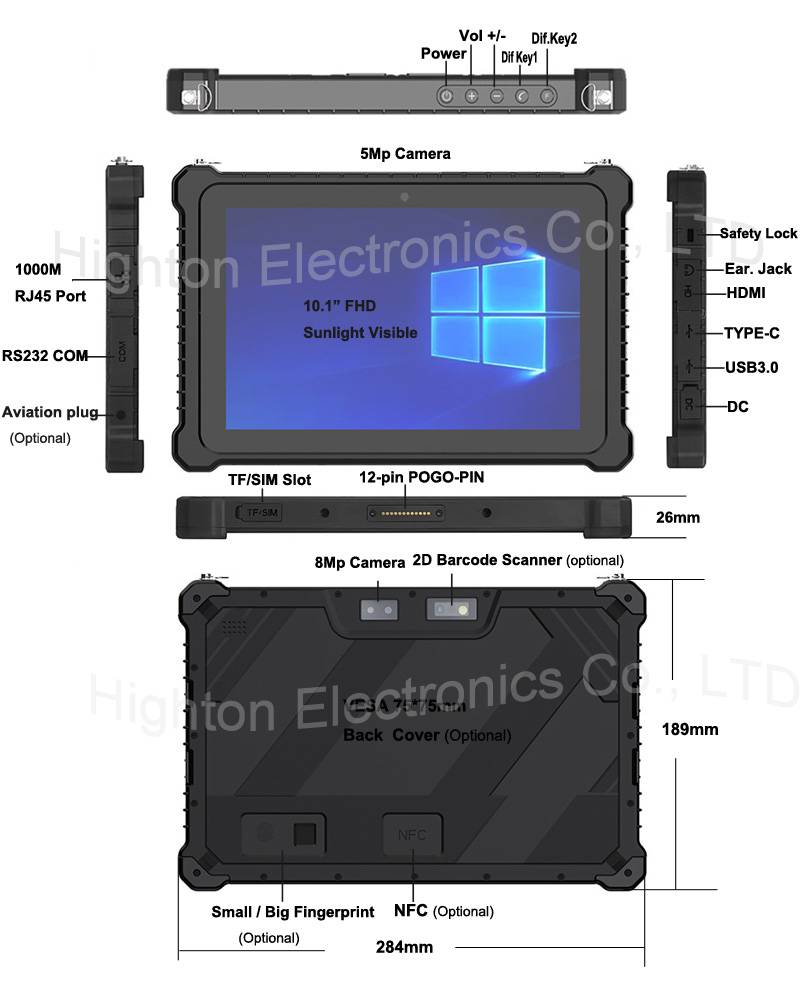

Hot Selling 10 Inch Intel N5100 I5 I7 FHD 8 +128GB 16+256GB Win10 Pro Win11 Pro 4G 5G Rugged Tablet PC Pad with NFC Barcode
Highton Electronics Co., Ltd.
20 Inch 1600*900 Full HD 60Hz TFT LED Monitor with VGA and DP Interfaces for Desktop Computers-Business Use
Guangzhou Zanying Optoelectronics Technology Co., Ltd.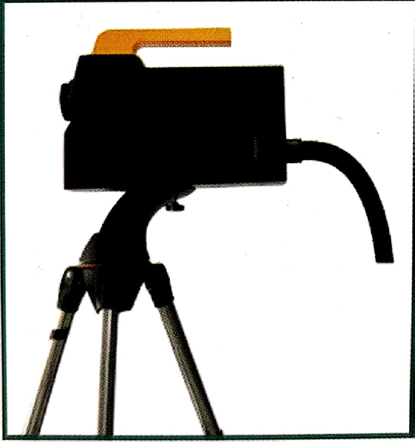
Automatic Aiming Laser Remote Obstacle Removal Robot
Pinggao Group Weihai High-Voltage Apparatus Co., Ltd.
Multi-function Marine Monitoring Low-altitude Detection Radar Sea-air Boundary Ocean Dynamic Environment Measurement
Chengdu Dixin Technology Co., Ltd.
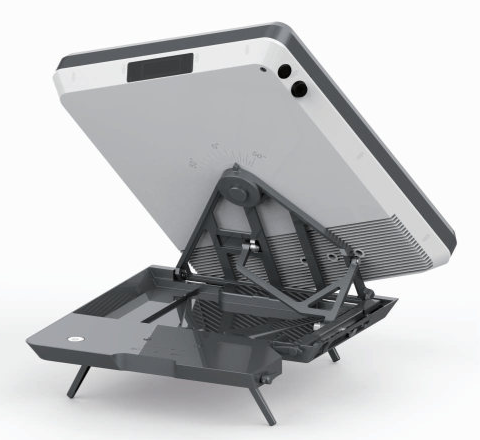
Flat Portable Satellite Terminal 0.35m Aperture Manual Portable Terminal
China Starwin Science & Technology Co., Ltd.
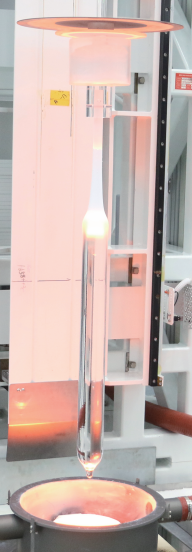
G.652.D Wavelength-extended Non-dispersion Shifted Single-mode Optical Fiber
HONGAN GROUP CO., LTD.