Nvidia Denies Rubin Ultra Delay at US Roadshow, Revenue Nears $100 Billion with Accelerated Growth
en.Wedoany.com Reported - Nvidia CEO Jensen Huang, along with CFO Colette Kress and other executives, attended a non-M&A roadshow hosted by Morgan Stanley in California, signaling to institutional investors that despite revenue approaching $100 billion, the company's growth rate is still accelerating. The market interpreted this as a direct response to concerns over competition from application-specific integrated circuits (ASICs), product launch delays, and the sustainability of AI computing demand growth.
Morgan Stanley analyst Joseph Moore summarized the closed-door meeting as having a "positive tone." Management emphasized "accelerated growth" and outlined the expansion of AI computing demand from research labs and traditional cloud giants into autonomous AI and industrial applications. Morgan Stanley reiterated its top pick rating for Nvidia in the semiconductor industry, maintaining an "Overweight" rating with a target price of $288, representing approximately 42% upside from the recent closing price.
Prior to the roadshow, market rumors suggested that Nvidia's next-generation flagship architecture, Rubin Ultra, might be delayed until 2028. Huang directly refuted these claims during the meeting, clearly stating that Rubin Ultra remains on track for shipment next year as planned.
Addressing supply chain concerns, Moore revealed that certain rack designs for the Rubin system are indeed being adjusted. The original Kyber rack solution will be replaced by a "better solution" designed to support larger-scale computing domains. However, this was defined as a system architecture optimization rather than a material change to the product timeline. Key technology modules, including 800V power delivery and inter-rack optical interconnects, are progressing as planned, with the next-generation product cycle unaffected.
The most surprising detail from the roadshow was a subtle shift in the customer composition of AI labs. Moore described in his report: "A fairly representative frontier model, previously developed primarily on ASICs with very low Nvidia engagement, now has nearly 50% engagement from Nvidia."
Morgan Stanley did not directly disclose the client's name, but the combination of "frontier model" and "primarily using ASIC chips" has drawn market attention to Anthropic. Anthropic's primary cloud service provider, Amazon, is also a key driver of its self-developed Trainium chip project.
This shift directly addresses investor concerns that hyperscale cloud providers like Google and Amazon, by developing custom chips, could erode Nvidia's moat. Moore believes that ASIC growth and Nvidia's business expansion can coexist. He noted that customers ultimately compare the total cost per token, not the bare chip price. Citing industry research data, Moore emphasized, "In many cases, Nvidia's solutions still offer lower token costs," allowing it to remain competitive in both training and inference workloads. He also pointed out that from 2024 to 2026, Nvidia's overall share in AI computing has actually increased.
Addressing concerns about reliance on a single growth source, Nvidia outlined three clear growth directions at the meeting. First, AI labs, which currently account for about 20% of Nvidia's total demand. Beyond leading models maintaining deep integration with the Nvidia platform, customers like Anthropic, which previously favored ASIC chips, are significantly increasing their GPU deployments. Second, traditional hyperscale cloud service providers. Microsoft, Meta, Amazon, and Google remain major revenue sources, contributing about half of total revenue. However, their expansion is constrained by power supply, land permits, and data center construction timelines. Nvidia's revenue from these customers is expanding from GPUs to CPUs and networking equipment. Third, next-generation AI clouds, autonomous AI, and enterprise customers. This area is becoming one of the fastest-growing segments. Driven by geopolitical factors and data security needs, governments are actively building localized computing infrastructure. Such autonomous AI projects are less affected by proprietary ASIC competition and favor Nvidia's highly integrated full-stack solutions.
On the hardware frontier expansion, Nvidia reiterated its target of approximately $200 billion for its CPU business this fiscal year. Nearly half of this revenue could come from standalone CPU racks. This indicates that the next-generation Vera CPU is not only serving as a management node in GPU servers but is also entering the broader general-purpose server market, leveraging its architecture optimized for single-threaded workloads.
With its market capitalization approaching $5 trillion, Nvidia is actively reshaping its investor base. Moore noted that as many growth funds' concentration in Nvidia stock nears internal limits, the company is shifting its communication focus toward value investors. This strategy is underpinned by strong cash flow. Moore predicts that Nvidia may allocate over 50% of its cash flow to share buybacks and shareholder returns in the future. This allows the company to maintain high growth while beginning to exhibit the cash flow defensive characteristics typically associated with value stocks. According to Morgan Stanley's model, Nvidia's revenue is expected to grow 82% in fiscal 2026 and 52.4% in fiscal 2027.
Despite the strong outlook, Morgan Stanley also highlighted some risks. If supply growth exceeds expectations, data center business growth could slow significantly. Additionally, a sharp decline in AI development costs, the emergence of more revolutionary competitor products, and accelerated deployment of proprietary hardware by customers could challenge Nvidia's valuation framework.
Based on the final signals from the roadshow, Nvidia's primary challenge is no longer "whether AI demand exists," but how to convert its massive order backlog into deliverable system revenue amid multiple physical constraints, including memory, networking, power, and data center space.
Related Products


Industrial and Commercial Point-Type Gas Detector
Jinan Benan Technology Development Co., Ltd.



Comprehensive Mining Automation Control System
Beijing Tianma Intelligent Control Technology Co., Ltd.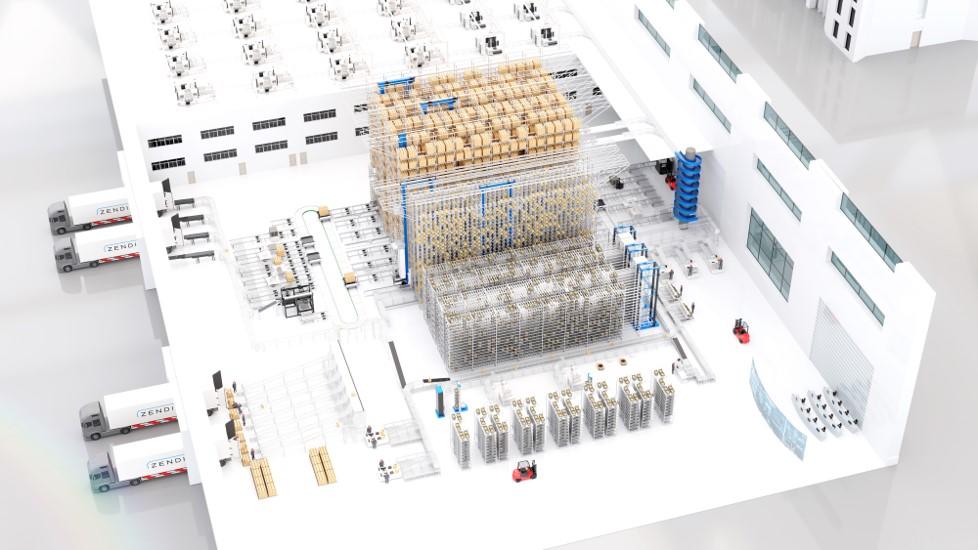
One-Stop Steward Service for the Entire Logistics System Integration Chain
Zhongding Intelligent (Wuxi) Technology Co., Ltd.
GYTA Type Non-Self-Supporting Aerial/Duct Optical Cable
TONGDING INTERCONNECTION INFORMATION CO., LTD.

MUX Series Communication Interface Device for Security and Stability Control System
Nanjing NR Electric Co., Ltd.
Hot Selling 10 Inch Intel N5100 I5 I7 FHD 8 +128GB 16+256GB Win10 Pro Win11 Pro 4G 5G Rugged Tablet PC Pad with NFC Barcode
Highton Electronics Co., Ltd.