UMC Singapore Launches 12-Inch Silicon Photonics Wafer Mass Production
en.Wedoany.com Reported - United Microelectronics Corporation (UMC Corp) has achieved a key milestone in silicon photonics, officially entering the AI infrastructure race.
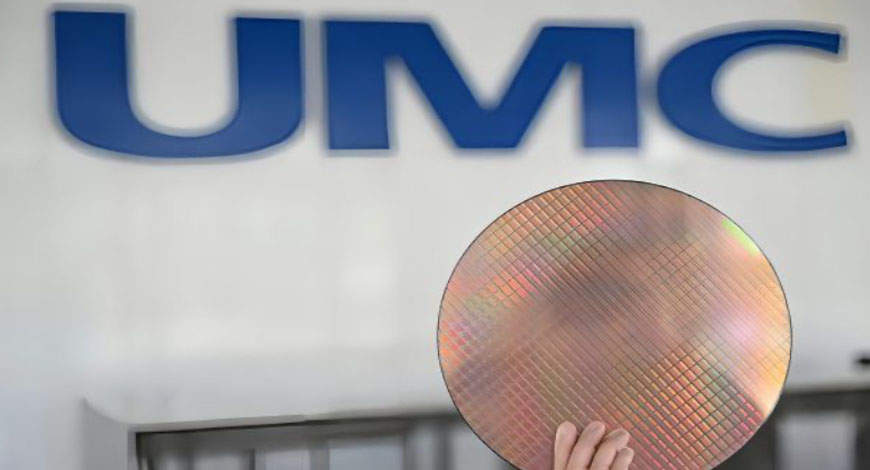
UMC revealed late last year that it is collaborating with several new customers to provide photonic integrated circuit (PIC) chips for optical transceiver applications on this new platform, with risk production scheduled to begin in 2026 and 2027. To achieve this goal, UMC has officially launched the first batch of 12-inch silicon photonics wafer mass production at its Fab 12i facility in Singapore.
In partnership with SILITH Technology, UMC advanced the 1.6T silicon photonics platform from development to production readiness within 18 months. The wafers have been certified by a top-tier cloud customer for high-speed AI data center deployments. This marks UMC's entry into the silicon photonics ecosystem. The transition from traditional 8-inch wafers to 12-inch wafers helps drive economies of scale, reduce unit costs, and improve reliability for high-volume production.
UMC's roadmap expansion includes: 200G/channel technology has entered commercialization; the next step involves joint development of a 400G/channel pure silicon solution; collaboration with imec to license its iSiPP300 technology, creating a 12-inch foundry platform that combines UMC's expertise in silicon-on-insulator (SOI) wafer processing and 8-inch silicon photonics IC platforms; TFLN and co-packaged optics (CPO) integration are coming soon.
Silicon photonics is rapidly entering mainstream manufacturing. UMC, focusing on a pure-play foundry model, continues to invest in the AI optical interconnect market. The Singapore base offers geopolitical diversity compared to being limited to Taiwan.
GlobalFoundries has already established a presence in silicon photonics with its SCALE™ technology. UMC's announcement may challenge GlobalFoundries' market share. TSMC is developing its COUPE architecture for end-to-end AI computing. It is worth watching how customers diversify procurement and adopt independent foundries like UMC to address the upcoming wave of optical transceivers.