en.Wedoany.com Reported - A wind-to-low-carbon-ammonia facility in Morris, Minnesota, USA, has commenced operations and launched its first production season. The plant is gradually ramping up to full capacity, aiming to produce one ton of low-carbon ammonia per day, which will support local fertilizer supply. Wind turbines power electrolyzers, which in turn provide hydrogen for the Haber Bosch ammonia synthesis unit. To address the fluctuating nature of renewable energy supply, newly developed modeling and control systems dynamically adjust the ammonia production rate.
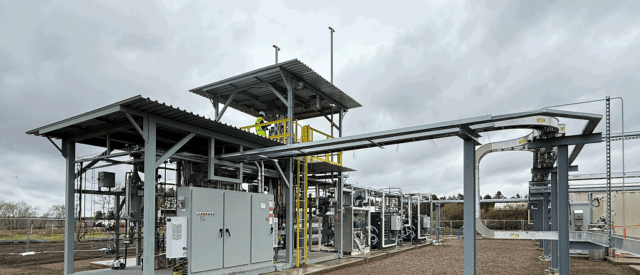
The plant is located at the University of Minnesota (UMN) West Central Research and Outreach Center in Morris, a rural area of Minnesota. The project is a collaboration between the University of Minnesota (UMN), RTI International, and Casale, aiming to alleviate high fertilizer prices and supply chain instability while creating new revenue streams for Minnesota. This unit is an upgrade from a 2013 pilot plant and could be expanded into a network of commercial renewable ammonia production centers owned by farmer cooperatives. The produced ammonia can be stored in tanks or combined with carbon dioxide byproducts from ethanol production to form urea, the most commonly used fertilizer form locally.
"When we first saw this idea, it seemed like an elegant concept: you can use a wind turbine to generate energy from the wind above cornfields or small grain fields, and then produce a nutrient directly beneath the wind farm in rural Minnesota... The state has no other ammonia or nitrogen fertilizer production facilities besides our small system here. If you can produce nitrogen fertilizer at an affordable and stable price year-round, farmers can budget for it and sell their crops accordingly," said Michael Reese, lead researcher for green ammonia at the University of Minnesota Twin Cities, in a June 26, 2026 press release.
"Essentially, wind or sun is our feedstock. We typically design chemical plants to operate at steady state and produce at a constant rate, assuming a constant feedstock supply. But that's not the case for green chemicals, or specifically green ammonia. To absorb the fluctuations in wind energy to some extent, you need large amounts of hydrogen storage to buffer these fluctuations, which is very expensive. On the other hand, if you allow the plant to operate dynamically, you can minimize the need for stored hydrogen or electricity, enabling a more compact and much more economical design. This is about economic development for the state... People can see the cooperative model, where they will join together to develop these plants with state support, loans, and credits," said Prodromos Daoutidis, a chemical engineering professor at the University of Minnesota Twin Cities, in a June 26, 2026 press release.
In the December 2025 issue of AEA's "Project Spotlight" program, project partners provided detailed introductions to the Morris facility and other ammonia energy research and development demonstration plants and startups originating from the University of Minnesota.