en.Wedoany.com Reported - As urban populations grow, extreme weather becomes more frequent and water stress increases, Reclaimed Water Reuse is moving from a downstream wastewater option to an important part of urban water resource planning. Many cities once treated wastewater mainly for compliant discharge. Today, treated effluent is increasingly viewed as an alternative water source for landscaping, road cleaning, landscape water, industrial cooling, ecological replenishment and municipal non-potable uses.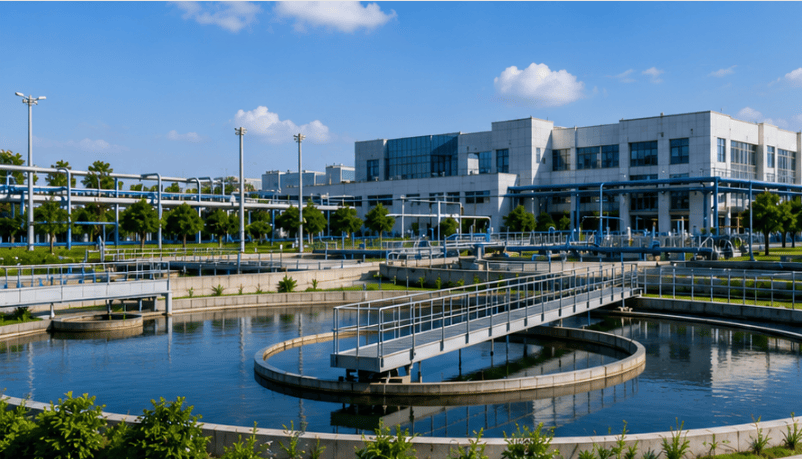
The core value of reclaimed water is the shift from treated discharge to treated utilization. Cities generate large volumes of domestic wastewater and some industrial wastewater every day. When this water is treated and polished properly, it can replace part of the demand for freshwater in non-potable applications.
For water-stressed cities and fast-growing urban districts, reclaimed water can reduce dependence on surface water and groundwater while also lowering discharge pressure on receiving water bodies. This makes reuse both a water supply strategy and an environmental management tool.
An urban reuse system usually requires wastewater treatment plants, advanced treatment units, reclaimed water pumping stations, distribution pipelines, storage facilities, online monitoring and user-side connections. Common polishing processes include filtration, disinfection, membrane treatment, activated carbon, ozone, advanced oxidation and reverse osmosis. Different end uses require different water quality targets.
Landscape irrigation and road cleaning focus more on suspended solids, turbidity and sanitary indicators. Industrial cooling requires attention to hardness, salinity, corrosion and scaling risk. Ecological or landscape replenishment requires control of nitrogen, phosphorus and algae-related problems.
The difficulty of urban reclaimed water projects is not only treatment technology. Distribution and operation are equally important. Reclaimed water needs separate pipelines or clear identification to avoid cross-connection with drinking water systems. Users need stable demand, otherwise utilization may remain low. Water quality must also be monitored continuously to avoid odor, microbial, color or salinity problems.
In the future, reclaimed water reuse will become an important tool for urban water security. Mature projects will need water quality matching, reliable pipelines, stable users and controllable operation. For water treatment suppliers and engineering companies, the opportunity is not only equipment construction. It is the delivery of complete solutions from source assessment and process design to distribution systems and long-term operation.