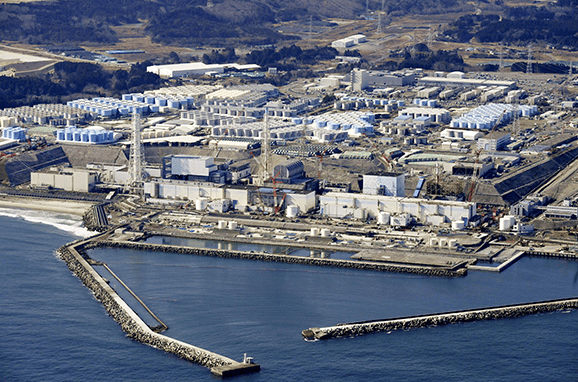
Wedoany.com Report-May 27, Deutsche Energy Terminal (DET), a state-owned operator under Germany’s Federal Ministry for Economic Affairs and Climate Action, has strengthened Germany’s energy infrastructure with the commissioning of its second liquefied natural gas (LNG) terminal in Wilhelmshaven, the country’s third LNG import facility. The Wilhelmshaven 2 terminal, featuring the 277-meter-long Floating Storage and Regasification Unit (FSRU) Excelsior, owned by Excelerate Energy, began operations off Wilhelmshaven’s coast, enhancing Europe’s energy resilience.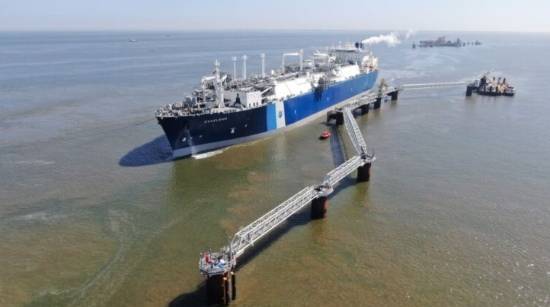
The terminal, with a regasification capacity of up to 4.6 billion cubic meters of LNG annually, supports Germany’s energy diversification. Dr. Peter Röttgen, DET’s Managing Director, stated: “In this challenging project, we have consistently worked together towards our goal: to significantly strengthen energy supply security in Germany. We must reduce the risks of one-sided dependence on energy imports for our economy and consumers.” The facility, completed in about two and a half years, was developed by ENGIE Deutschland and Tree Energy Solutions (TES) despite engineering challenges.
Katherina Reiche, Federal Minister for Economic Affairs and Energy, said: “Gas will remain of great importance for our energy supply for the foreseeable future. The opening of the second LNG terminal in Wilhelmshaven is therefore an important step towards greater security of supply, diversification of energy sources and the resilience of our country.” The project, supported by Gasfin Group, features an island jetty 1.5 kilometers offshore and uses ECOnnect Energy’s IQuay F-Class system for seabed pipelines, prioritizing ecological considerations.
Eric Stab, CEO of ENGIE Deutschland, noted: “We are pleased that ENGIE, together with TES, was able to contribute to securing Germany’s energy supply in the short term. We were responsible for the development and construction of the marine infrastructure that enables the operation of the floating terminal.” Marco Alverà, TES Co-founder and CEO, added: “The FSRU has helped turn Wilhelmshaven into a key entry point for LNG – at a time when energy security and transatlantic trade are high on Europe’s agenda.”
The FSRU Excelsior, testing an ultrasound method to prevent pipeline fouling, will supply up to 1.9 billion cubic meters of natural gas in 2025, equivalent to heating 1.5 million four-person households. By 2027, its capacity is expected to reach 4.6 billion cubic meters annually. DET operates four LNG terminals, including Wilhelmshaven 1, Brunsbüttel, and Stade, reinforcing Germany’s energy stability.