en.Wedoany.com Reported - The Institute of Architecture and Media at Graz University of Technology (TU Graz) in Austria reports that in on-site tests conducted in a sweltering attic on its campus, a temperature drop of nearly 7 degrees Celsius was recorded near a water-filled 3D-printed ceramic cube. This result validates a design concept that combines the centuries-old principle of evaporative cooling with additive manufacturing, aimed at addressing high-temperature urban environments.
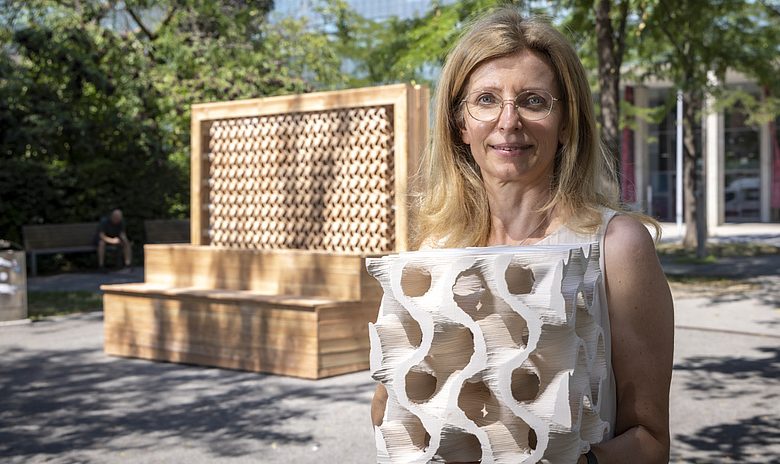
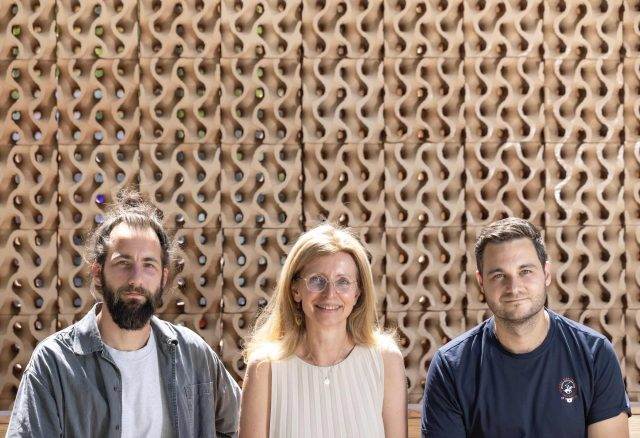
These cubes, measuring approximately 23 centimeters on each side, feature a triply periodic minimal surface geometry. They are formed from a ceramic clay mixture via 3D printing and subsequently fired at low temperatures, resulting in a highly porous structure. Water is drawn in through capillary action and spreads throughout the geometry, evaporating over a large surface area and absorbing heat from the air—a principle identical to that of clay pots and wind towers used for centuries.
Milena Stavric, Associate Professor at the Institute of Architecture and Media at TU Graz, stated that evaporative cooling methods using clay pots and traditional wind towers have been employed for hundreds of years. The technological advancement in this work lies in leveraging 3D printing to fabricate highly complex, porous, and functionally optimized geometries from clay mixtures. She noted that this special structure efficiently stores water, providing a vast evaporation surface despite its modest size.
The team is also testing biomimetic mixtures at the Shape Lab, adding fungal cultures and sawdust to the clay as a growth medium. Before printing and firing, the mycelial network spreads through the mixture; during firing, the fungal mycelium and sawdust are burned away, leaving behind micro- and macro-pores that improve water flow within the cube's interior.
Kristijan Ristoski, a researcher at the institute, stated that the cooling effect is clearly noticeable throughout the entire room. His master's thesis focuses on integrating the cubes and their water supply system into cooling walls. The team is currently also testing whether dredged sediment from Lake Neusiedl is suitable as a raw material for the cubes—sediment that is currently disposed of without being utilized.
Two demonstration walls have now been constructed: one at TU Graz's Campus Neue Technik on Stremayrgasse, measuring two meters by two meters, and another at the Museum of Perception in Graz. Stavric stated that the project's goal is to provide cooling solutions for populations particularly affected by heat, such as urban areas where tree shade is insufficient, relying on natural cooling principles rather than energy-intensive air conditioning technology.
The project, titled "3D Printed ceramic cooling walls for sustainable urban architecture," is being co-developed with the Institute of Building Physics, Services and Construction at TU Graz and is funded by the Proof of Concept program of Austria Wirtschaftsservice GmbH.