Wedoany.com Report-Jun 4, BASF SE has officially commenced commercial operations at its Black Mass plant in Schwarzheide, Germany. This advanced facility marks a key development in BASF’s battery recycling efforts and is one of the largest operational Black Mass plants in Europe. The plant is capable of processing up to 15,000 tons of end-of-life lithium-ion batteries and battery production scrap annually, equivalent to approximately 40,000 electric vehicle batteries.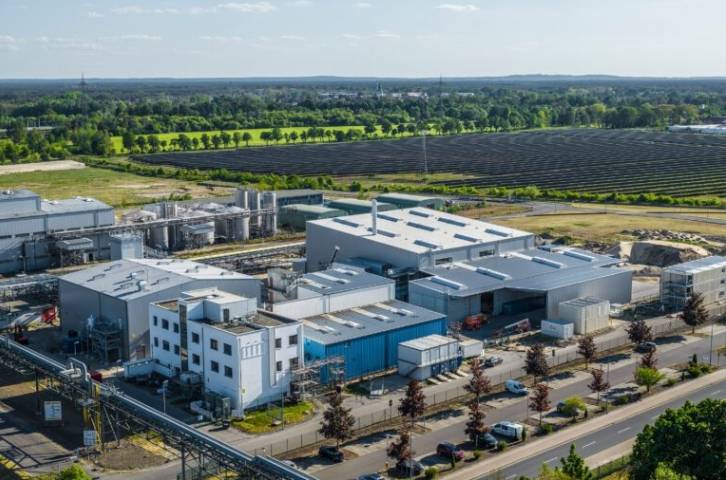
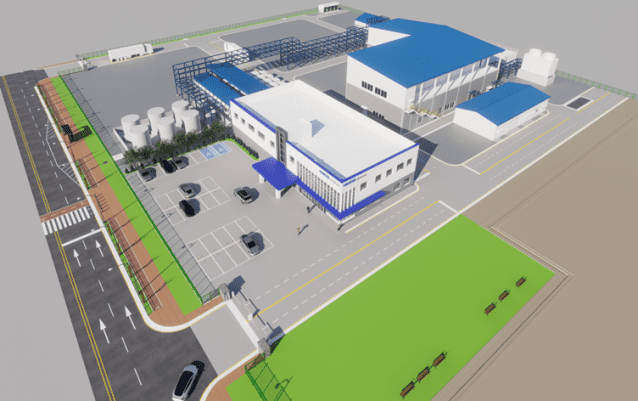
At its production site in Schwarzheide, Germany, BASF operates one of the largest commercial recycling plants for producing black mass from end-of-life batteries and production scrap in Europe.
The new plant enhances the European battery industry’s recycling capacity, aligning with the region’s circular economy goals. Battery recycling is essential for reducing reliance on primary raw materials and supporting more sustainable production practices. Black Mass, the intermediate product generated through the mechanical processing of used batteries, contains critical metals such as lithium, nickel, cobalt, and manganese. These metals are crucial for producing cathode active materials (CAM) and can be recovered and reused, contributing to the circular use of resources and lowering carbon emissions compared to using virgin materials.
Dr. Daniel Schönfelder, President of BASF’s Battery Materials division, emphasized the significance of the launch: “Our new Black Mass plant is another proof for our commitment to the Battery Materials and Recycling industry, which remains to be one of the most significant growth opportunities in the chemical industry and for BASF Battery Materials. It will become a cornerstone of our offerings to our customers to increase raw materials self-sufficiency and comply with the EU Battery Regulation.”
The Schwarzheide site plays a strategic role in BASF’s broader battery recycling value chain. In addition to the Black Mass facility, the site also hosts Europe’s first fully automated CAM production line, a prototype metal refinery, and one of the largest Black Mass storage facilities in Europe. These integrated capabilities allow BASF to manage multiple stages of the recycling process—from collecting and dismantling used batteries to refining recovered materials.
BASF’s comprehensive recycling services are supported by a strong network of partners across Europe, ensuring efficiency and consistency throughout the entire recycling value chain. The new plant not only adds significant capacity to BASF’s recycling operations but also reinforces its long-term strategy to support sustainable mobility and raw material recovery in the growing electric vehicle market.
By investing in advanced recycling infrastructure and technology, BASF aims to provide a reliable and scalable solution for battery material recovery, meeting both customer needs and regulatory standards while contributing to environmental sustainability.