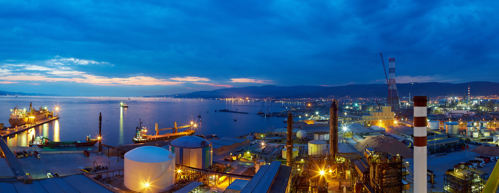
Wedoany.com Report-Sept. 9, In June, Metsä Group launched a carbon capture pilot plant at its Rauma mill in Finland, in cooperation with technology provider Andritz, which supplied the equipment. The project marks the first attempt to apply carbon capture technology to pulp mill flue gases, aiming to explore its feasibility and potential industrial benefits.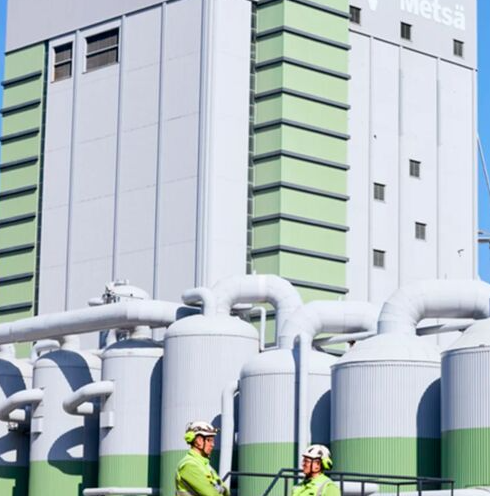
The pilot period will also provide information about the need for flue gas treatment and the quality of the end product.
During the autumn of 2025, the pilot will test several operating models, including energy use and the volume of carbon captured. It will also generate information about the need for flue gas treatment and the quality of the captured product. “So far, the technology appears to be working well with the pulp mill’s flue gases,” said Kaija Pehu-Lehtonen, Senior Vice President of Business Development and Director of Metsä Group’s carbon capture project.
Alongside the pilot, Metsä Group is studying the possibility of building a larger demonstration facility at the Rauma site. Such a plant could capture between 30,000 and 100,000 tonnes of carbon dioxide annually, compared to the pilot plant’s capacity of about one tonne per day. No decision has yet been taken, as the project would require solutions to both technical and financial challenges before moving forward.
The company highlights that bio-based carbon dioxide, a side stream from pulp mills, remains largely unused. Captured CO₂ can be employed as a raw material in sectors such as chemicals and fuels, providing an alternative to fossil-based resources. Importantly, the capture process does not increase wood usage at the mill nor reduce production efficiency.
Pehu-Lehtonen added: “Capture-related investments are large, and the market is underdeveloped, so we’re proceeding gradually. In addition, the value chains from raw material to finished products are often new and complex, requiring close cooperation between the participants and an insight into industrial operations.”
Metsä Group views the project as a step toward developing new markets, but emphasizes that regulatory frameworks and financial support will be essential. Market development depends on EU and national-level regulations as well as on state aid for the green transition. Such support is seen as crucial to accelerating large-scale industrial investments.
By testing carbon capture in a pulp mill environment, Metsä Group aims to explore how industrial by-products can be transformed into valuable inputs for other industries. The pilot is expected to provide insights into efficiency, costs, and integration with existing mill operations, while also supporting broader goals of reducing reliance on fossil-based materials and advancing the circular economy.
If successful, the Rauma project could serve as a model for scaling up carbon capture in the pulp and paper industry, contributing both to industrial innovation and to emission reduction targets in Europe.