On December 24, the Xinjiang 750kV Chang'an Substation was completed and put into operation, marking the entry of China's 750kV power grid development into a new stage of one hundred substations. Located in Alar City, Xinjiang, the substation will effectively enhance the power supply reliability of the regional grid, strengthen the power mutual support capability between the Northwest main grid and the Southern Xinjiang grid, and provide strong support for industrial development in border areas and residential electricity consumption.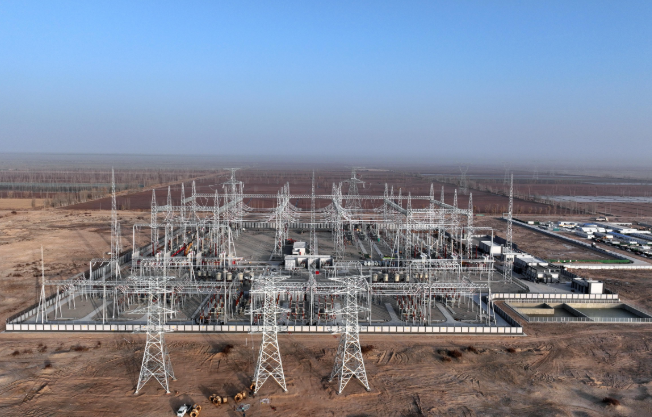
The 750kV power grid is a unique backbone grid in Northwest China, primarily responsible for long-distance, large-capacity power transmission. Since the first 750kV demonstration project was put into operation in 2005, after 20 years of development, this voltage-level grid has covered 100 substations, with a total transmission line length exceeding 36,000 kilometers, becoming a key infrastructure for energy transmission in the Northwest and optimal resource allocation nationwide.
Ma Xiaowei, Deputy Chief Engineer of the Northwest Branch of the State Grid Corporation of China and Director of the Development and Planning Department, stated: "Currently, the rapid development of new energy in the Northwest power grid and the intensive integration of UHV DC lines have placed higher demands on the planning and construction of the 750kV grid. We will take the milestone of one hundred substations as a new starting point, continuously optimize the grid structure, strengthen system planning, and promote the 750kV grid to better fulfill its energy strategic mission."
Currently, the 750kV grid is continuously being reinforced and upgraded, having basically formed a backbone network. It supports the stable operation of 14 UHV DC lines, ensures reliable access for approximately 400 million kilowatts of new energy installed capacity, and its service scope continues to extend to remote areas such as deserts and Gobi, making it an important guarantee for "West-to-East Power Transmission" and regional energy security.