Wedoany.com Report on Mar 13th, The German specialty chemicals company hubergroup Chemicals recently introduced an amine-modified polyether acrylate oligomer named UHVPI-222200. This product is designed to enhance the performance of next-generation UV-curable coatings by increasing curing rates, optimizing process efficiency, and improving surface quality, providing innovative solutions for related industries.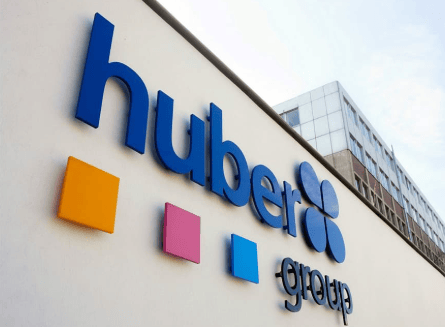
The core advantage of UHVPI-222200 lies in its high reactivity, which delivers significant effects even at low addition levels. This characteristic facilitates the acceleration of the UV curing process, helping to shorten production cycles and reduce energy consumption. Simultaneously, its low-viscosity design ensures good flow properties and formulation flexibility, enhancing application versatility.
According to hubergroup Chemicals, UHVPI-222200 effectively acts as a highly efficient amine synergist for Norrish Type II photoinitiators, is compatible with systems based on benzophenone and thioxanthone, and also supports the use of Type I photoinitiators. By promoting the generation of surface radicals, it reduces oxygen inhibition—a common phenomenon in thin films and pigmented systems—thereby enabling reliable surface curing and achieving high-gloss finishes.
Thanks to the combination of high reactivity and low viscosity, UHVPI-222200 can be used both as a synergist and as a reactive binder. In high-performance, low-viscosity formulations such as UV varnishes and coatings, it can even serve as the primary or sole binding component. This simplifies formulation structures, reduces monomer content, and supports more stable processing.
The product has a trimethylolpropane triacrylate content of less than 0.1%, making it particularly suitable for low-migration applications. Typical application areas include industrial coatings, UV varnishes, wood coatings, and other energy-curing systems, as well as UV flexographic inks and overprint varnishes. Overall, the key features of UHVPI-222200 include high reactivity, fast curing capability, low viscosity, and excellent pigment wetting, providing strong support for optimizing the performance of UV-curable coatings.