UK's Pulsar Fusion Achieves "First Plasma" Test for "Sunbird" Nuclear Fusion Rocket
en.Wedoany.com Report, On March 25, 2026, at the MARS conference hosted by Jeff Bezos, the UK-based space propulsion company Pulsar Fusion live-streamed and announced that the exhaust system of its "Sunbird" nuclear fusion rocket had successfully achieved a "first plasma" test. This marks a crucial step in humanity's journey towards utilizing controlled nuclear fusion for space propulsion by providing engineering validation for its core physical architecture.
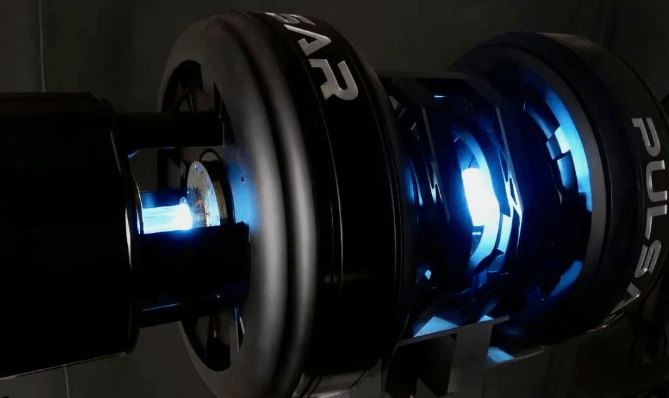
I. Core Breakthrough: Live-streamed "First Plasma" Test
The core of this demonstration was the successful generation and confinement of ultra-high-temperature plasma for the first time within the physical architecture of the "Sunbird" exhaust system.
Process: In their laboratory in Bletchley, UK, Pulsar's scientists injected krypton gas into the exhaust channel of the "Sunbird" system. Using a specific combination of electric and magnetic fields, they ionized, heated, and accelerated the gas, forming a plasma stream with a temperature exceeding that of the Sun's core. This "first plasma" test is an early, critical step in the project's development, with its core purpose being to verify the feasibility of confining and guiding plasma within the physical architecture of this exhaust system.
Technology: The exhaust system tested is a core component of the "Dual Direct Fusion Drive" (DDFD) design employed by Pulsar Fusion's "Sunbird" fusion thruster. The principle of DDFD involves using magnetic fields generated by superconducting magnets to confine the fusion reaction and directly channel the high-energy plasma produced by the reaction out through a nozzle to generate thrust. Its design goal is to create a propulsion system that can simultaneously provide high thrust akin to chemical rockets and extremely high specific impulse (high efficiency) akin to ion thrusters, thereby solving the fundamental conflict in current deep space exploration where chemical rockets consume fuel too quickly, while electric thrusters have too little thrust. Theoretical analysis indicates that the exhaust velocity of such thrusters has the potential to exceed 500,000 miles per hour.
II. Plasma Control and Material Endurance Emerge as Key Bottlenecks
While celebrating the successful demonstration, Pulsar Fusion clearly outlined the significant obstacles ahead and showcased targeted collaborative efforts to address them.
Plasma Confinement Challenge: The DDFD system needs to maintain operating temperatures of hundreds of millions of degrees Celsius. Under these extreme conditions, plasma instability makes confinement extremely difficult. To tackle this, the company is collaborating with Princeton Satellite Systems, applying artificial intelligence algorithms to analyze experimental data and optimize magnetic field configurations.
Material Endurance Limits: Even if future fuel cycles using deuterium-helium-3 are adopted to reduce neutron radiation, the high-energy particles generated during the reaction will still cause damage to the reactor chamber walls and magnets. Pulsar has already initiated collaboration with the UK Atomic Energy Authority, focusing on research into neutron shielding materials and modeling activation effects.
III. Clear Follow-up R&D Roadmap Based on This Breakthrough
This test validated the feasibility of the foundational architecture. Following closely, Pulsar Fusion unveiled a set of specific, measurable technical upgrade pathways:
Precision Measurement of Performance Parameters: In the next phase, the company will use specialized equipment such as thrust balances, E×B probes, and retarding potential analyzers to conduct precise measurements of thrust and exhaust velocity for the current experimental system. This will establish a data foundation for planning the "Sunbird's" first mission.
System Upgrades and Heating Experiments: Subsequent experiments will introduce rotating magnetic field heating and radio frequency (RF) heating systems, aiming to create plasma conditions that more closely match actual operating scenarios. Concurrently, the company plans to upgrade the magnetic system to rare-earth high-temperature superconducting magnets to achieve stronger magnetic fields. This will allow exploration of plasma operating conditions at higher densities and pressures, a critical step towards achieving a controlled fusion reaction.
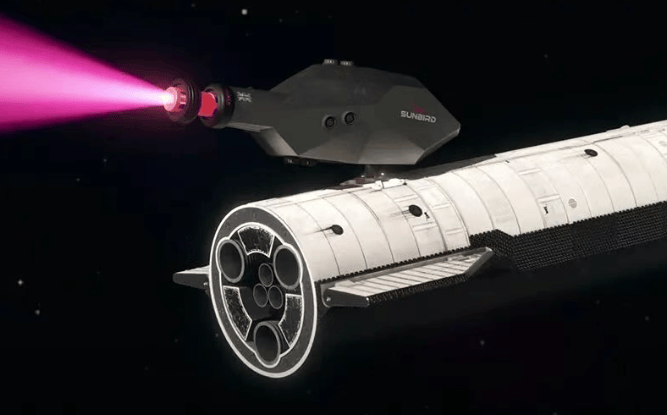
The "Sunbird" project is central to Pulsar Fusion's long-term strategy. The company has set ambitious long-term goals: achieving an in-orbit demonstration of the core fusion propulsion technology around 2027, and introducing a production-ready system in the early 2030s. If successful, this technology has the potential to shorten a journey to Mars to 3-4.5 months and reduce a mission to Pluto from over a decade to approximately 4 years, positioning it as a key enabler for unlocking the projected $1.8 trillion space economy.