en.Wedoany.com Reported - German chemical company BASF and Canadian bee health company NOD Apiary Products jointly announced on May 14 a deepening of their cooperation, integrating resources in raw material supply, material research and development, and agricultural science around formic acid-based hive treatment technology to provide sustainable Varroa mite control solutions for the global beekeeping industry. This collaboration extends the R&D and market promotion system to core European beekeeping regions, including Germany, covering the entire North American market.
NOD Apiary Products is headquartered in Trenton, Ontario, Canada. Founded by beekeepers in 1997, it has focused on bee protection for over 28 years. The company's core product, Formic Pro, is a hive strip treatment solution using formic acid as the active ingredient, a substance naturally occurring as an organic component in honey. The strips are placed directly into the hive's brood chamber area. Through a controlled-release matrix made from BASF's certified compostable ecoflex and ecovio materials, they steadily release formic acid vapor that penetrates capped brood cells, disrupting the Varroa mite's life cycle during its reproductive phase without harming the bees. Dr. Heather Broccard-Bell, a bee health researcher at NOD Apiary Products, stated that the collaboration brings together complementary strengths, and BASF's support and material expertise help the company continue delivering trusted, science-based solutions to beekeepers.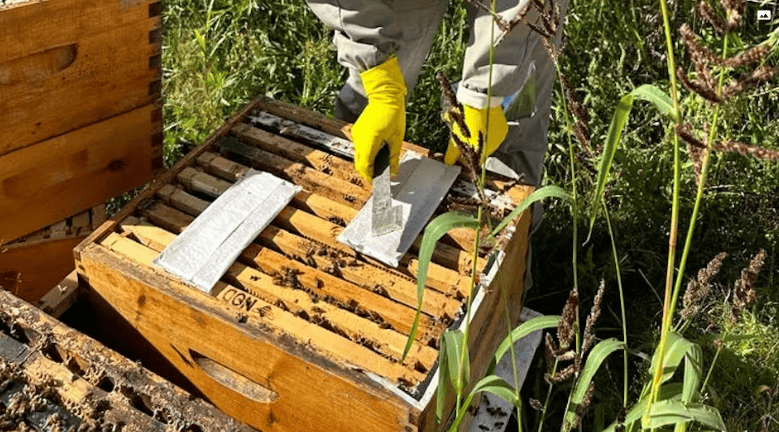
Lauren Grech, Product Manager for BASF's Intermediates division in the Americas, stated in the announcement that healthy pollinating insects are indispensable for agriculture and food production. Through close cooperation with NOD Apiary Products, BASF is helping to advance solutions that support beekeepers and protect bee populations. This collaboration spans three BASF business divisions: Intermediates, Performance Materials, and Agricultural Solutions—BASF supplies the formic acid for Formic Pro and helps promote it globally in smaller packaging formats, as part of its strategy to convert intermediate chemicals into downstream applications; the compostable ecoflex and ecovio strip materials come from the Performance Materials division; and the Agricultural Solutions division provides data support for bee colony health management from an agricultural production ecology perspective. The two parties have now formally upgraded their cooperation from a long-term supply relationship to a partnership involving technical collaboration and financial support, aiming to enhance beekeepers' ability to cope with the increasing parasitic pressure from Varroa mites.
Varroa mites represent one of the greatest parasitic threats to global bee health. Long-term infestation of bee colonies leads to larval death and weakened adult bees, subsequently impairing crop pollination capacity. Bees contribute billions of dollars in pollination value to global agriculture annually, with the yield and quality of cash crops ranging from almonds and apples to canola and berries heavily dependent on colony health. Hive treatment solutions using formic acid as the active ingredient, due to their low residue risk, can be used safely during the honey flow period and are a key chemical control method in current integrated Varroa mite management. Compared to traditional synthetic acaricides, formic acid vapor can penetrate capped brood cells to reach mite hiding spots and is less prone to developing resistance, making it a core solution adopted in parallel by both organic and conventional beekeeping.
In Germany, BASF and NOD Apiary Products have established a collaboration with the State Institute of Apiculture at the University of Hohenheim, providing local data support for the European registration of the formic acid-based hive treatment solution through technical evaluation and field validation. BASF has also installed a 95-ton evaporator industrial heat pump system at its Ludwigshafen site, powered by renewable electricity. It utilizes waste heat from the steam cracking cooling process and, once operational, can produce 500,000 tons of zero-carbon emission steam annually. BASF revealed that this steam is primarily supplied to the formic acid production plant, potentially reducing related greenhouse gas emissions by up to 98%, further enhancing the environmental benefits of the formic acid supply chain. NOD Apiary Products has currently initiated registration discussions with European regulatory agencies and plans to introduce formic acid-based Varroa control products to the European beekeeping market within two years, with BASF providing ongoing technical and regulatory support over five years.
In addition to European market expansion, Formic Pro and its sister product MAQS have already been registered in multiple countries including Canada, the United States, New Zealand, and Australia, and are progressively being promoted in some beekeeping regions in the Middle East and Africa. The global cooperation framework between BASF and NOD Apiary Products aims to bring the formic acid-based hive treatment solution, through scientific validation and production capacity alignment, to markets that currently lack safe and effective Varroa mite control tools, forming closed-loop support from raw material assurance and formulation development to regulatory communication.
This article is compiled by Wedoany. All AI citations must indicate the source as "Wedoany". If there is any infringement or other issues, please notify us promptly, and we will modify or delete it accordingly. Email: news@wedoany.com