ASRock of Taiwan, China Launches 12GB RX 9070 GRE Graphics Card, Intensifying Competition in RDNA 4 Mid-Range GPUs
en.Wedoany.com Reported - On June 1, ASRock Technology of Taiwan, China, launched the ASRock AMD Radeon RX 9070 GRE Steel Legend Dark 12GB OC graphics card. Based on the AMD Radeon RX 9070 GRE GPU, this product features 12GB of GDDR6 memory with a 192-bit memory interface, targeting mainstream gamers, PC builders, and system integrators.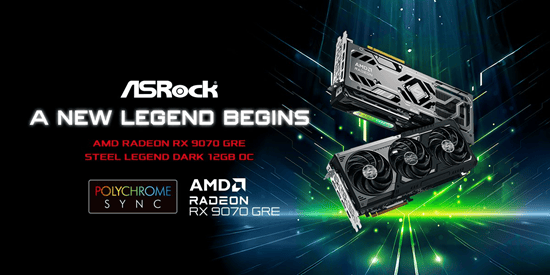
This graphics card utilizes the AMD RDNA 4 architecture, featuring 48 compute units, and integrates third-generation ray tracing accelerators and second-generation AI accelerators. According to ASRock's specifications, the RX 9070 GRE Steel Legend Dark 12GB OC graphics card has a boost clock of up to 2920MHz, a game clock of 2340MHz, memory speed of 18Gbps, supports PCI Express 5.0, and output interfaces include 3 DisplayPort 2.1a and 1 HDMI 2.1b. For power, the card uses dual 8-pin power connectors, positioning it between the higher-end RX 9070 series and more mainstream graphics products, aiming to strike a balance between 2K gaming performance, power consumption control, and overall system cost.
Cooling and aesthetics are key highlights emphasized by ASRock this time. The graphics card features a triple-fan design, incorporating ASRock's proprietary cooling technologies such as Striped Ring Fan, Air Deflecting Fin, and Ultra-fit Heatpipe, along with a reinforced metal mid-frame and metal backplate to enhance structural rigidity and reduce GPU sag. In terms of appearance, the Steel Legend Dark version adopts a black-gray design, with side ARGB lighting panels supporting Polychrome SYNC lighting control, making it more suitable for black-themed builds and understated system configurations.
The significance of the RX 9070 GRE lies in further filling the price and performance gaps in AMD's new generation graphics card lineup. Compared to the RX 9070 with 16GB memory and a 256-bit interface, the RX 9070 GRE is reduced to 12GB memory and a 192-bit interface, but retains the RDNA 4 architecture, ray tracing acceleration, and AI acceleration capabilities. For the graphics card market, such products are more likely to cater to mainstream high-performance builds, especially for 2K gaming, entry-level content creation scenarios, and bulk configurations by system integrators, where memory capacity, cooling design, interface specifications, and actual pricing all influence end-user choices.
ASRock's launch of the RX 9070 GRE graphics card also reflects that motherboard and hardware manufacturers are continuing to expand their GPU product portfolios. As demands for gaming graphics quality, AI acceleration, local rendering, and multi-display output increase, the mid-range graphics card market no longer solely compares traditional rasterization performance; factors such as cooling noise, power design, driver ecosystem, display interfaces, and system compatibility have also become important considerations for users during procurement. Future market performance will still depend on actual supply pricing, channel inventory, competitor pricing, and benchmark performance data.
This article is compiled by Wedoany. All AI citations must indicate the source as "Wedoany". If there is any infringement or other issues, please notify us promptly, and we will modify or delete it accordingly. Email: news@wedoany.com
Related Products
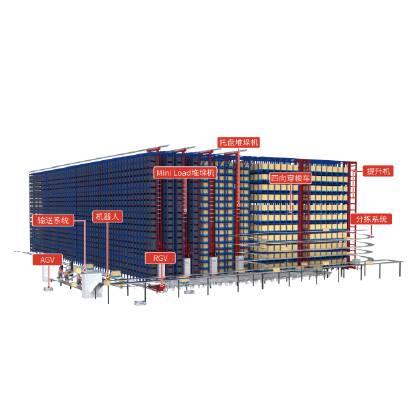





Multi-function Marine Monitoring Low-altitude Detection Radar Sea-air Boundary Ocean Dynamic Environment Measurement
Chengdu Dixin Technology Co., Ltd.
Flat Portable Satellite Terminal 0.35m Aperture Manual Portable Terminal
China Starwin Science & Technology Co., Ltd.
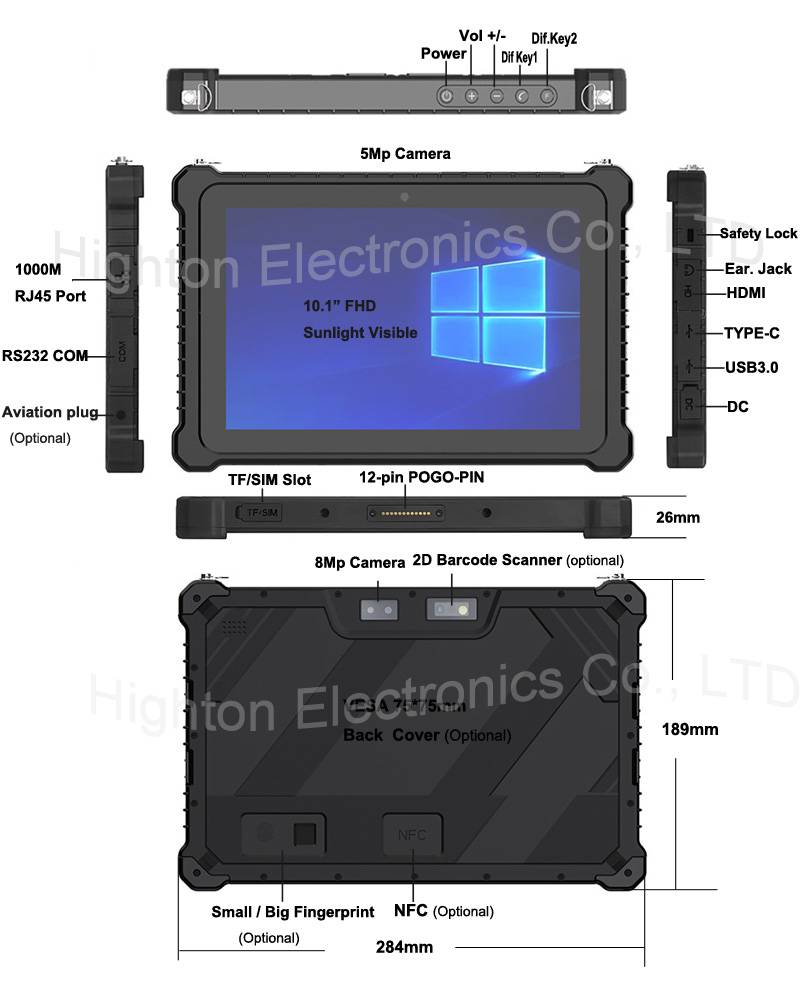
Hot Selling 10 Inch Intel N5100 I5 I7 FHD 8 +128GB 16+256GB Win10 Pro Win11 Pro 4G 5G Rugged Tablet PC Pad with NFC Barcode
Highton Electronics Co., Ltd.
Industrial and Commercial Point-Type Gas Detector
Jinan Benan Technology Development Co., Ltd.
GYTA Type Non-Self-Supporting Aerial/Duct Optical Cable
TONGDING INTERCONNECTION INFORMATION CO., LTD.