en.Wedoany.com Reported - Vector Architects has completed the Jingyang Camphor Court project in Jingdezhen, Jiangxi Province, China. The project is a renovation of a preserved historic industrial complex, with the core design premise being the protection of the mature camphor trees growing on the site. The design team planned the architecture around each tree, maximizing respect for the existing environment.
Jingdezhen, located in Jiangxi Province, is approximately a three-hour and fifteen-minute drive from Shanghai. As China's porcelain capital, its imperial kilns have been firing ceramics for 1,800 years. This hotel project is situated precisely on this deeply historic industrial site.
In its 17 years of practice, the design team has consistently focused on issues related to site, light, and construction. This project embodies its pursuit of a primal, tranquil, and timeless power in the essence of architecture. The building complex is composed of pure materials, including wood, stone, and the red-orange bricks from the original structure.
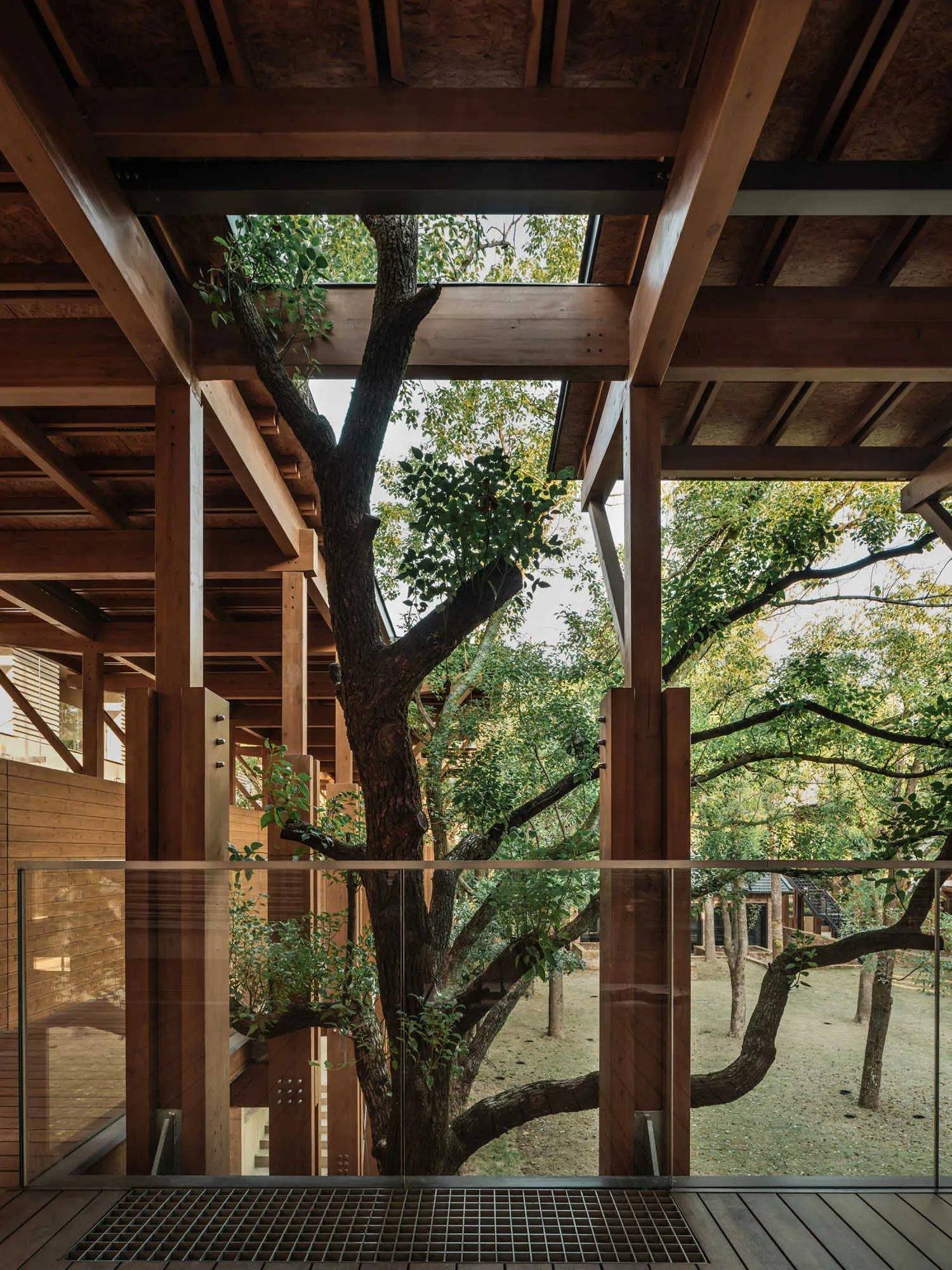
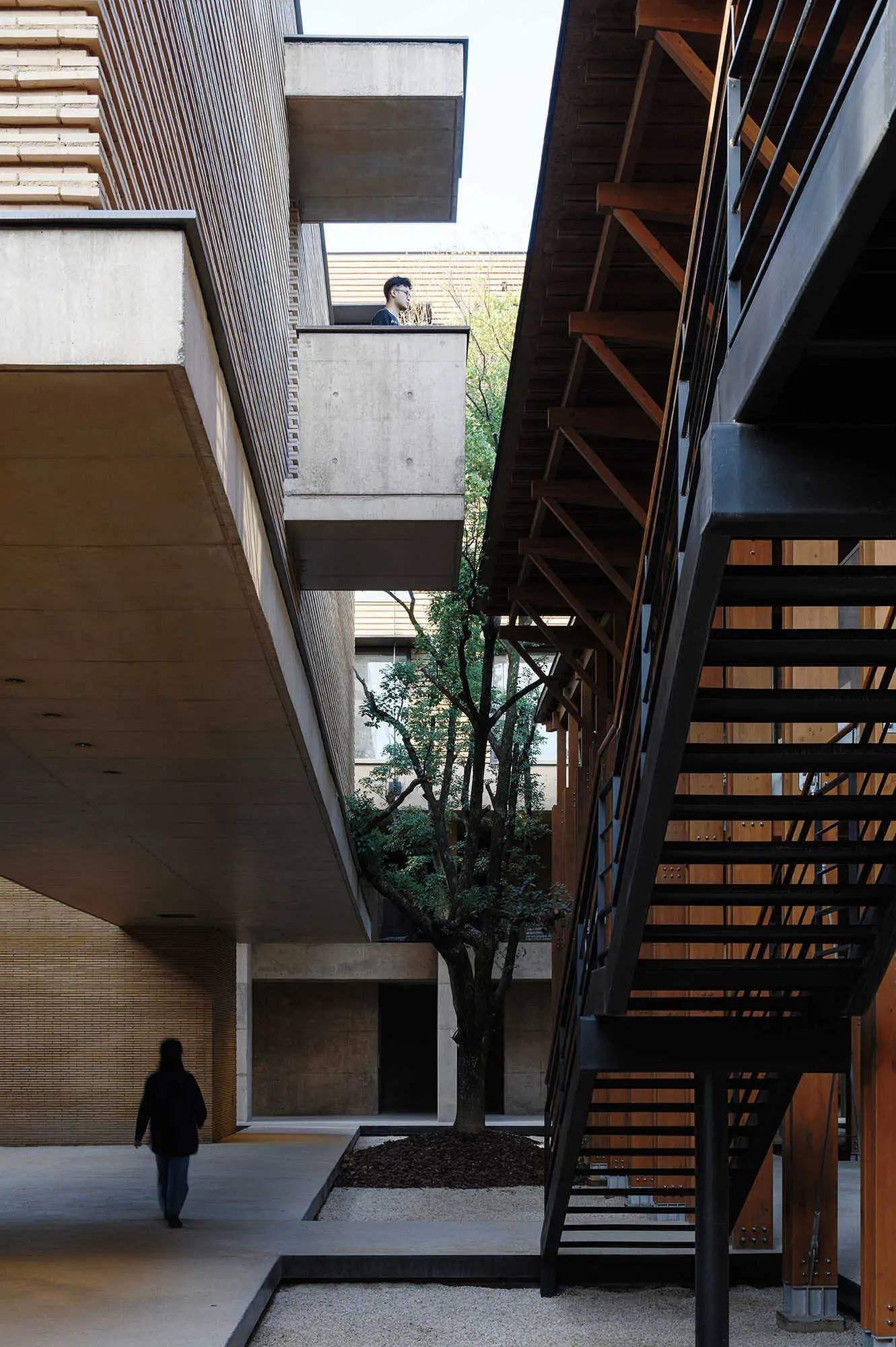
At the heart of the hotel, a wooden cloister surrounds the dense camphor trees. All new spaces, including terraces, guest rooms, meeting rooms, and the restaurant, are arranged around and connected to this cloister. The different building volumes are placed close together, with narrow wall gaps, creating an intimate, personal walking experience where visitors can observe the changing material palette as they pass through.
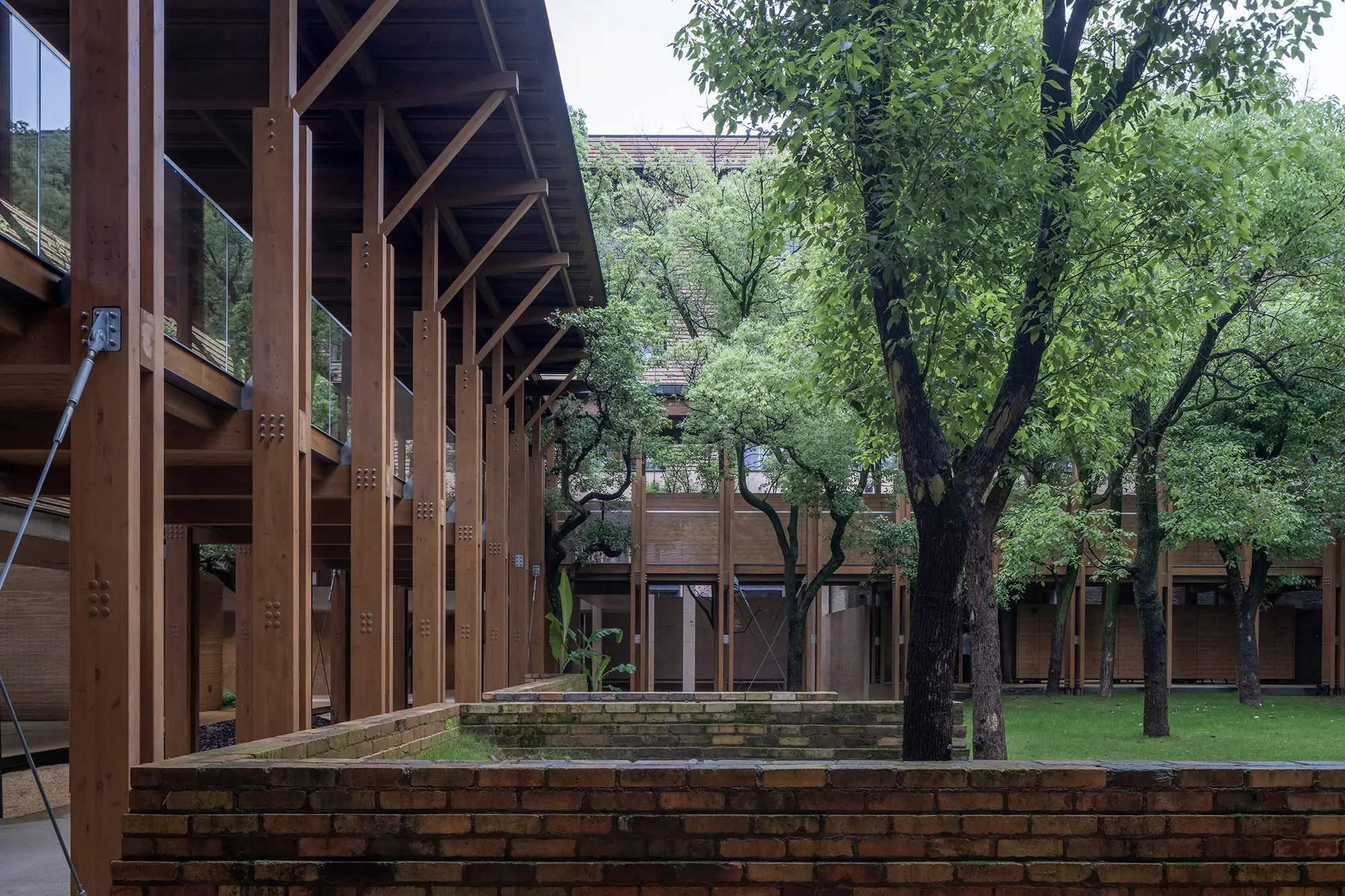
The overall warm tone of the project is dominated by the red-orange bricks from the original structure. To continue this color scheme, warm-toned concrete was used in the new additions, creating a transition between old and new elements. The use of wood harmonizes natural and industrial elements, contributing to a tranquil atmosphere.
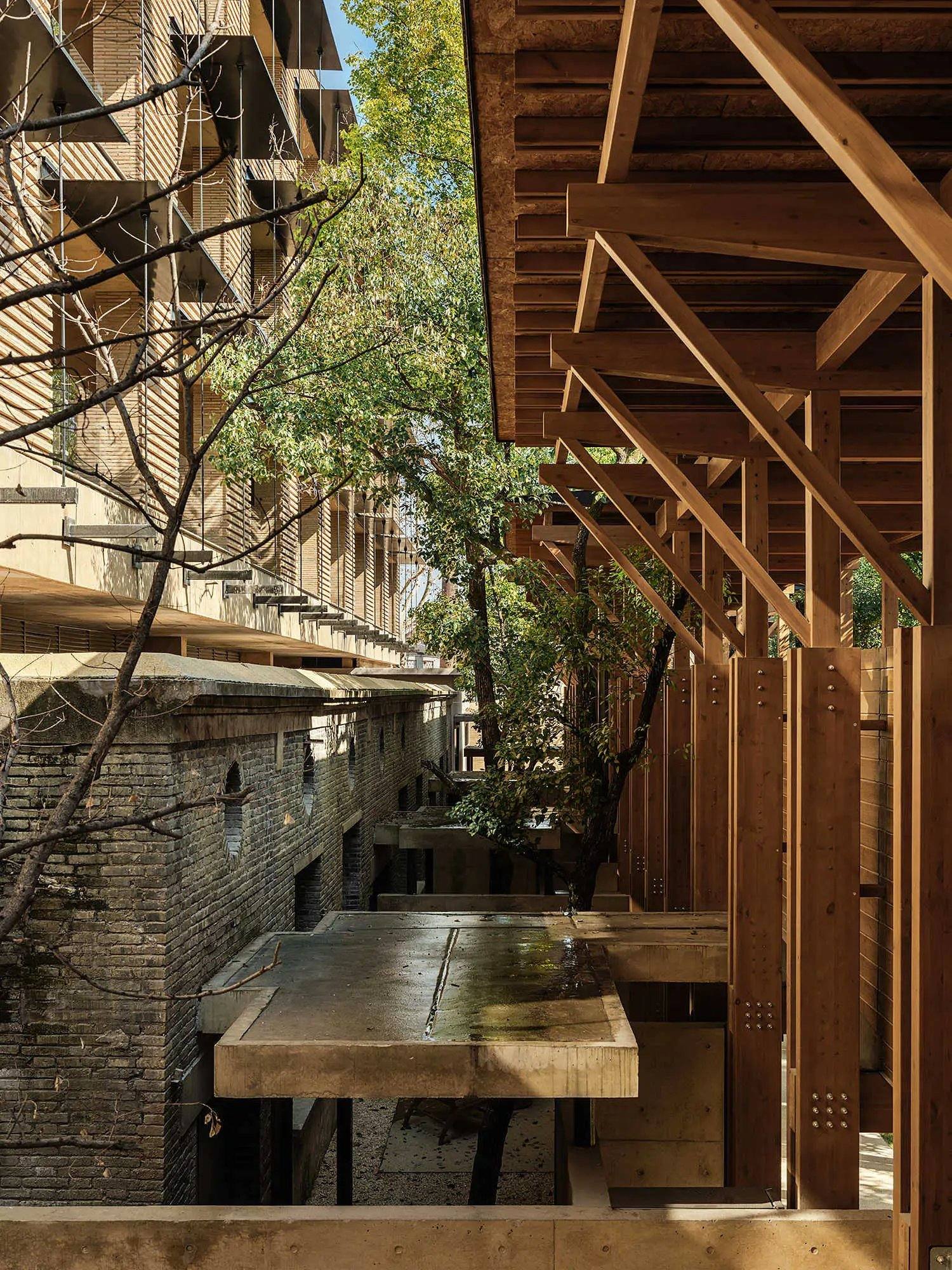
The guest room section is located in the north wing facing the central courtyard, an area that originally served as student dormitories. The design preserved the original walls of that building, with new structures grafted onto them, emerging from the existing volume. Each guest room opens via a balcony towards the inner courtyard and the passages between buildings, creating an introverted, human-scaled intimacy.
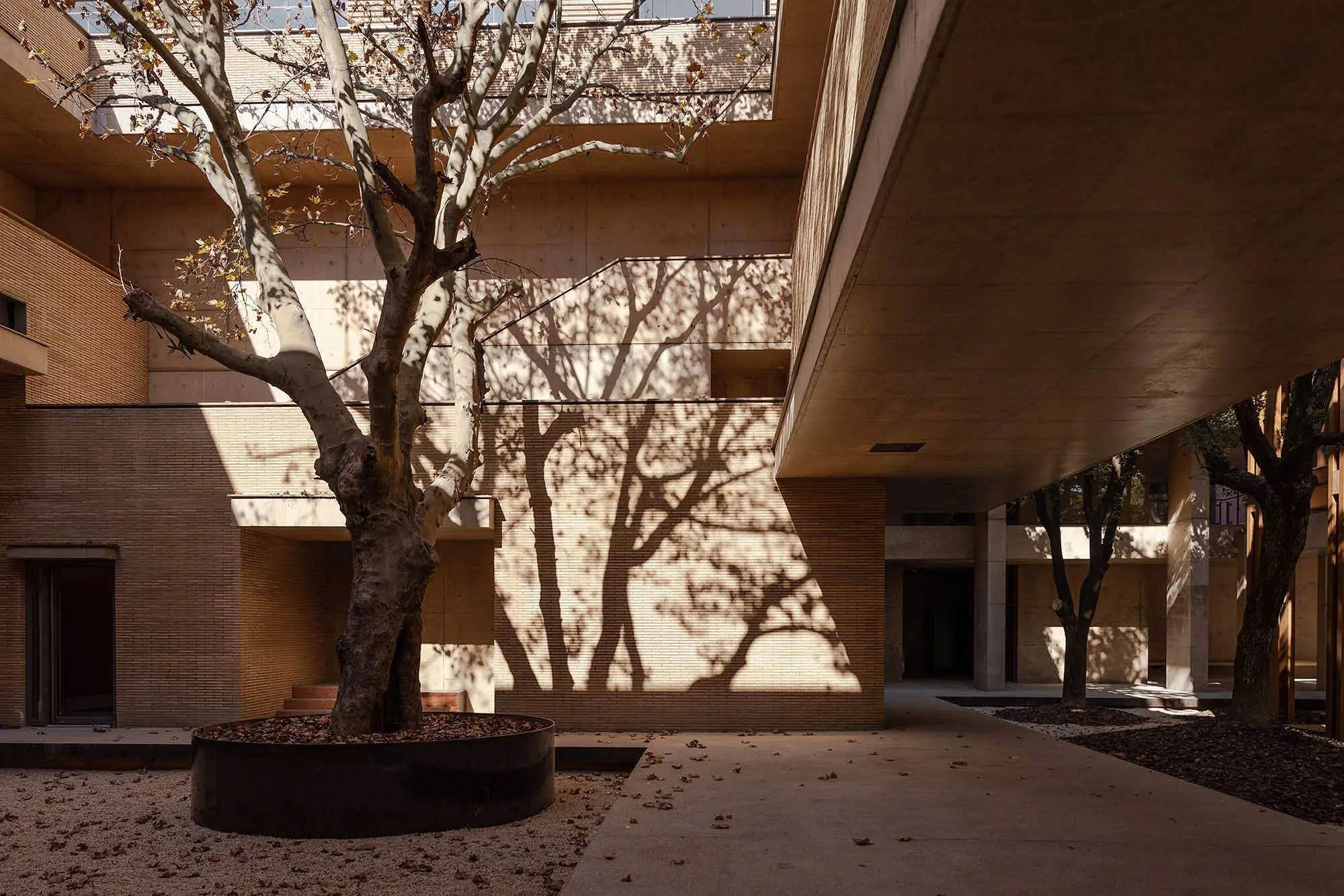
The project's continuation of the existing bricks' red-orange hue and the use of warm-toned concrete pay homage to the original industrial architecture's color palette.
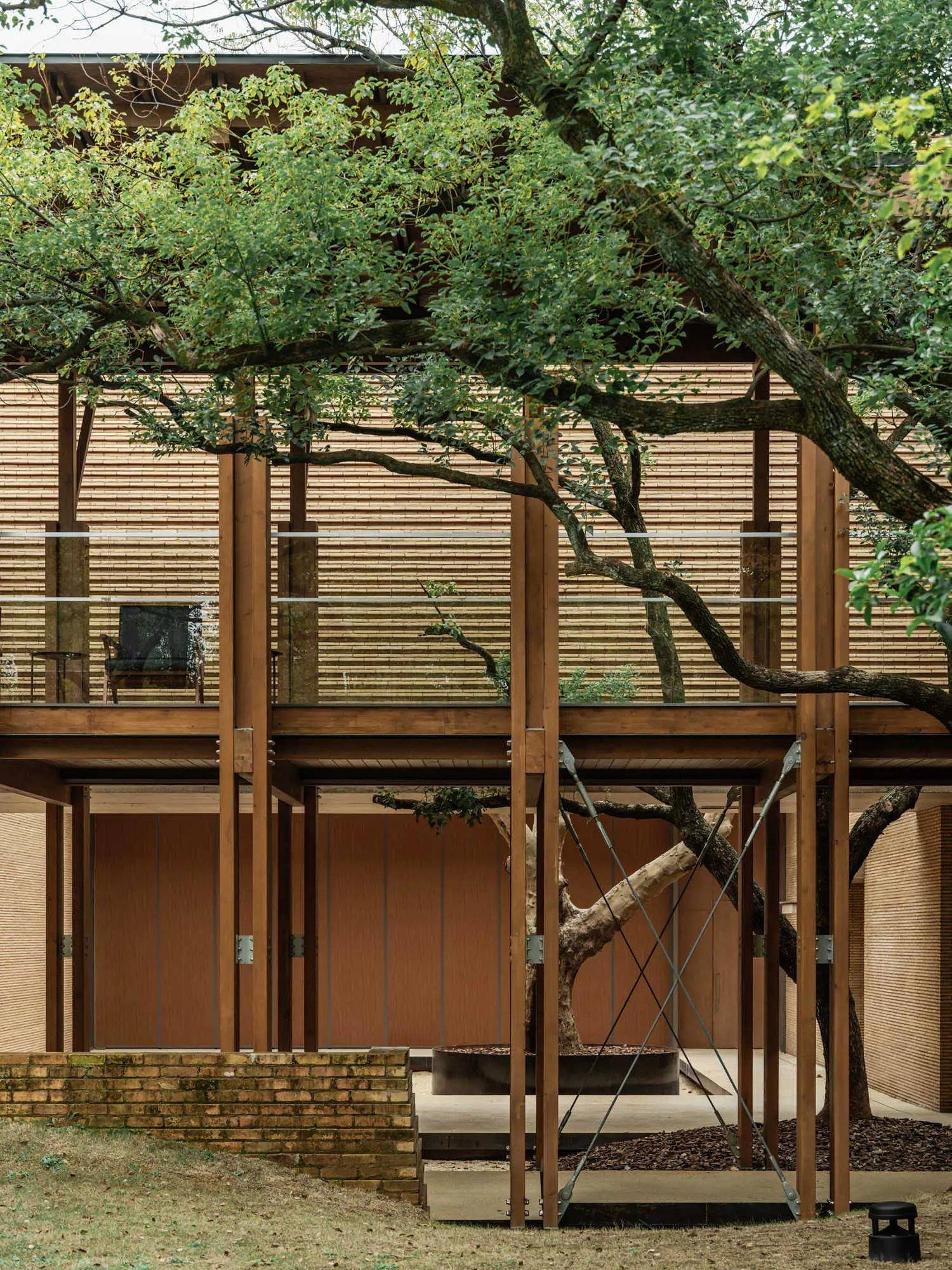
Overall, the project uses wood as one of its primary materials, establishing a harmonious relationship between natural and industrial elements within the structure, thereby supporting the preservation strategy.
This article is compiled by Wedoany. All AI citations must indicate the source as "Wedoany". If there is any infringement or other issues, please notify us promptly, and we will modify or delete it accordingly. Email: news@wedoany.com