en.Wedoany.com Reported - The Massachusetts Clean Energy Center (MassCEC) has launched a bidirectional charging pilot program that allows eligible electric vehicle owners to feed stored battery energy back into the grid and receive compensation for their vehicles' participation.
Bidirectional charging programs led by state governments and utility companies are becoming increasingly common in the United States, requiring specialized charging equipment. For example, Pacific Gas & Electric (PG&E) offers three bidirectional charging programs, while Baltimore Gas & Electric and Sunrun launched a pilot in Maryland two years ago, a period during which the state also passed laws requiring utilities to accelerate the installation of bidirectional chargers and allow customer vehicles to participate in virtual power plant projects.
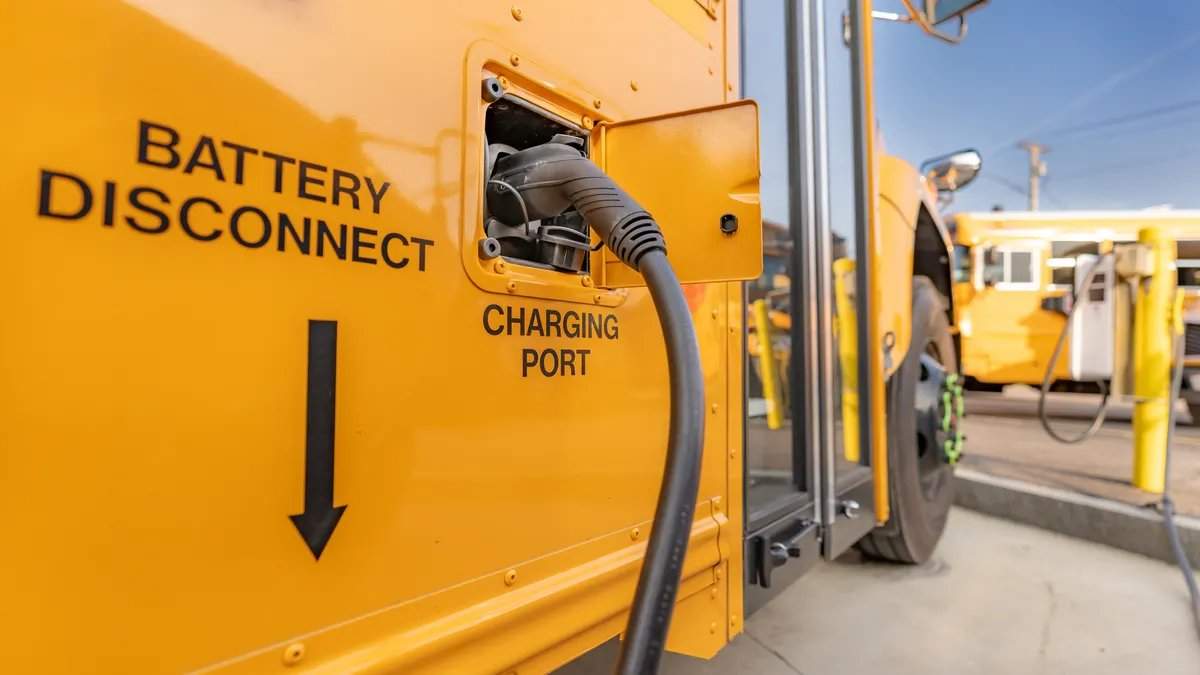
Not all electric vehicles have the capability to feed battery energy back into the grid, but the number of models with this feature is growing. According to MassCEC, consumer models eligible for the pilot include the Ford F-150 Lightning pickup, Nissan Leaf hatchback, Kia EV9, Volvo EX90 family SUV, and Polestar 3 compact SUV. Additionally, five electric school bus models qualify. This pilot is one of the charging programs selected by the state's Electric Vehicle Infrastructure Coordinating Council (EVICC) to secure a portion of the $50 million in grants authorized by the 2021 federal economic stimulus package, the American Rescue Plan.
Sinclair of MassCEC stated that the Coordinating Council's mission is to build "the future electric vehicle charging network" in Massachusetts, and lessons from the pilot could help the state overcome ongoing challenges to widespread bidirectional charging adoption, such as upfront costs and logistical hurdles. He noted that the goal is to validate "how to go from a 'lab experiment' to something anyone can operate at home."
Sinclair said the state's ConnectedSolutions virtual power plant is one of the most generous in the U.S. for bidirectional electric vehicle owners. Certain registered light-duty vehicles could potentially earn around $3,000 per summer, making the compensation highly attractive for residential users.
Electric school buses, with their larger batteries and predictable downtime—especially during peak summer demand periods—can generate substantial annual income. According to a MassCEC case study, vehicles participating in National Grid's ConnectedSolutions program can earn up to $12,000 per bus per year. In an earlier vehicle-to-grid demonstration, a school bus in Beverly, Massachusetts, discharged 10.78 megawatt-hours into the National Grid system during the summers of 2021 and 2022, generating $23,500 in revenue.
Sinclair believes that for school buses, "the use case is starting to make economic sense," and adoption of electric school buses is likely to grow in the coming years. The state's utilities have taken steps to simplify grid interconnection for bidirectional chargers. However, utilities are still learning how to manage bidirectional electric vehicles as load management assets. During a workshop hosted by MassCEC last week, Sinclair mentioned that at least one utility is concerned about balancing "ensuring they get the power they need while also ensuring vehicle owners have access," meaning not drawing too much energy from vehicles during demand response events. Sinclair is optimistic, noting that electric vehicle batteries are significantly larger than standard residential stationary battery systems. If scaled to cover a substantial portion of Massachusetts' approximately 5 million registered vehicles, even tapping a small fraction of their stored energy would have a massive impact.
This article is compiled by Wedoany. All AI citations must indicate the source as "Wedoany". If there is any infringement or other issues, please notify us promptly, and we will modify or delete it accordingly. Email: news@wedoany.com