en.Wedoany.com Reported - The film and flexible packaging recycling industry is facing a need to shift from a "predetermined route" to "dynamic navigation." Just as taxi drivers, who constantly plan new routes, have an extremely low incidence of Alzheimer's disease, while bus drivers who follow fixed routines do not share this advantage, this sector must also break away from existing models and find new pathways to a circular economy.
Policies have set ambitious targets. In some U.S. states implementing Extended Producer Responsibility (EPR), plastic recycling rate targets are set at approximately 60% by 2032. The industry must now explore ways to achieve this goal on its own. Experts from the Flexible Film Recycling Alliance (FFRA), the Circular Action Alliance (CAA), the Circular Economy for Flexible Packaging (CEFLEX), and consumer brands agree that a system should be built to continuously collect, reprocess films and flexible packaging, and manufacture new products, thereby reducing landfill waste and dependence on virgin materials.
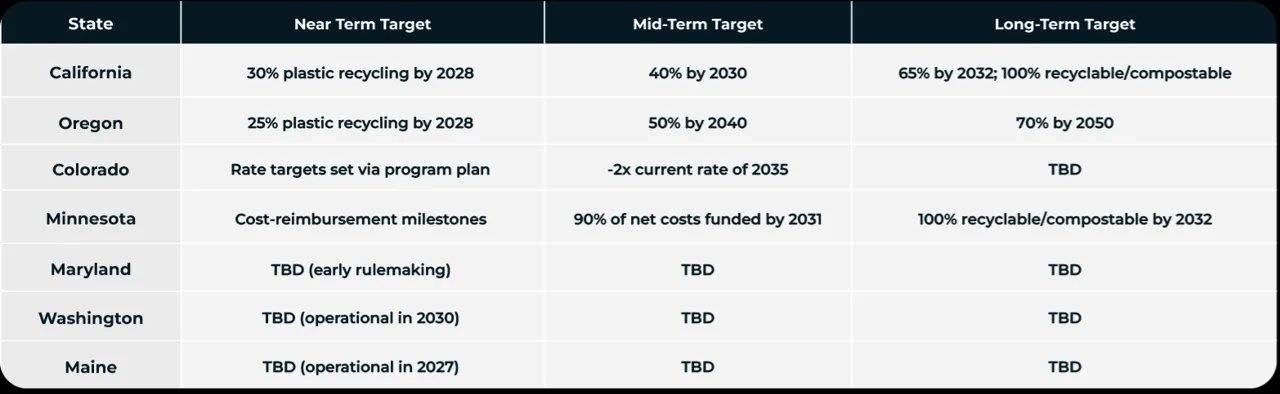
Achieving this goal faces significant obstacles, including supply-demand disparities, material contamination, and insufficient cost incentives. State-level EPR laws set high standards for the broad "plastic" category, requiring packaging to move toward 100% recyclability. Currently, recycled content targets are primarily driven by post-consumer resin (PCR) mandates in five states. Among them, California requires a minimum PCR content of 25% by 2032, while Oregon, Colorado, and Maine set targets through producer responsibility organizations.
Currently, curbside collection rates for films and flexible packaging in the U.S. are very low, with recycling rates hovering between 2% and 4%. However, collection pathways are expanding significantly. Research by the Sustainable Packaging Coalition shows encouraging accessibility of film collection points at retailers: 92% of U.S. consumers live within a 10-mile driving radius of a polyethylene film store drop-off location. Municipal drop-off sites and subscription services are also filling gaps. Experts point out that recycled content requirements can bridge the gap between collection and end markets by creating demand for post-consumer resin, making collection more economically viable.
Europe's experience in flexible packaging recycling offers valuable lessons. According to experts from CEFLEX and Packaging Europe speaking at the SPC Impact conference, Europe's recycling rate for flexible packaging is approximately 18 times that of the U.S. This achievement is partly due to the Packaging and Packaging Waste Regulation currently being developed, which addresses reuse, recycled content, and packaging waste reduction. Policy levers such as taxes on virgin plastics have also tangibly changed industry behavior. However, Europe also faces the challenge of insufficient end-market demand.
The industry needs incremental milestones to guide the way. Current actionable steps include: continuing to design for recyclability and advancing packaging compatible with recycling systems; effectively using recyclability labels to guide consumers toward existing collection pathways; supporting the use of post-consumer resin in new products to build market demand; and participating in industry leadership organizations such as the SDO Film Recovery Collaborative, the Flexible Film Recycling Alliance (FFRA), the U.S. Flexible Film Initiative (USFFI), CalFFlex, CEFLEX, and the Association of Plastic Recyclers (APR) to test new methods and share experiences.
Just as taxi drivers constantly navigate new routes, the packaging industry must develop the capacity to turn policy targets into tangible milestones for film and flexible packaging circularity through collaboration, investment, and adaptive problem-solving.
This article is compiled by Wedoany. All AI citations must indicate the source as "Wedoany". If there is any infringement or other issues, please notify us promptly, and we will modify or delete it accordingly. Email: news@wedoany.com