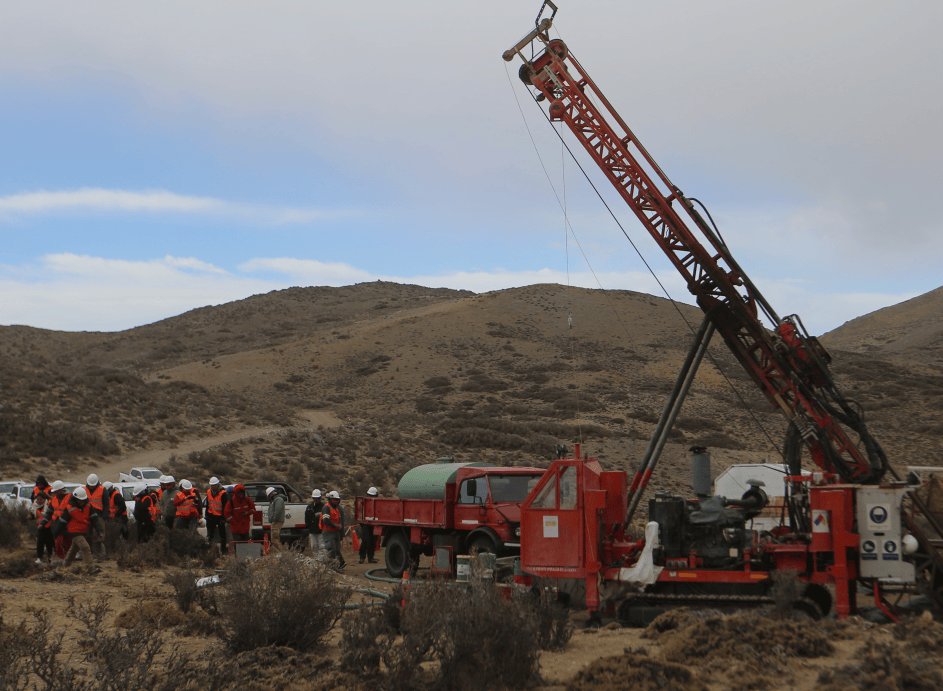
en.Wedoany.com Reported - The research project on AI-empowered development strategies and technical pathways for Gansu Province's metal mineral industry was launched in Lanzhou. Project leader and Chinese Academy of Engineering (CAE) academician Gui Weihua stated at the kickoff meeting that Gansu, as a major mineral base in China, holds a leading advantage in the reserves of nickel, cobalt, and platinum group metals, playing a prominent role in safeguarding national strategic resource security. Leveraging artificial intelligence technology to drive the metal mineral industry toward high-end, intelligent, and green development is a topic of strategic value and practical significance.
The meeting was hosted by the Gansu Research Institute of China's Engineering Science and Technology Development Strategy. Relevant officials from the Gansu Provincial Development and Reform Commission, the Department of Industry and Information Technology, and the Bureau of Geology and Mineral Exploration and Development, along with experts and scholars from Lanzhou University of Technology, Central South University, and Lanzhou University, participated in the discussions. CAE academician Tang Juxing, speaking online, pointed out that conducting research on AI-empowered mineral exploration technologies in response to the new round of strategic mineral prospecting breakthroughs will help unlock the region's deep prospecting potential and enhance the modernization level of Gansu's mineral exploration. Tang Juxing stated that the research team will align with Gansu's geological exploration realities, striving to produce high-quality advisory outcomes to support Gansu's prospecting breakthroughs.
Gui Weihua outlined four directions for AI-empowering the metal mineral industry: intelligent exploration and resource assessment, intelligent mining and beneficiation-smelting optimization, intelligent management of energy consumption and carbon emissions, and industrial chain coordination and decision support. Gui Weihua believes that "AI + manufacturing" is currently becoming the core engine driving new industrialization and cultivating new productive forces.
These concepts have already been put into practice at Gansu's leading enterprise, Jinchuan Group. Gui Weihua's team and Jinchuan Group have established an industry-university-research-application collaborative innovation system centered on the intelligent transformation of non-ferrous metals. They have jointly advanced projects such as the digital transformation of the nickel smelting process, promoting the intelligent upgrade of the entire nickel smelting process from four dimensions: equipment, detection, control, and management. Combining the outcomes of consulting projects, both parties successfully applied for the first national-level project led by Jinchuan Group during the "15th Five-Year Plan" period.
Gui Weihua's team has made progress at the technical level. The team innovatively developed a theoretical system for intelligent collaborative control of dynamic production processes, proposed precise control technologies for large-scale non-ferrous metallurgical furnaces and dynamic collaborative control technologies for cascade hydrometallurgical multi-reactors, built the world's first reconfigurable and easily reusable intelligent model library for non-ferrous metallurgy, developed China's first large model for embodied intelligent metallurgy in the non-ferrous sector, and took the lead in building intelligent factories for copper and zinc smelting. Over the past 20 years, the team has led the acquisition of 6 national-level science and technology awards and 23 provincial/ministerial-level first prizes in science and technology.
In Gansu, these technologies are being implemented. Focusing on China's largest copper-nickel collaborative beneficiation-smelting production line, the team clarified the digitalization status, needs, and bottlenecks. Adopting an approach that deeply integrates processes with digitalization, they formulated a full production line digital transformation plan covering equipment, processes, workshops, and workflows. Focusing on the intelligent construction of pyrometallurgical furnaces, the team overcame the challenge of predicting key grade indicators based on the fusion of mechanisms and data, laying the foundation for solving the furnace "black box" problem and achieving intelligent control. Gui Weihua expressed willingness to continue deepening cooperation with Gansu to promote the implementation of intelligent technologies in the region.
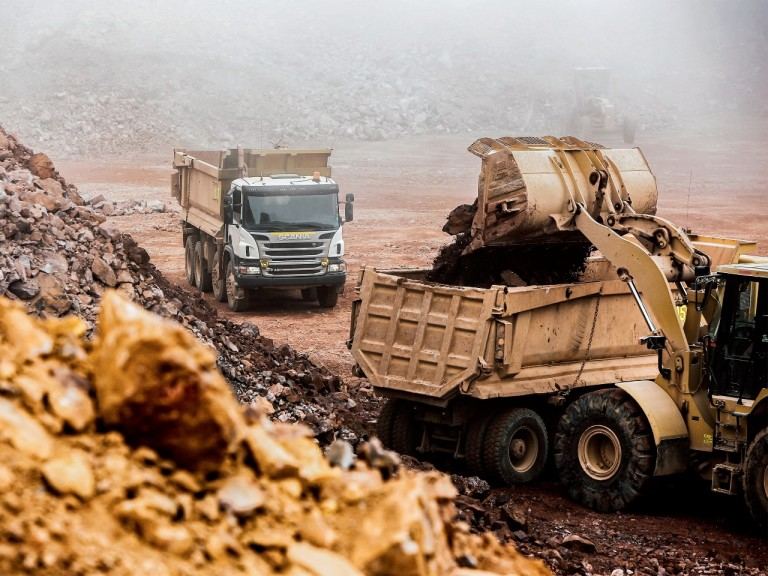
AI technology is also playing a role in mine safety. Focusing on the development of robotic equipment for auxiliary mining operations at Jinchuan mines, the team overcame the technology for precise identification and localization of wire rope damage by integrating magnetic induction and vision. This enabled millisecond-level real-time monitoring of internal and external wire rope damage and quantitative assessment of broken wires and wear. A full lifecycle health archive for equipment was established, transitioning hoist wire rope replacement from experience-based judgment to precise, scientific replacement. Simultaneously, the team overcame technologies for real-time underground mapping and positioning, personnel and vehicle target recognition, and collision prediction. They built a safety prevention and control system integrating environmental mapping, precise positioning, intelligent perception, and graded braking, pushing the safety management of underground equipment like load-haul-dump vehicles away from manual control models toward active intelligent safety protection.
Experts at the meeting believe that the deep integration of AI technology with the metal mineral industry is transforming the production and management models of traditional mines. The project team will fully absorb expert opinions and propose actionable advisory recommendations, contributing a Gansu solution to safeguarding national resource security.
This article is compiled by Wedoany. All AI citations must indicate the source as "Wedoany". If there is any infringement or other issues, please notify us promptly, and we will modify or delete it accordingly. Email: news@wedoany.com