en.Wedoany.com Reported - US electric aviation developer Helios Horizon has completed a flight using a solid-state battery to power a manned aircraft, which the company claims is a first in the field.
Solid-state batteries typically offer higher energy density than lithium-ion batteries, which are the primary power source for most electric aircraft, including air taxis currently under development. Solid-state batteries also have advantages in safety, but manufacturing challenges remain, so they are still in the development stage.
Helios was founded by Miguel Iturmendi, who has participated in notable aerospace test projects such as the Perlan Project and Solar Impulse. On June 5, the company conducted a test flight using a modified Pipistrel Taurus Electro powered glider at Zephyrhills Airport in Florida.
Helios stated that solid-state batteries "can more than double the range of electric vehicles, with charging times that are a fraction of those of traditional electric vehicle batteries." Iturmendi, who piloted the Taurus during the test flight, added: "For the first time, we have a battery technology that can provide the range and charging times needed to make commercial electric aviation viable, while meeting the safety requirements of the flying public."
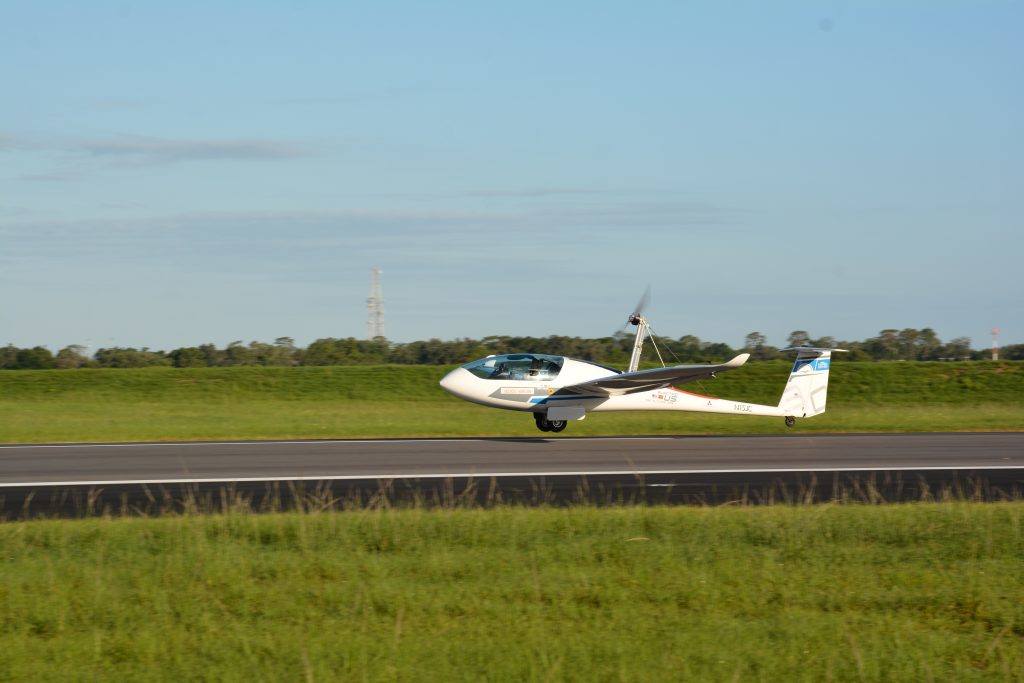
Over the past few years, Helios has been conducting high-altitude electric propulsion demonstration flights using the modified Taurus Electro. Previously, the team replaced the aircraft's original electric propulsion system with custom lithium-ion batteries and other components. Lithium-ion batteries use a liquid electrolyte to separate the anode and cathode, while solid-state batteries use a solid electrolyte.
The National Aeronautics and Space Administration (NASA), through its SABERS project, along with several airlines, has also recently been researching solid-state batteries. These batteries typically store more energy, are less prone to combustion, more resistant to damage, smaller, and lighter, partly due to the elimination of complex packaging and cooling systems. However, solid-state batteries face manufacturing challenges and are often costly, and traditional designs may degrade faster due to defects in the lithium anode caused by repeated cycling.
Chinese air taxi developer EHang tested a solid-state battery on an air taxi prototype several years ago. Helios stated that its solid-state battery "can provide 60-80% higher energy density and can charge from nearly empty to 80% in less than 15 minutes." The lithium-ion unit previously used in the Taurus Electro had an energy density of 260 Wh/kg, while the solid-state battery achieves 410 Wh/kg.
Helios noted: "Cost and availability are certainly challenges at the moment, but the lifespan of solid-state batteries is significantly better than traditional lithium-ion batteries, not worse. Lifespan is related to temperature-based cell degradation; solid-state cells can handle a wider temperature range, thus offering a longer service life."
Each flight on June 5 lasted "a few minutes," following "tethered ground operations at full power until the battery was depleted." "These initial test flights were primarily to evaluate weight and balance changes after installing the new battery." The test results will provide data to support Helios' subsequent plans—the company intends to equip the Taurus Electro with the new battery system and fly it into the stratosphere, targeting an altitude of 40,000 feet, with the test program scheduled to launch this fall.
This article is compiled by Wedoany. All AI citations must indicate the source as "Wedoany". If there is any infringement or other issues, please notify us promptly, and we will modify or delete it accordingly. Email: news@wedoany.com