China's Largest Megawatt-Level Vehicle-Grid Interactive Flash Charging Demonstration Station Launched in Shenzhen
en.Wedoany.com Reported - On June 9, the second phase of the China Southern Power Grid Shenzhen Guangming Hongqiao Park Flash Charging Demonstration Station was officially put into operation, adding 14 V2G (Vehicle-to-Grid) charging piles. This station is currently the largest single-site megawatt-level vehicle-grid interactive flash charging demonstration station in the country, with a maximum single charge/discharge power of 4.21 megawatts, capable of simultaneously charging and discharging 61 new energy vehicles.
"After the second phase expansion, the station is equipped with one 1000-kilowatt (i.e., 1 megawatt) flash charging pile, ten 600-kilowatt ultra-fast charging piles, and 26 fast charging piles ranging from 30 to 300 kilowatts," said Lin Chao, Deputy Head of the Engineering Department at China Southern Power Grid Shenzhen Guangming Power Supply Bureau. "All these charging piles support vehicle-grid interaction, and the total discharge power is equivalent to that of a small to medium-sized distributed power station."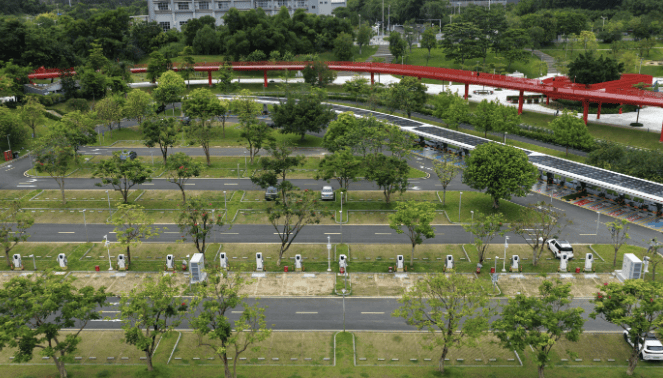
Vehicle-grid interaction refers to a technical model that enables bidirectional flow of energy and information between electric vehicles and the power grid through intelligent charging and discharging facilities. It comes in two forms: unidirectional smart orderly charging and bidirectional charging/discharging, allowing new energy vehicles to transform from power-consuming devices into mobile energy storage units.
It is reported that the demonstration station integrates three "national first" achievements, including the country's first 20 kV prefabricated "Power Cube" distribution station, the country's first full-liquid-cooled passenger vehicle single-gun megawatt-level V2G pile, and the country's first sodium-ion battery energy storage device designed for ultra-fast charging scenarios. The combination of multiple cutting-edge technologies, along with autonomous intelligent drone inspection and a smart energy management system, not only provides citizens with an ultra-fast recharging experience but also strengthens the foundation for efficient power usage and safe operation of the station.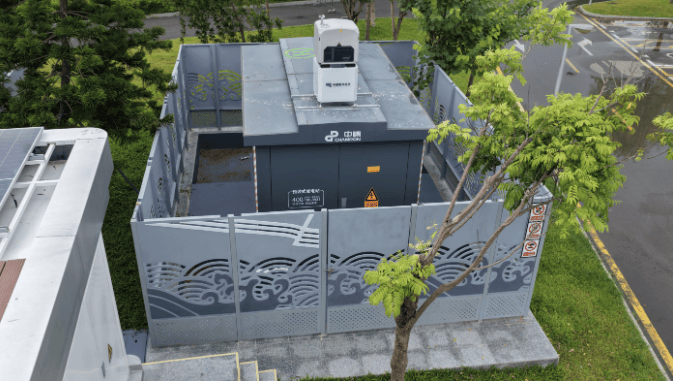
The supporting drone nest for power line inspection at the demonstration station is a key carrier for the implementation of the "charging + low-altitude inspection" model.
"Normally, inspecting the overhead lines in the surrounding area requires two people and a vehicle, taking four hours to complete," said Yu Wen, Deputy Squad Leader of the Distribution Operation and Maintenance Squad 1 at China Southern Power Grid Shenzhen Guangming Power Supply Bureau. "Now, the drone nest can respond at any time, autonomously inspecting the station and overhead lines within a 5-kilometer radius. It can complete tasks such as temperature measurement and foreign object detection in half an hour, and transmit images and data back, improving efficiency by about eight times."
This article is compiled by Wedoany. All AI citations must indicate the source as "Wedoany". If there is any infringement or other issues, please notify us promptly, and we will modify or delete it accordingly. Email: news@wedoany.com
Related Products

G.652.D Wavelength-extended Non-dispersion Shifted Single-mode Optical Fiber
HONGAN GROUP CO., LTD.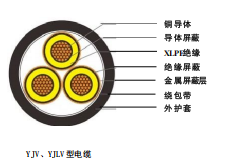
Rated Voltage 6-35kV Cross-linked Polyethylene Insulated Power Cable
TONGDING INTERCONNECTION INFORMATION CO., LTD.
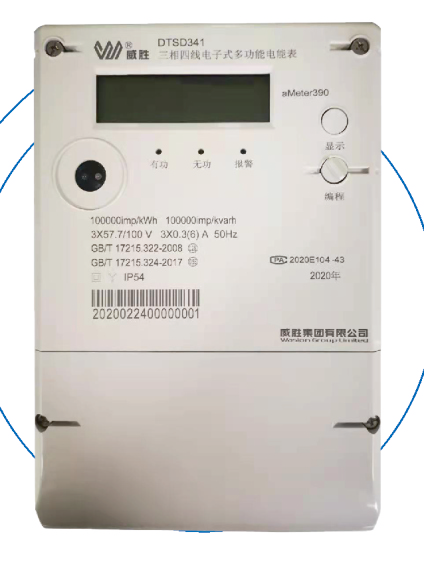
Overseas IEC Gateway Energy Meter - DTSD341/DSSD331-aMeter390
Wasion Group Limited Co., Ltd.
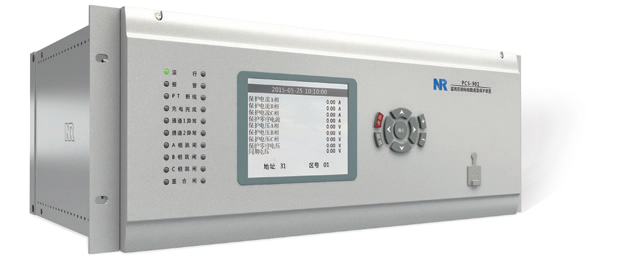
PCS-901 Series Ultra (Extra) High-voltage Transmission Line Complete Protection Device
Nanjing NR Electric Co., Ltd.
KYN28 - High Voltage Switchgear
Anhui Tianying Electrical Equipment Manufacturing Co., Ltd.
Electromagnetic Fluid Seawater Floating Oil Separation and Recover Equipment
Huate Magnet Group Co., Ltd.