Chicago's 1901 Project Breaks Ground on June 3, with $500 Million for Phase One
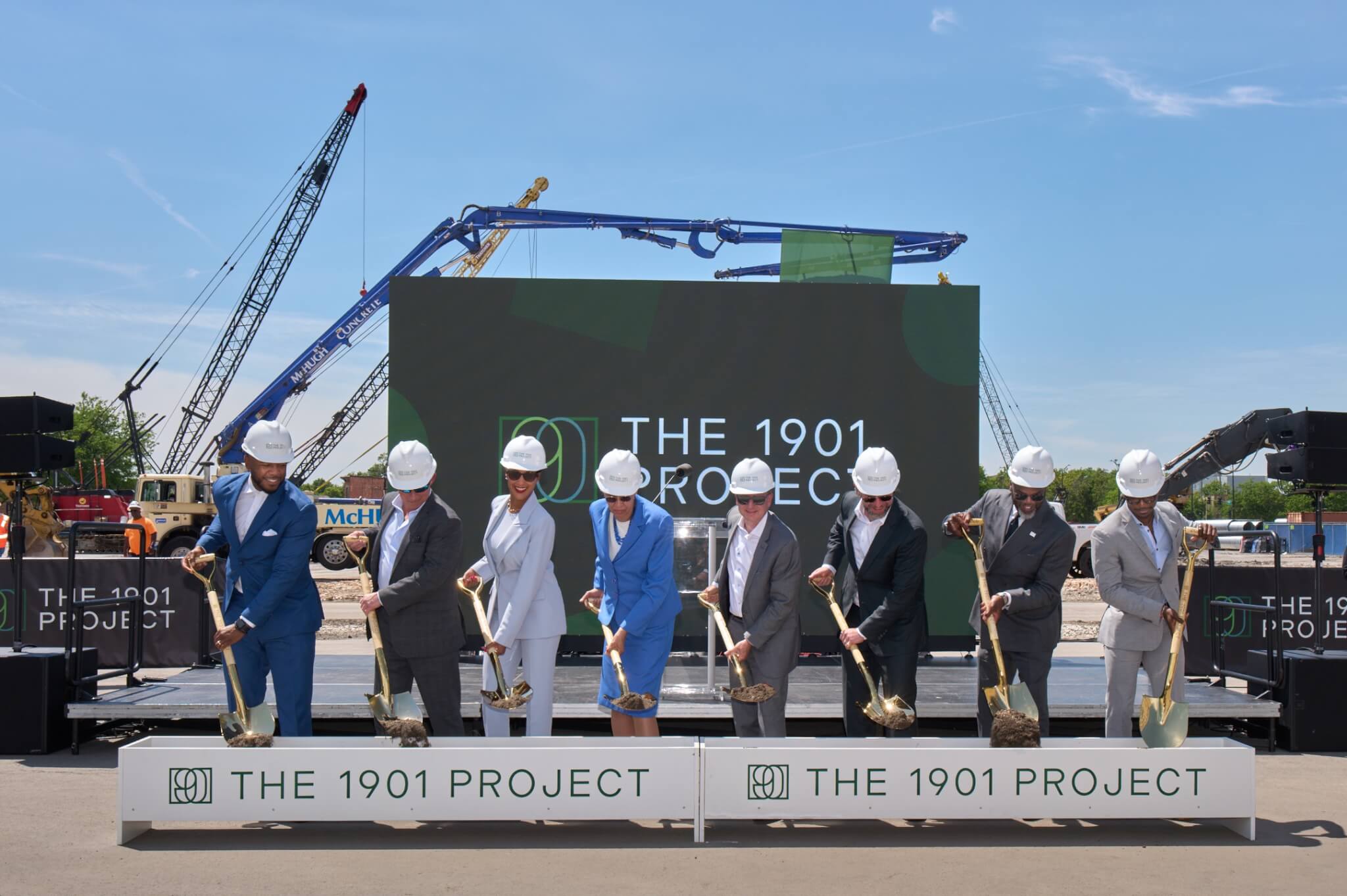
en.Wedoany.com Reported - On June 3, the family that owns the Chicago Bulls and Chicago Blackhawks broke ground on a parking lot in the Near West Side, officially launching the 1901 Project. As previously reported by The Architect's Newspaper (AN), the plan involves building a $7 billion mixed-use community of residential, hotel, retail, and park spaces on the parking lots surrounding the United Center, with Los Angeles-based RIOS as the architect and New York's Field Operations handling landscape design.
The United Center, home to both teams, sits in the middle of a 55-acre surface parking lot. Over the past few years, companies linked to the family quietly acquired these parcels. Named after the venue's address at 1901 West Madison Street, Blackhawks Chairman Danny Wirtz said the previous fan activity pattern was "drive, park, enjoy the interior amenities, and go home," and the new project aims to "bring these parking lots to life year-round" for fans, with potential benefits for the surrounding community.
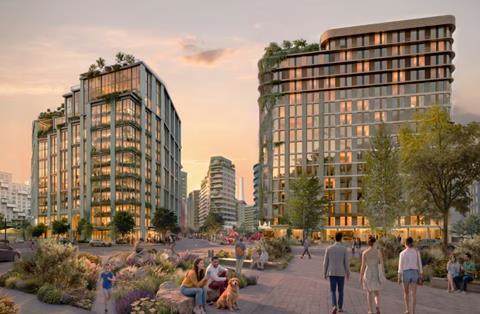
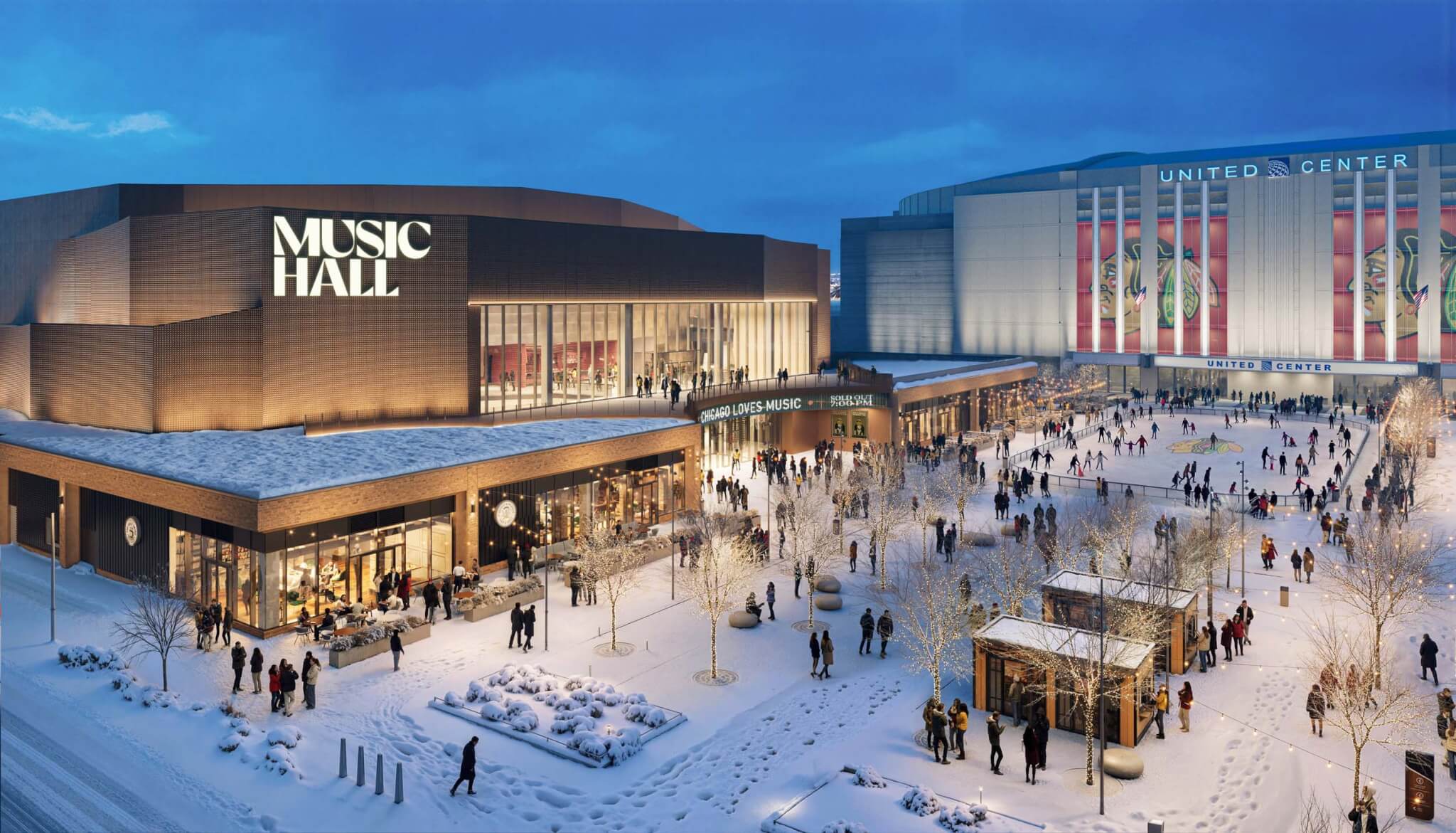
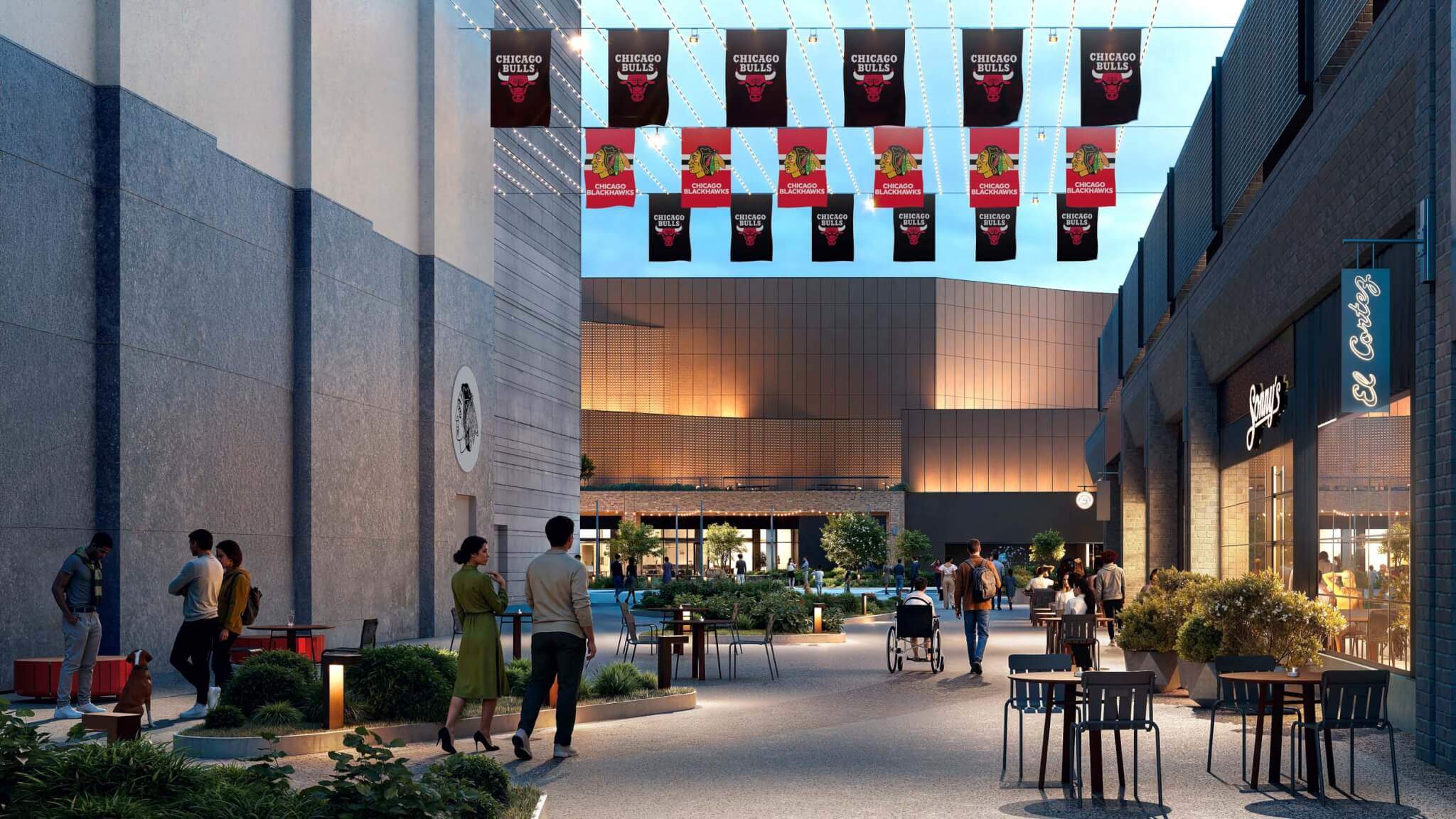
Renderings released by the developer depict community life scenes: dogs on a summer lawn, children chasing a soccer ball, diners under umbrellas, and an ice rink glowing in the snow under string lights. The renderings also include a basketball court with the Bulls' bull logo and an ice rink with the Blackhawks' emblem on the ice. A pedestrian shopping street is lined with flags of both teams from end to end.
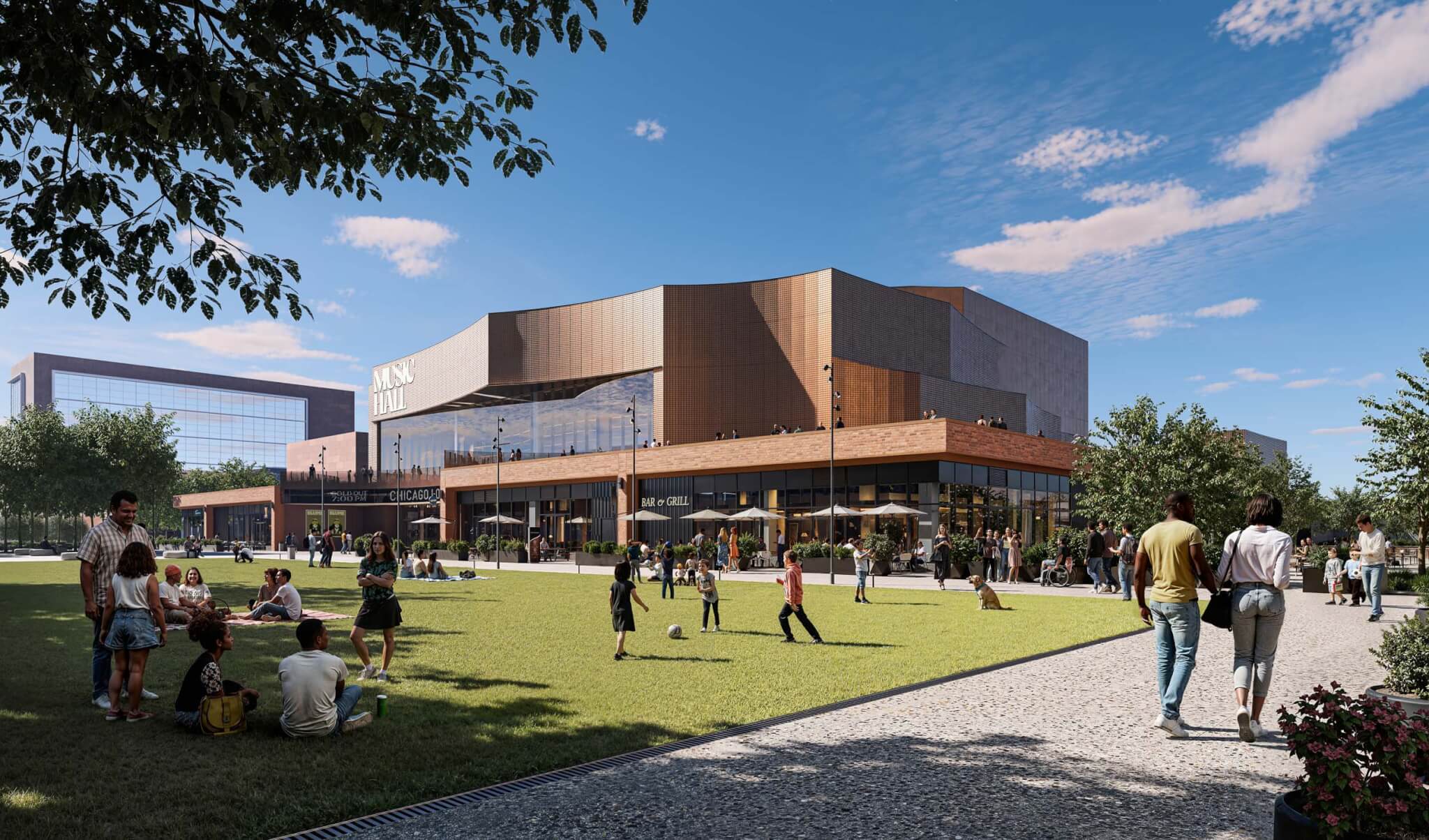
At the heart of the master plan is a 6,000-seat concert hall, designed as if it lifts a corner from the sidewalk, forming an eave wrapped in glass and gold-copper perforated metal. The design was revised just before groundbreaking, replacing a previous striped facade with softer concave arches and a green roof. Flanking the concert hall are two parking garages, each with a brick storefront base at street level and a public park on top. The master plan elevates the ground level and spans across buildings, surrounding the venue with elevated green spaces.
Phase one covers approximately 12.3 acres of asphalt south and west of the arena, along Damen Avenue and Adams Street. Initial construction includes the concert hall, a 180-room hotel, retail and dining spaces, two parking garages, and rooftop green spaces, totaling about $500 million. The master plan includes up to 9,463 residential units, 20% of which are affordable housing, but these units belong to later phases, with the developer stating they depend on market conditions and community feedback. During project approval hearings, a downtown service worker expressed concerns about the timeline for affordable housing, joking that it might be completed by the time she retires, "too late for me."
The 1901 Project has repeatedly been promoted as privately funded, requiring no municipal funds. However, in May, the City Council approved a Cook County Class 7(b) property tax break worth approximately $54.7 million over 12 years, the first public subsidy for the project. Mayor Brandon Johnson proposed and defended it. United Center CFO Steve Rooks told the City Council committee that the developer had secured only about 20% of the funding for the $500 million phase one, with the remaining private financing contingent on the tax break's passage. The city's Department of Planning and Development stated more explicitly: Phase one "would not proceed as planned without the incentive."
Project progress was unaffected by financing issues, with the City Council unanimously approving it in February 2025. Mayor Johnson said people in the West Side never stopped believing in the community. However, at community meetings in 2024, residents described being "priced out of their own neighborhoods." When the tax break was brought to a committee vote, Alderman Raymond Lopez questioned the lack of Latino representation and accused the planning department of picking winners; Alderman Nicole Lee warned developers not to return for the next phase without answers.
Alderman Walter "Red" Burnett, representing the 27th Ward, grew up across the street from these parking lots. When the United Center was built thirty years ago, his father served as the same ward's alderman. His parents owned a house in the neighborhood, and Burnett said he now rents. "These concerns and fears about gentrification are personal," he said while voting multiple times in favor of the development.
This article is compiled by Wedoany. All AI citations must indicate the source as "Wedoany". If there is any infringement or other issues, please notify us promptly, and we will modify or delete it accordingly. Email: news@wedoany.com